Follow Us on Google

By Steve Agbota
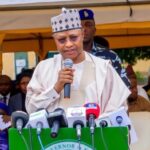
A Professor of Agricultural Economics, Ahmed Ala, has said that Nigeria will need about $93 billion to fix infrastructure across all sectors of the economy.
Speaking at a workshop organised by Association of Agricultural Journalists (NAAJ) with the theme, “Sustainable Agriculture Under Economic Recession,” Ala said that government could only boost economy and achieve its infrastructure development through Public Private Partnership (PPP).
Ala, who represented the Commissioner for Agriculture, Sokoto State, Alhaji Umaru Nagwari Tambuwal, at the workshop recently, said that government could only boost the economy and achieve its infrastructure development through Public Private Partnership (PPP).
According to him, in PPP collaboration, the private sector is found to play a key role in the success of government in providing infrastructure and other social services to the people. He added that the private sector has resources, human capital and problem-solving capabilities that government needs in solving its socio-economic problems as well as improving its operation and services.
However, he said that the aim was to create economic growth and development through market-oriented investment and thus contribute to employment generation, poverty reduction and revenue generation by the government, among others.
Speaking on other advantages of PPP, he explained that it utilises private sector skills and technology to deliver projects in a more efficient manner, resulting in either lower costs or a superior product for the same investment and managing and minimising government risks associated with long term projects.
Ala stated that PPP allows projects to be accomplished more quickly and on schedule than those attributed to public sector provision as bureaucratic tendencies/bottlenecks are reduced to the barest minimum.
On the problems facing PPP, he said the partnerships are faced with challenges such as failure to honour agreement signed, insecurity, low political will and wrong selection of private sector (poor expertise and resources on the part of the private sector to implement the project).
He said the way forward for achieving a successful PPP project includes honouring of agreements/MoUs signed between parties and ensuring strong legal and institutional bodies to protect PPP, so that when there is a problem with the arrangement(s) the private sector or investors are not left to bear the burden alone.
Said he, “tackling insecurity in the country, as no investor will invest his resources in a country/state that is not safe, especially during period of crisis, is very paramount.”
Good political will from the leadership: strengthening the regulatory institutions/framework for proper implementation of PPP projects as well