Follow Us on Google
From Sola Ojo, Kaduna
The Kaduna State Government has begun training Community-Based Enumeration Teams (CBETs) as part of efforts to expand and update the State Social Register (SSR) under the NG-CARES 2.0 programme.
The one-day training, organised under Result Area 4 (RA 4) of the programme, brought together CBET members from Igabi, Kaduna North, Kaduna South, Chikun and Birnin Gwari Local Government Areas, all within Zone 2. In contrast, the training is expected to continue in Zones 1 and 3 in a week.
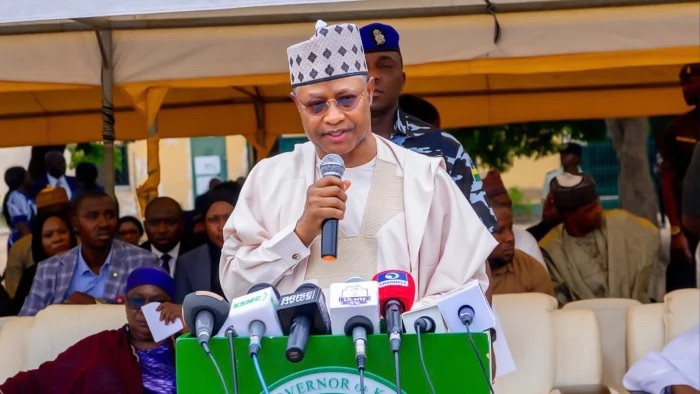
Speaking on the sidelines of the training at Sardauna Memorial College, Kaduna, the Kaduna State Coordinator of the State Operations Coordinating Unit (SOCU), Mrs Nina Dawong, said the exercise was aimed at refreshing the enumerators on the targeting process while updating them on changes to the social register mechanism.
Dawong explained that the teams were formerly known as Community-Based Targeting Teams but had now been renamed Community-Based Enumeration Teams following changes to the targeting mechanism.
According to her, the previous system relied heavily on communities to determine poverty criteria applicable to their areas and identify people who met such criteria.
She said, “The purpose is a refresher on the targeting they used to do and then also an update on the targeting mechanism.”
She explained that the national programme had overhauled the previous community-based targeting system in favour of a more holistic approach that recognises that vulnerability could affect anyone.
“From the national level, there is an overhaul of that targeting mechanism where we now look at a more holistic targeting mechanism.
“Where we all agree that everyone is vulnerable. Every human being is vulnerable. No matter how rich you are, you can be vulnerable, and in that case there is a move to ensure that everyone is added to the register and it’s called the Universal Register,” she said.
Dawong noted that although the Universal Register was still being developed at the national level, Kaduna and a few other states had commenced work on expanding and updating their registers with support from the NG-CARES programme.
She said the social register was a Delivery Linked Indicator (DLI) under NG-CARES 2.0, adding that the programme was supporting the state to expand the existing register and update information already captured.
“For expansion, it means those that were previously not on the register can be brought in based on agreed criteria.
“And then the update is for those who are on the register, and their information is not complete, especially those whose NIN had not been added,” she explained.
The SOCU coordinator said some beneficiaries whose information was captured previously did not have National Identification Numbers (NINs) at the time, but could now have their records updated.
“Maybe at the point that their data was taken, they didn’t have a NIN. Now they have, or they are encouraged to have, and then their data is updated,” she added.
Dawong said the training exercise would be conducted across the three senatorial zones of Kaduna State, starting with the central zone.
She said the exercise would subsequently move to the northern zone and then the southern zone.
Meanwhile, the Kaduna State Coordinator of NG-CARES, codenamed KD-CARES, in the Planning and Budget Commission, Badamasi Musa, said the training was important because it would enable the state to meet the requirements of Result Area 4 of NG-CARES 2.0.
Musa said the requirement focused on expanding and updating the state social register, stressing that the enumerators needed to be properly trained to carry out the assignment effectively.
“Why this training is important is that we are trying to meet the requirement of Result Area 4 for NG-CARES 2.0, which requires states to expand and update the social register,” he said.
He added that the State Operations Coordinating Unit was central to the exercise because it was the implementing agency responsible for the relevant DLIs.
“We are supporting SOCU. No, not even supporting. SOCU is a pillar because it’s an implementing agency.
“They are implementing the two DLIs, expanding and also updating the social register,” Musa said.