Follow Us on Google
Senate screens him, two others for NUPRC board
________________________________________________
From Adesuwa Tsan, Abuja
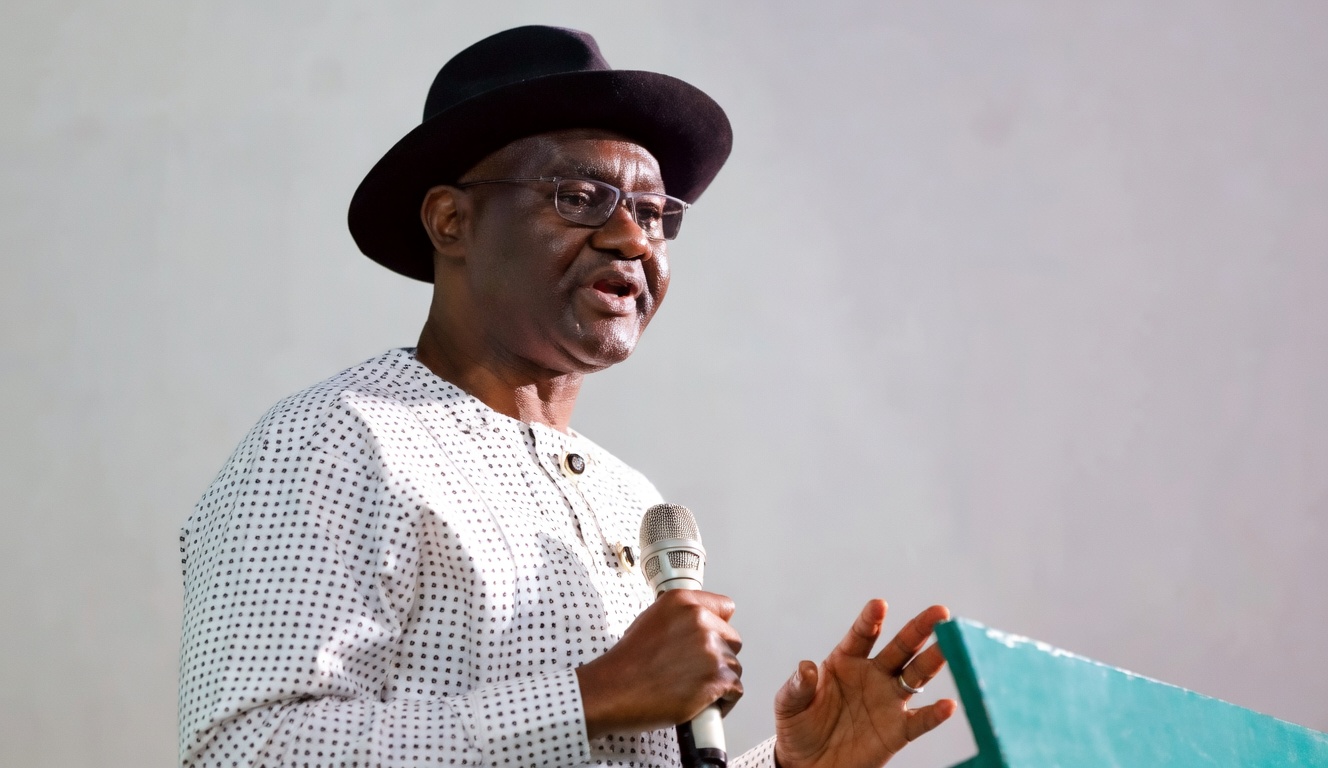
Nigeria could reap higher revenues and unlock new investment opportunities in its energy sector as global oil prices surge amid rising geopolitical tensions, a former lawmaker representing Rivers South East, Magnus Abe, said on Monday.
Abe said the spike in crude prices, triggered by tensions involving Iran and the United States, presents an opportunity for Nigeria to expand investments in marginal oilfields and boost gas production, despite potential economic pressures at home.
The former senator spoke with journalists on Monday after appearing before the Senate Committee on Petroleum Resources (Upstream), chaired by Eteng Jonah Williams, for screening as Chairman of the Board of the Nigerian Upstream Petroleum Regulatory Commission (NUPRC).
President Bola Tinubu had forwarded the nominations of Abe, Paul Yero Jezhi and Sunday Adebayo Babalola to the Senate for confirmation as chairman and non-executive commissioners of the commission’s board.
While acknowledging that higher crude prices could translate to increased domestic fuel costs, Abe stressed that Nigeria also stands to benefit from improved earnings from crude exports.
“You must look at the balancing act. Prices will definitely be affected, but revenues from our oil sales will also be positively affected. There will be some measure of balance in what will happen,” he said.
According to him, the price rally offers Nigeria a strategic window to invest in marginal oilfields that previously appeared commercially unattractive.
“If the price of oil is going up, it gives us an opportunity to invest in marginal fields that otherwise would not have been profitable,” Abe said.
He added that disruptions to global gas supplies could also position Nigeria to strengthen its role in the gas market, saying, “if gas supplies are being disrupted globally, this is an opportunity for Nigeria to optimise its own gas production, which will create jobs and new opportunities.”
Other News
Despite the potential economic gains, Abe described the geopolitical tensions driving the price surge as a global crisis with far-reaching consequences.
He said “this is a very difficult time for the entire planet. It’s not just a Nigerian challenge; it is a global challenge,” while expressing hope that the conflict would soon end.
“Human beings are actually dying. Our prayers should be that this conflict, which in my opinion is unnecessary and harmful to the entire world, should quickly come to an end so that we can begin to recover,” he added.
Abe also expressed appreciation to President Tinubu for nominating him to serve on the board of the upstream regulatory body.
“I am sincerely grateful to Mr. President, the Commander-in-Chief of the Armed Forces, Bola Ahmed Tinubu, for considering me and other members of the board worthy of service to this country,” he said.
He assured stakeholders that the incoming board would work to strengthen regulation in the petroleum sector, noting that the Petroleum Industry Act provides mechanisms to address long-standing challenges in the industry.
According to him, the Host Communities Fund created under the law has helped align the interests of oil-producing communities with those of operators.
“With the Host Communities Fund, the host communities themselves are now stakeholders. They benefit from production, and nobody destroys what he is eating,” he added.
Earlier during the screening, a nominee for non-executive commissioner on the NUPRC board, Paul Yero Jezhi, told lawmakers that discrepancies in crude oil measurement at custody transfer points remained a major challenge in the industry.
He said the deployment of modern metering systems could significantly reduce the problem.
“The discrepancies in crude oil at the custody point have been a long-time issue. But modern meters can now record measurements within a margin of plus or minus one to five, and when such meters are deployed, these discrepancies will largely disappear,” Jezhi said.
He also recommended the use of drones and satellite technology to improve surveillance and curb oil theft and pipeline vandalism, particularly in the Niger Delta region.