Follow Us on Google
By Maduka Nweke
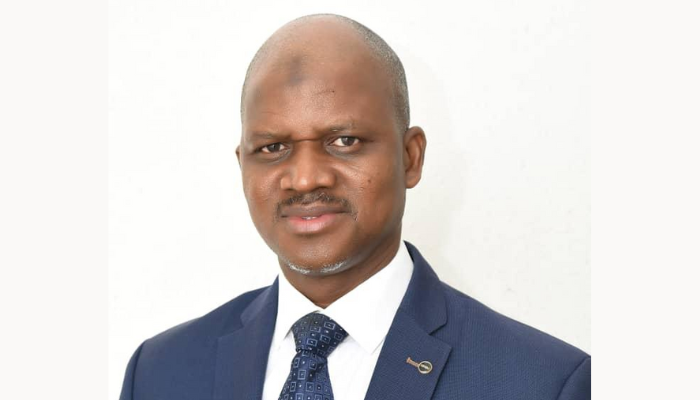
The Managing Director/Chief Executive of the Federal Mortgage Bank of Nigeria (FMBN), Mr. Shehu Usman Osidi, has said that a whopping N5.5 trillion is needed annually for the next 10 years to construct 550,000 homes to alleviate Nigeria’s acute housing shortage.
Speaking at the 2024 Annual Conference of the Property & Environmental Writers Association of Nigeria (PEWAN) held recently in Lagos, Mr. Osidi said that Nigeria is faced with a huge population estimated at over 200 million growing at about 2.52 per cent per annum, with a high urban-rural ratio of about 50 per cent also growing at an astronomical rate of 4.3 per cent per annum and perennial unfavourable regulatory and macroeconomic factors.
According to him, the combination of these unfortunate circumstances have resulted in a significant housing gap estimated in millions.
He noted that a 2019 PwC study revealed that about 75 per cent of the nation’s estimated 42 million housing stock falls below the United Nations criteria for permanent human occupation. “In addition, the nation’s dismal record of untitled land implies that about $300 billion, roughly 60 percent of national GDP is ‘dead capital’ as the owners cannot realise tangible earnings or utilise the assets to improve their economic status.
“By contrast, our average annual housing production is about only 100,000 units mostly through prevalent informal, incremental self-construction dictated by the availability of excess household income, scarce savings or loans from friends and relatives. Again, the national appropriation for housing last year was around a paltry N50 billion, a far cry from the N5.5 trillion required per annum.
“However, the motivation for new home development would be driven by housing demand. By extension, housing demand tends to be a factor of the available opportunities for mortgage financing as in most societies, less than 5 percent of the population lack the financial capacity for housing for cash transactions. Even where individuals can afford to purchase a house outright, economic prudence dictates that a mortgage facility which offers regular repayment in installments over a convenient length of time is preferable to tying down lump financial resources which can be more optimally deployed to alternative investment opportunities.
“In this context, the role of affordable mortgages in addressing the housing deficit cannot be overstated. Under President Tinubu’s administration, the Federal Ministry of Housing & Urban Development is rolling out the Renewed Hope Cities and Renewed Hope Estate housing projects to deliver 100,000 new homes across the country.
“This is where an institution like the Federal Mortgage Bank of Nigeria (FMBN), as the apex mortgage institution in Nigeria is playing a huge role by driving housing affordability and accessibility.
“FMBN has issued a N100 billion off-taker guarantee to real estate developers engaged under the Renewed Hope Housing projects to facilitate project delivery. By this, we will provide mortgages at single-digit rates of six per cent and a tenor of up to 30 years to Nigerians interested in becoming homeowners”, he explained.
In his assessment of affordable housing, Mr. Odunayo Ojo, the Managing Director of UPDC, a frontline real estate firm in Nigeria said that affordable housing is a thing of the mind. According to him, since there is no affordable cement, no affordable raw materials and building materials, anyone expecting to have affordable housing is chasing shadows. “The term Affordability is subjective. What is considered “affordable” depends on a household’s income. With low income levels and high cost of infrastructure and construction, providing affordable housing has been a great challenge to all stakeholders. A majority of the population cannot afford housing costs. Statistically, more than one in seven households are what economists call “severely cost burdened,” meaning they pay half or more of their income on housing,” he said.
Ojo noted that there are several factors responsible for high housing prices. In his opinion these include; land allocation costs, high cost of building materials / need for alternative materials, inadequate access to finance. Others include, high Cost of infrastructure, taxes and Fees, implementation of policies/ bureaucracy, skilled labour/ technology, lack of cooperation between different sectors.
Meanwhile the FMBN boss had earlier stated that this transaction arrangement clearly highlights the significant role of the FMBN in housing delivery in Nigeria.” FMBN is empowered to collect and manage the National Housing Fund (NHF) Scheme as a pool of long-term funds funded by contributions of 2.5 percent of workers’ monthly incomes. It remains one of the institutions that provides affordable financing to both the supply (construction) and demand (off-take) sides of the housing market. The Bank’s loan products are granted on concessionary basis that are below market interest rates and for relatively long tenors to ensure affordability.
“FMBN’s construction loans are granted to real estate developers, cooperative societies and individuals. Asides from the NHF mortgage loan, FMBN’s other loans on the demand side include a rent-to-own product and home renovation/improvement loans. The Bank is set to launch the Diaspora Mortgage loan to address the needs of Nigerians in Diaspora, non-interest loans and rent assistance. It is of interest that to address the rising cost of housing delivery due to escalating cost of building materials, the Bank increased loan limits for individuals from N15 million to N50 million while the equity requirement was reduced from as high as 30 per cent to only 10 per cent to ensure affordability. We have also established partnerships with critical stakeholders including State Governments, regulators, bilateral and multilateral financial institutions and the labour centres to increase access to affordable housing,” he revealed.