Follow Us on Google
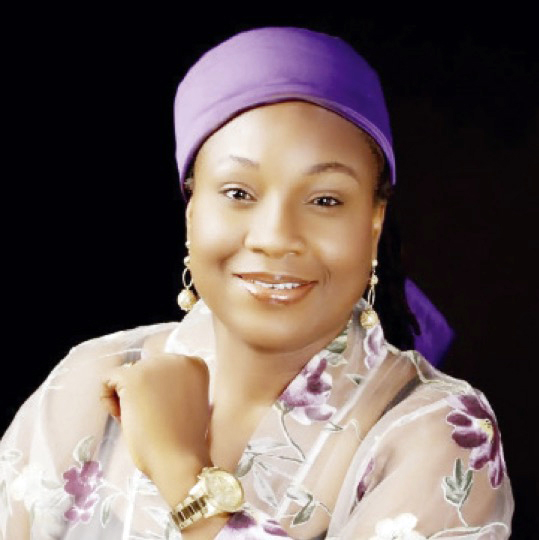
…Says I’ve never seen public service as transaction
Mary Ikoku has served in advisory and leadership roles in key public institutions, including the Federal Ministry of Information, Federal Ministry of Finance, and the Bureau of Public Service Reforms. She also served as Special Adviser to two Federal Ministers and later headed Communications for the Subsidy Reinvestment and Empowerment Programme (SURE-P), one of Nigeria’s most ambitious social intervention programmes at the time.
The exposure gave her a deep understanding of governance, policy implementation, stakeholder engagement, and the challenges of national development.
She is the Lead Consultant, The Access Media Limited, a strategic communications and public affairs consultancy that helps organisations shape narratives, build trust, and strengthen stakeholder engagement.
Beyond her professional work, she is deeply committed to empowering people, especially women and young people. She is the Founding Director of Emerge Women Development Initiative (Emerge Women), a non-partisan platform dedicated to increasing women’s participation in leadership, governance, and public life.
In this interview, the Abia State indigene speaks about the polity, women in politics, her quest to represent her constituency at the House of Representatives.
Politics in Nigeria is deemed complicated, tough and even brutal. How did your family react when you told them about your political ambition?
Interestingly, my family has been one of my greatest sources of strength throughout my political journey. Politics was not entirely new to us because I had already spent many years serving in government as a political appointee. The difference this time was that I was no longer working behind the scenes. I was asking the people to entrust me with elective office.
My husband was incredibly supportive from the beginning. Coming from a political family himself, he understood both the opportunities and the realities of politics. In fact, he helped me refine my manifesto. We spent many evenings discussing ideas, policies and the kind of representation our people truly deserve. Throughout the campaign, he remained my greatest encourager and one of my most honest critics.
My sons were just as excited. They threw themselves into the campaign with so much enthusiasm that it reminded me leadership is also about inspiring the next generation to believe they can make a difference.
The only person who really struggled with my decision was my mother. Like every mother, her greatest concern was my safety. She would often say, “Politics is full of dangerous and evil people.” I would smile and tell her, “Mummy, our politics cannot become cleaner if decent people continue to stay away from it. If we want a better political culture, then honest, competent and responsible Nigerians must be willing to participate.”
She worried a lot during my first election, but by the time I contested again, I deliberately carried her along every step of the journey. She understood my motivation much better and became far more comfortable.
Looking back, I have come to appreciate that politics is never an individual journey. Behind every candidate is a family making sacrifices, offering encouragement and praying quietly for their success.
You relocated to the East a few years ago to join Gov. Alex Otti’s election campaign, but you seem to share different views politically now. Is this true or false?
It is true that I spent a few months in Abia in 2015 to support Dr. Alex Otti’s governorship campaign. Whether you describe it as a temporary relocation or simply committing myself fully to the campaign, I immersed myself completely because I believed deeply in the vision he presented for the state.
I played several strategic roles in the campaign, including setting up and coordinating the campaign’s Situation Room, supporting the campaign’s media strategy and contributing to fundraising efforts. When I believe in a cause or a leader, I don’t do things half way. I give it my very best. I was convinced then, as I still am today, that Dr. Otti won the 2015 governorship election and that the mandate freely given to him by the people of Abia was not reflected in the declared outcome. In many ways, I see his victory in 2023 as the fulfillment of what many of us believed should have happened in 2015.
I also provided strategic support during the 2019 campaign and, when he later joined the All Progressives Congress (APC), we continued working together within the party. Our political journeys eventually took different directions when Dr. Otti left the APC for the Labour Party while I remained in the APC to pursue my own political aspirations.
Politics has taught me many lessons. One of the biggest is that institutions must always be greater than individuals. I have always believed in giving my all to every cause I believe in, and my experience also taught me that in public life, loyalty is at its strongest when it is mutual. Ultimately, our enduring loyalty must always be to the people, democratic values and good governance.
People often ask me, “After everything that you did, why are you not in the government? Why didn’t you get contracts or appointments?” I always smile because that was never my motivation. I have never seen public service as a transaction. For me, it has always been about making a difference. The greatest reward is seeing lives improved, institutions strengthened and communities develop.
Today, Dr. Alex Otti is the governor of Abia State, and I genuinely wish him well because when Abia works, every Abian wins, regardless of political affiliation. In fact, if Abia becomes one of the best-governed and most prosperous states in Nigeria, I will probably be one of the happiest people you’ll find. That is what public service should be about.
Nigeria must move from the politics of survival to the politics of development. We must build a political culture where our greatest satisfaction comes not from what the government gives us personally, but from what the government delivers for the people.
You didn’t secure your party’s ticket for the House of Representatives. What did that experience teach you that winning never could?
The experience reinforced something I have always known: our democracy is still a work in progress.
I entered the race because I genuinely believed I had something valuable to offer the people of Arochukwu/Ohafia Federal Constituency. Throughout the campaign, I engaged communities, listened to people, and presented a vision for representation rooted in competence, inclusion, and service.
The process highlighted some of the realities that still exist within our political system. It reminded me that politics is not always a straightforward contest of ideas, merit, capacity, or public support. There are often competing interests and dynamics at play.
The experience strengthened my conviction that we must continue advocating for greater transparency, fairness, and internal democracy. It also reminded me that leadership is not confined to elected office. You can continue to create impact, influence change, and serve people regardless of title or position.
I believe the party lost an opportunity to present a candidate with a different vision and approach, and my constituency may have missed an opportunity for a different style of representation. Nevertheless, my commitment to service remains unchanged.
Other News
One of the most important lessons for me was that leadership is ultimately about purpose, not position. Elections come and go, but the responsibility to serve people remains.
You worked for the government and supported your party in various capacities, especially during the 2023 election. Some would argue that someone with your level of contribution and competence should have been appointed rather than having to seek elective office. Do you agree?
That is an interesting question. I was privileged to contribute in different ways, including during the 2023 election cycle, and I remain committed to the ideals and success of the party.
However, I have never approached public service from the perspective of entitlement. I do not believe that service automatically translates into a right to appointment.
That said, every political party must constantly evaluate how it identifies, nurtures, and deploys talent. Strong institutions thrive when competence, loyalty, hard work, and capacity are recognised and utilised.
My decision to seek elective office was not about reward. It came from years of engagement with communities and a conviction that I could contribute meaningfully through representation.
I do believe that parties become stronger when committed members see that merit, service, competence, and loyalty are valued. That is how institutions grow, how future leaders emerge, and how citizens gain confidence in the political process.
For me, the focus has always been impact. Whether through appointments, advocacy, entrepreneurship, or elected office, what matters most is the opportunity to serve.
What is your advice to women who want to enter politics but don’t have a godfather or billions?
My advice is simple: do not count yourself out before you start. Many women assume politics is only for those with powerful connections or enormous wealth. While resources and networks matter, they are not the only assets that matter.
Competence, character, relationships matter, credibility and service matter. Before seeking office, build a record of impact. Let people know you for something positive. Invest in your community. Develop your skills. Build genuine relationships. Show up consistently.
Women also need to support one another more intentionally. One of the challenges many women face in politics is isolation. We need stronger networks, mentorship, and collaboration.
Most importantly, do not wait for permission to lead. Leadership begins where you are. Whether you are leading a business, a community initiative, a classroom, or a family, those experiences prepare you for greater responsibilities.
The road may be harder for women, but it is certainly not impossible. Some of the most transformative leaders in history started without wealth, political godfathers, or powerful networks. The preparation, courage, persistence, and a willingness to serve distinguished them.
Women have a place in politics, not as spectators, but as decision-makers, agenda-setters, and leaders. My message is simple: prepare yourself, believe in yourself, and never allow anyone define the limits of what you can achieve.
You mentor young women. What would you tell a 25-year-old who says Nigeria is finished?
I would first tell her that I understand her frustration. Young Nigerians are facing enormous challenges. Many are worried about jobs, the economy, insecurity, and uncertainty about the future. Those concerns are real and should never be dismissed. But I would also tell her that Nigeria is not finished.
Nigeria remains a country of extraordinary possibilities. Every day, I meet young Nigerians who are building businesses, creating jobs, developing innovative solutions, and competing globally despite the challenges around them.
The danger is that when we focus only on what is wrong, we stop seeing what is possible. I would encourage her to invest in herself, develop skills, remain curious, build meaningful relationships, and stay engaged in the process of nation-building. The future belongs to those who are prepared for it.
Hope is not pretending that problems do not exist. Hope is choosing to keep building despite them.
Our generation has a responsibility not only to complain about Nigeria but also to contribute to fixing it. Change may not happen overnight, but every positive action, every business built, every young person empowered, and every community strengthened moves us closer to the country we desire
Following the House of Representatives primary, what next for Mary Ikoku?
The election may be over, but the mission continues. One thing the campaign reinforced for me is that leadership is not tied to a title. My commitment to service existed before politics and will continue long after any election cycle.
One of my immediate priorities is the Continuous Voter Registration (CVR) sensitisation campaign we recently launched. I believe we must do more to encourage voter registration, civic awareness, and active participation, particularly among women and young people. Democracy is strongest when citizens are informed, engaged, and involved in shaping the future of their communities.
I will also continue expanding the work of the Mary Ikoku Foundation, Emerge Women, Working Moms Africa, and The Access Media Limited.
There is still much work to be done in em