Follow Us on Google

…Pushes private sector-led economic reset
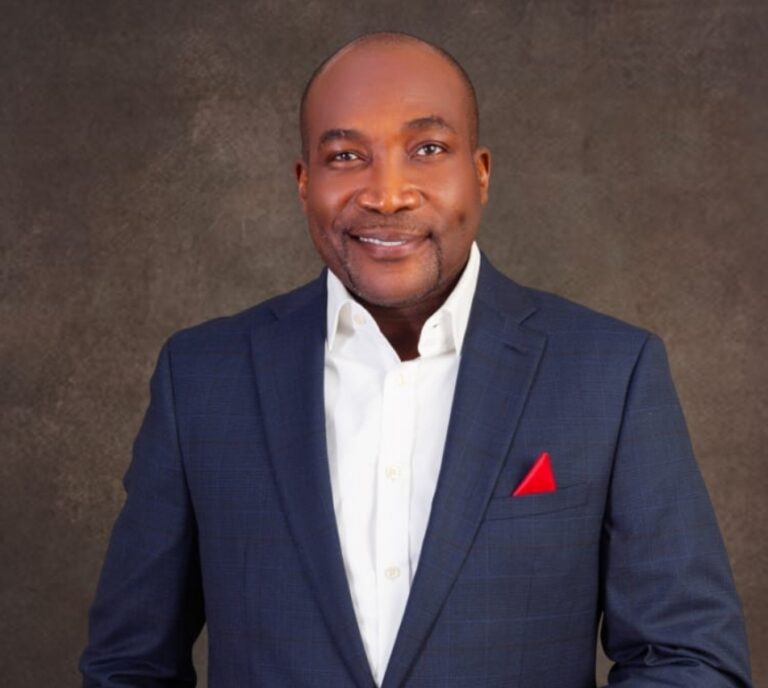
Chairman, Alliance for Economic Research and Ethics and former President, Nigerian Association of Chambers of Commerce, Industry, Mines and Agriculture,
Kelvin Oye, has revealed that Nigeria has lost over $76 billion in a sustained pattern of failed government business ventures.
He made the disclosure in a new policy document at the 2026 Vanguard Newspaper Conference held in Lagos.
According to him, the figure represents cumulative losses from decades of funding, mismanagement and missed investment opportunities across key state-owned enterprises, including Ajaokuta Steel, Nigeria’s refineries, NITEL and the aviation sector.
Oye argued that Nigeria’s persistent model of government ownership and operation of businesses has proven economically unsustainable, stressing that the state must limit itself to regulation while the private sector drives commercial activity.
“The government has no business running business,” he said, warning that continued state participation in commercial ventures has consistently produced inefficiency and financial waste.
Breaking down the losses, Oye stated that over $8 billion was expended on the Ajaokuta Steel project without any commercial output, while failed refinery rehabilitation efforts reportedly gulped $43 billion. He added that the telecommunications sector, through the collapse of NITEL, accounted for about $5.3 billion in lost value, with another $20 billion tied to inefficiencies in the aviation sector.
According to him, “If Nigeria is to translate GDP growth into actual inclusive growth, we must address a fundamental structural flaw: Our government insists on being in business.”
He added, “The private sector cannot be a government. And the government cannot be the private sector. This is not ideology, it is institutional logic.”
Oye described Ajaokuta Steel as a “monument to governmental hubris,” noting that despite billions spent over decades, the facility has never produced a single commercial steel output.
Other News
He also referenced refinery rehabilitation efforts, stating that trillions of naira and billions of dollars have been expended without restoring functional capacity.
“The money vanished; the plant stands idle,” he said, adding that repeated failures reflect a systemic inability of government-run enterprises to deliver value.
He further cited the collapse of Nigeria Airways and NITEL as examples of structural inefficiency, noting that private sector operators have since filled the gap in aviation and telecommunications more effectively.
Shifting focus to economic opportunity, Oye highlighted Nigeria’s livestock sector as a major untapped growth engine. He noted that the sector currently contributes about $32 billion to GDP and supports millions of livelihoods, with potential to expand significantly under the National Livestock Growth Acceleration Strategy (NL-GAS) 2025–2035.
He stated that projections show the sector could grow to between $74 billion and $94 billion if properly structured, adding that the government and private sector had already aligned on a $50 billion livestock investment initiative.
Oye proposed the adoption of a “Catalyst Model” for development, where the government provides infrastructure, regulation, and enabling frameworks while private investors drive production and operations.
“The recent alignment on a $50 billion livestock initiative is encouraging, but a signal is not a strategy. We need architecture,” he said.
Warning against repeating past mistakes, he stated: “The disasters of Ajaokuta, the refineries, Nigeria Airways, and NITEL are not accidents of fate. They are predictable consequences of violating a fundamental law: governments regulate, markets operate.”
He urged reforms to deepen private sector financing of the real economy, strengthen lending to productive sectors, and reduce dependence on government-dominated enterprise models.
Oye also noted that Nigeria’s livestock industry alone could generate millions of jobs, reduce import dependence, boost exports, and transform rural livelihoods, if the government steps back from ownership and embraces facilitation instead.