Follow Us on Google
If Justice Omotosho’s judgment—sentencing Maazi Nnamdi Kanu to life imprisonment and transferring him to Sokoto—reveals anything, it is this: Nigeria’s crisis is no longer merely constitutional or political. It is linguistic. It is memetic. It is moral. The nation is now governed as much by what the state refuses to say as by what the people insist on remembering. The courtroom, the WhatsApp group, and the meme have converged into one unruly archive. And so we return to the fundamental question suspended at the end of the first installment, which I reframe thus: How did NAIRA and KOBO become repositories of truths too tasteless and inconvenient for official discourses? The answers unfold here: memes have become popular historiography, which thrive on WhatsApp platforms, as the people’s archive.
Nigeria’s most reliable record-keeper today in the sphere of public opinion is neither the National Archives, Ministry of Information, nor the History Departments in our universities. It is the ubiquitous WhatsApp group – market square, civic classroom, confessional booth, and subaltern parliament rolled into one. WhatsApp forwards are the most democratic form of Nigerian historiography. They are crude, fragmentary, and sometimes dishonest; yet they are also honest about mood. Where official archives are guarded, inaccessible, or revisionist, indefinite forwards carry the people’s memory. In this digital space, memes have evolved into people’s historiography—our informal textbook for stories the state refuses to tell or insists on revising. When a society distrusts its institutions, it memorializes through humour. When truth becomes dangerous, Nigerians encode it in acronyms. Thus emerged the viral formulations: NAIRA = Never Allow Igbo Rule Again KOBO = Kill Ojukwu Before Others. These were not merely jokes. They were mnemonic records of a forbidden, unresolved past—a spectral footnote to 1970 that still roams the land unburied. WhatsApp merely democratized the archive, giving every citizen the power to circulate an inconvenient truth without needing editorial approval or ethnic permission.
The NAIRA/KOBO meme compresses decades of grievance into a mnemonic easily passed from group to group. Its very circulation reveals two things: first, that many Nigerians sense an unresolved grievance against the Igbo that has been instrumentalized since 1966; second, that humour remains the most functional coping mechanism in a polity that distrusts its institutions.
Importantly, memes do not simply reflect public sentiment — they shape it. When a communal joke replays calamity as comedy, the community is rehearsing an interpretation of past and present. The NAIRA acronym fantasy weaponizes history: it says, bluntly, that the currency was never meant to include the Igbo. The rejoinder flips that insult into indictment: what was meant to exclude has come to signify universal inclusion in suffering. That rhetorical arc—from exclusionary conspiracy to universal agony—maps how structural injustice metastasizes into public despair.
Now, let us interrogate the “Kill Ojukwu” tail as language of residual violence. The memetic tail is not about the iconic historical figure – Eze Igbo Gburugburu, Dim Emeka Odimegwu Ojukwu; it is about the linguistic afterlife of the civil war. This second leg of the meme – KOBO—is not merely tasteless wordplay; it is a snapshot of historical violence refracted through contemporary language. Yet history is stubborn. This meme resurfaces because Nigeria never demobilized the rhetoric of the battlefield. The war officially ended in 1970, but the language never did. And when a war is not linguistically ended, it continues as residual violence—quietly, symbolically, but persistently. That is why Ojukwu remains Nigeria’s most popular meme not for what he did, but for what Nigeria refuses to admit it did to itself. The KOBO meme is a spontaneous truth-telling mechanism: it captures the enduring belief that Igbo political aspiration is treasonous by default; that Igbo memory must be policed; and that Igbo history must remain suspended in apology. This is how language becomes an unending war.
Other News
Ojukwu’s name remains one of Nigeria’s most contested signifiers: for some a rebel, for others a freedom fighter; for many, in the brittle national imagination, an enduring symbol of the trauma of 1966 – 1970. To render his name as a punch line of extermination is to demonstrate how easily memory can be weaponized into a call for symbolic violence. Yet, his subsequent return from exile in 1982, his reintegration, and the large attendance at his 2011–2012 national funeral rites complicate such crude demarcations. The nation’s capacity to reabsorb a figure once punished as a rebel into the ranks of honoured dead signals both an adaptability and a moral amnesia. The meme’s violent tail forgets that reconciliation – often incomplete, sometimes superficial – has been intermittently attempted. What remains is the lesson, that language can revive old hostilities; in fragmented societies, jokes can become scripts for future exclusion unless public institutions carefully steward memory into justice.
Next in this discursive trajectory of NAIRA-KOBO memeology is IBB’s linguistic leverage in laundering authority, attribution, and the ventriloquism of power. Memes gain traction when they masquerade as authoritative testimony. Assigning the acronyms to IBB did more than dramatize; it lent the utterance an air of official sanction. This is telling. Nigerians continue to invest rhetorical power in figures of authority even as they distrust the same authorities’ governance. The paradox explains why false attributions proliferate; authority confers believability; big names are easy short-cuts for truth-making on social platforms. Yet, the record is messy. The attribution to General Ibrahim Badamasi Babangida was a deliberate, sardonic thrust – especially ironic because IBB, in his recent reflections, has publicly rejected the simplistic ethnic framing of the 1966 coup. Nonetheless, the meme’s power lies less in factual accuracy than in interpretive purchase. It names an old, often unspoken logic of statecraft – the use of history as a weapon to sideline a people. In moments of national confusion, Nigerians instinctively stage debates through the ventriloquized voices of the powerful. This explains the meme that attributes the NAIRA acronym to General Ibrahim Babangida. Whether he said it or not is immaterial; what matters is that Nigerians believe he could have. This is ventriloquism of power, the memetic strategy where the populace speaks through the mouths of their rulers to articulate truths those rulers would never publicly confess. IBB becomes a symbolic avatar of what the state often whispers but never writes, that is, the belief that an Igbo presidency is a threat to Nigeria’s equilibrium.
Meme attribution becomes a diagnostic tool. It reveals public perception of institutional bias even without empirical validation. Memes tell us what the public believes power believes. General Babangida has sought in his recent book to correct historical misapprehensions about the 1966 coup; he has argued for political rather than ethnic readings of the actors involved. The meme’s misattribution thus becomes a mirror reflecting a public that prefers myth to nuance, perhaps because myth simplifies and mobilizes. Part of the editorial task of this series, then, is to insist on the tedious work of accuracy while acknowledging the social reasons why accuracy often loses to narrative speed and emotional resonance. It teases out the semiotics of the memes, deconstructs the clerical reframing of political grievances into metaphysical curses, contextualizes contemporary insecurity and judicial denial (the case of Nnamdi Kanu), and argues, in no uncertain terms, that the so-called “Igbo curse” is a diversion – an instrument that masks Nigeria’s deeper, self-inflicted malaise.
• To be continued
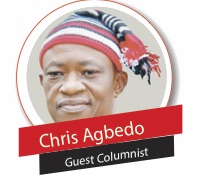
• Prof. Agbedo writes from University of Nigeria, Nsukka