Follow Us on Google
From Fred Ezeh, Abuja
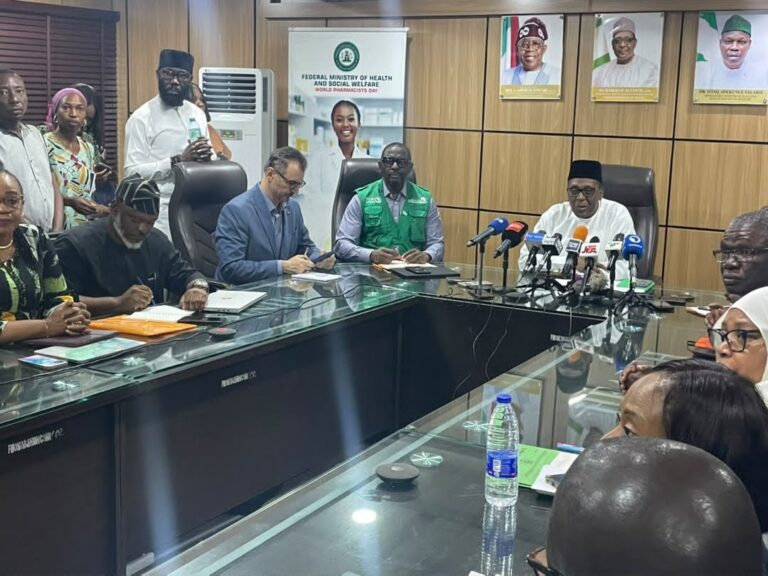
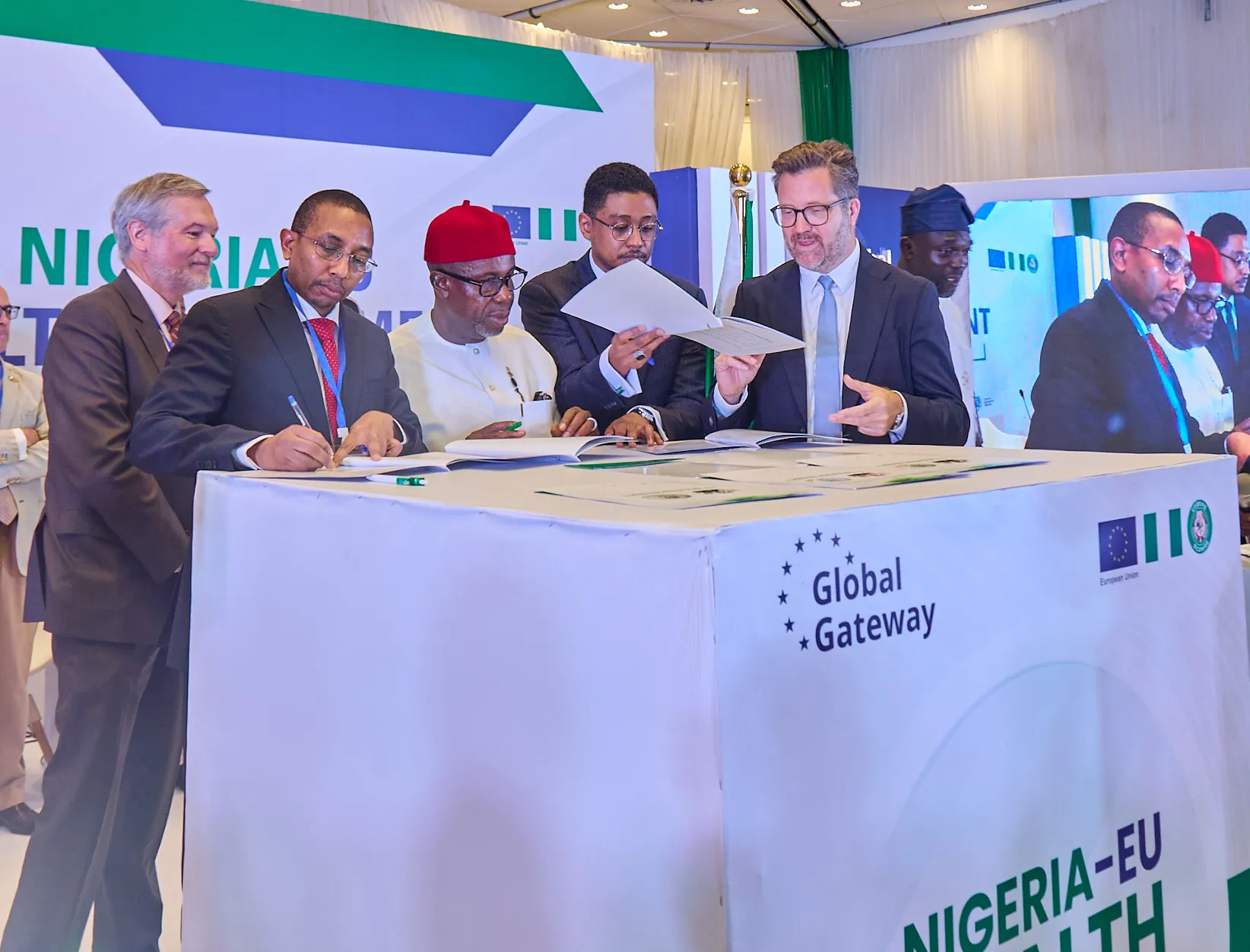
The Federal Government of Nigeria, the European Union (EU), and the United Nations Children’s Fund (UNICEF) have formalised a partnership to boost Nigeria’s capacity for local production of health, immunisation, and nutrition commodities.
The partnership known as Enabling Local Manufacturing of Health, Immunisation and Nutrition Commodities in Nigeria (ELM-N), which is under the Global Gateway’s Manufacturing and Access to Vaccines, Medicines and Health Technologies (MAV+) Initiative, aims to enhance Nigeria’s self-reliance in health manufacturing of health products, improve supply chain systems, and ensure access to safe and affordable health products for all.
Furthermore, the 24-month project, with a total investment of €6.3 million (EU contribution: €5.5 million; Spain: €800,000), will reduce Nigeria’s dependence on imports, strengthen regulatory compliance, and foster innovation within the pharmaceutical and nutrition industries.
Speaking at the signing ceremony in Abuja, an event under the Nigeria-EU Health Investment Forum, Minister of Budget and Economic Planning, Abubakar Bagudu, noted that the agreement underscores the deepening partnership between Nigeria and the EU in building a stronger, more competitive, and pharmaceutical sector.
“We are glad that we are signing this agreement, and we value the EU’s partnership with Nigeria through initiatives such as the EU Global Gateway Investment Package,” he said.
Reaffirming the government’s commitment to aligning investments with clear policy priorities, fiscal discipline, and measurable outcomes, Sen Bagudu said, “This partnership is expanding opportunities for technology transfer, facility financing, and local manufacturing production, proposing Nigeria’s mission to become a regional hub for health, innovation, research, and development.”
Representing Team Europe, the EU Ambassador to Nigeria and ECOWAS, Gautier Mignot, underscored the importance of strategic investment partnerships, which, according to him, is what the EU’s Global Gateway Investment Strategy is about.
He said: “More than anything, we want to support the paradigm shift taking place in Nigeria and West Africa, moving from aid to peer-to-peer collaboration, from standalone projects, however important, to a dynamic investment strategy.
Other News
“Under MAV+, we provide both financial and non-financial support to manufacturers, governments, academic institutions, and all actors contributing to the local manufacturing agenda. We work closely with the government to identify investment opportunities.”
In his remarks, Ambassador of Spain to Nigeria, Félix Costales Artieda, noted that the partnership will not only promote local manufacturing but will also ensure equitable access throughout the ECOWAS region.
“This event marks an important step in our joint endeavours to advance the full potential of Nigeria’s healthcare value chain and health security,” he said.
The United Nations Resident Coordinator, Mohamed Malick Fall, said the partnership is not just about investment access and healthcare for all people; it is also about unlocking economic development and strengthening the health system.
Fall, represented by UNICEF Representative to Nigeria, Wafaa Abdelate, said, “In Nigeria, we have over two million zero dose children and a large maternal mortality rate because Nigeria is a very big country, so the numbers are big.
“This also stresses that it is very urgent and important that this transformation, investment, and partnership results in people having access to affordable, timely, safe, health products or vaccines and also medicine or nutrition products.
“We are very much committed to supporting efforts under the leadership of the government. Our collaborative efforts can effectively and meaningfully support the vision of the government and aspirations of the people for a more resilient Nigerian.”