Follow Us on Google


For too long, the South East, as a political entity, has spoken in fragments. Its governors, five in all, have met in one room and discussed; its traditional rulers have met in another room; its business leaders and professionals talk in yet another room, while its youth and women’s groups have often been left out of these conversations. Each has left these different rooms with a voice that said something valuable about the people and state of the region. However, these staccato voices have rarely amounted to a single, coherent message to Abuja, the seat of the Nigerian government where decisions to include or exclude are taken. As a result, Abuja does not take the region seriously. It listens not to the governors, the traditional rulers or the business leaders and professionals. It simply ignores all. When its youth respond, Abuja sends boots, guns and tanks.
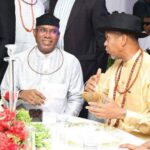
That is why the recent South East Stakeholders’ Convergence held in Owerri, Imo State, deserves serious attention. Convened under the chairmanship of Gen. Ike Nwachukwu, a retired Nigerian Army general and senator, who led the South East delegation to the National Conference in 2014, the gathering brought together elders, political figures, traditional rulers, religious leaders, women, youth, business people and academics from the five states of the region. It was a significant gathering whose essence lies less in any single speech than in the fact that it happened at all.
The most significant thing about the convergence was that, for the first time in a very long history of the region, grievance brought people together. The South East has long argued that it is arrogantly marginalised and underrepresented in the federal arrangements that shape Nigeria’s national life. Abuja refuses to listen. Its citizens have produced entrepreneurs, engineers, doctors, lawyers and public servants who have built businesses and institutions across Nigeria, yet its share of major federal appointments, strategic infrastructure and large public investments has never been reciprocally commensurate with its contribution.
Look at it this way! Whichever way one measures this reality, whether through ministerial portfolios, presidential attention, federal road networks, rail links or the gas masterplan that taps from huge gas deposits in Imo and Anambra states, the pattern remains the same. Anyone who has travelled from Enugu to Owerri, or Enugu to Abakaliki, or Onitsha to Port Harcourt, or Onitsha to Aba, or from Owerri to Umuahia, or Aba to Enugu, or Aba to Ikot-Ekpene, by road, comes in direct contact with the reality of how unfair Nigeria has been to the region. Many residents of the region describe their experiences on these roads as punishment. They may not be wrong, and a region that feels overlooked does not need a lecture on its grievances. Instead, it needs a platform where those grievances can be stated clearly and pursued with discipline. The Owerri meeting offered exactly that.
As I stated earlier, the gathering’s most important achievement was the act of convergence itself. It was significant because Nigeria’s brand of politics rewards fragmentation. Nigeria’s political philosophy says that a divided bloc is easier to bargain with, easier to ignore and easier to divide further through selective offers of appointments, contracts, and financial inducements. Sadly, many politicians from the region have offered themselves as embodiments of this philosophy. However, when leaders from different parties, professions and generations sit together and agree on a common agenda, they change the equation. This is because federal officials cannot easily dismiss a unified request backed by elders with moral authority, governors with administrative responsibility, business and professional leaders with strategic insights, and youth organisations with mobilising power. That is the message of the convergence. It simply says that the South East is not a collection of purchasable individuals but a single constituency with interests to defend.
Reports of the proceedings quoted Gen. Nwachukwu on the forces that have tested the region’s solidarity, namely insecurity, economic hardship, political fragmentation and mutual distrust. Those are not abstracts. They are realities. Insecurity disrupts farming, trade and school attendance. Economic hardship drives talented young people abroad or into precarious work outside their homelands and in places where they are systematically dehumanised, abused and freely murdered for who they are, without consequences. Political fragmentation allows outside actors to play one brother against another. Mutual distrust, which is perhaps the most corrosive of these, makes it difficult to build anything that survives the decades. By naming these problems openly, the South East Stakeholders’ Convergence shows that it is more credible than any voice that pretends the region is already sold in whole. Naming a weakness, as they say, is the first step toward correcting it.
Other News
Also heartwarming was the emphasis on infrastructure as a shared, achievable goal. Gen. Nwachukwu pointed to the collective effort that produced Imo Airport, now the Sam Mbakwe International Cargo Airport, as proof that the region can deliver large projects when its people act together. This is a powerful argument because it draws on memory rather than rhetoric. The South East does not need to invent a tradition of collaboration because one already runs in its DNA. It only needs to reawaken it. Community collaborations built schools, hospitals, roads, electricity projects and offered university and overseas scholarships, among many others. This suggests that while major projects in rail, energy, agriculture and digital infrastructure are beyond the reach of any single state in the region, they are, however, within the reach of a region that coordinates its planning, pools its advocacy and holds its federal partners accountable for commitments, including election campaign promises.
The participation of women and youth groups in the convergence is perhaps the most forward-looking feature of the dialogue. Political movements that rely only on elders eventually run out of future. Young people who feel excluded from decisions about their region will either leave it or disengage from it. Bringing youth and women into the room is an indication by the organisers that the region’s agenda must answer to the generation that will live with its outcomes. For them, a unified voice is not merely a loud one but one that represents the full population it speaks for.
No doubt, sceptics will ask whether such gatherings are anything more than talk shops. They may be right because the South East has hosted many meetings, summits and forums over the years, and some of them produced little beyond communiqués and photographs. However, that scepticism is also healthy, and should nurture the convergence and its outcome. Its true test will not be the eloquence of the speeches but the follow-through.
The meeting produced a nine-point communique read by Ikedi Ohakim, a former governor of Imo State, but the value of that document will depend on whether its commitments are assigned to named people, given timelines, and tracked publicly by the people. A convergence that keeps a standing secretariat, publishes progress reports, and holds its members to their word would mark a genuine break from the past. Without these steps, even the best-intentioned gathering risks becoming another item in a long list of unfulfilled resolutions.
Besides, there is also a broader national argument to be made here. Nigeria’s federation will work best when every region is a confident and credible partner in national decision-making. A Southeast that speaks with one voice on security, infrastructure and economic policy is not a threat to Nigeria’s unity. Instead, it is a contributor to a more balanced federal conversation and a representative government of the federation. The region’s leaders have every right to advocate for their people within the framework of the Constitution, through dialogue, through the National Assembly, and through the ordinary channels of democratic politics. Unity within a region must not be seen as separatism but as the civic maturity of a people which makes national bargaining honest and productive. What should rather bother Nigerians is the deliberate and conscious actions of its leaders at systematically editing southeast out of the federation. This comes across as a national project that has been openly promoted over the past decade.
The Owerri convergence, then, is best understood as a strategic beginning. It acknowledged the region’s problems, brought together a broad coalition, pointed to a tradition of collective achievement, and set the stage for negotiations with the federal government. Whether it fulfils that promise would depend on the discipline of the people who carry its agenda forward. As it is said, a people who wish to shape their future cannot leave that task to others. They must organise, agree on priorities, and speak clearly. In Owerri, the Southeast took a step forward by doing exactly that, and Nigeria would do well to take it seriously.