Follow Us on Google
By Chukwuma Umeorah
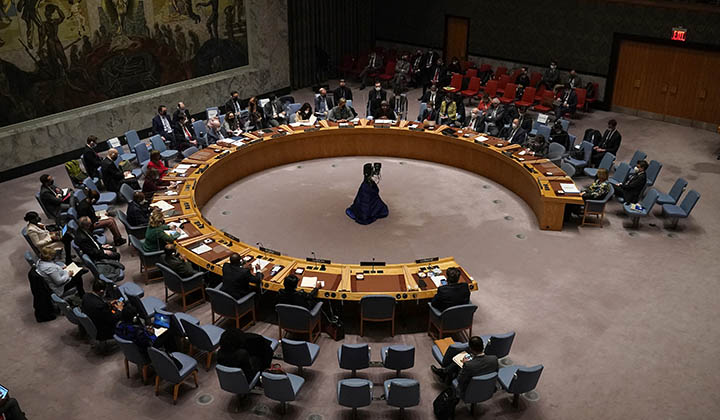
Nigeria, China and other stakeholders have renewed calls for the democratisation of the United Nations Security Council, warning that the global body risks irrelevance if urgent reforms were not implemented.
The call was made at the Lagos Sub-Forum commemorating the 80th anniversary of the UN, jointly organised by the Nigerian Institute of International Affairs (NIIA) and the Chinese Consulate in Lagos yesterday.
Speakers argued that the Security Council’s 1945 structure, dominated by the five permanent members (P5), no longer reflects today’s global realities and has left the UN paralysed in the face of major conflicts.
Director General of the NIIA, Prof. Eghosa Osaghae, said Africa’s representation on the Council was long overdue.
“At independence, only four African states were UN members. Today, Africa has 54. Yet, five countries still monopolise power. We have insisted under the Ezulwini Consensus that Africa must have no fewer than two permanent seats, with full veto rights.”
Osaghae stressed that the current system had created gridlock, undermining the UN’s ability to act effectively. “The Security Council is tied down by the veto powers of the P5. The result is paralysis. The UN must democratise if it is to remain the voice of the voiceless and safeguard weaker states,” he said.
Other News
The Chinese Consul General in Lagos, Yan Yuqing, echoed the call, noting that China supports reforms that strengthen inclusivity and multilateral cooperation. “The history of the Second World War shows us the cost of unilateralism and authoritarianism. Today, the UN must reflect the diversity of nations, especially the developing world. China and Africa share a responsibility to promote peace, justice and common development,” she said.
Director of Studies, NIIA, Prof. Efem Ubi, explaining the importance of the forum from World War II lessons, said: “War does not add value to humanity. It destroys development and undermines economies. The causes of the war, authoritarianism, nationalism and inequality, remain with us today. That’s why multilateralism and cooperation are key,” he said.
Ubi underscored the role of young people in sustaining peace and reshaping global governance.
“If the new generation understands the causes of the war, they can work to prevent its recurrence. Poverty, underdevelopment and climate change must be addressed if we are to avoid repeating history,” he argued.
He also called for democratising the UN, saying, “Five countries cannot sit down and determine how things should be run globally. It is only through collective effort that we can resolve the world’s problems.”
Professor of International Relations, Femi Otunbanjo, argued that despite its shortcomings, the UN remains indispensable and has no substitute, highlighting the organisation’s achievements in humanitarian work, international law and climate change advocacy.
However, he noted that the body has struggled with conflict resolution. “As we speak, there’s a devastating war in the Middle East, a devastating war between Russia and Ukraine, and wars in Sudan and Yemen. The United Nations appears helpless. Unless you reform the Security Council, you’re not going to get anywhere,” he said, calling for a democratisation of the UN system and reforms to the veto power wielded by the permanent five (P5) members.