Follow Us on Google

The Customs administrations of Nigeria (NCS) and the Republic of Benin have moved to dismantle persistent bottlenecks at the Sèmè-Kraké border, with both countries conducting a joint assessment of the One-Stop Border Post and pushing for greater harmonisation of Customs procedures.
The initiative is aimed at reducing cross-border trade barriers, strengthening regional economic integration and ensuring faster, safer and more seamless movement of legitimate goods and services along the strategic Nigeria-Benin trade corridor.
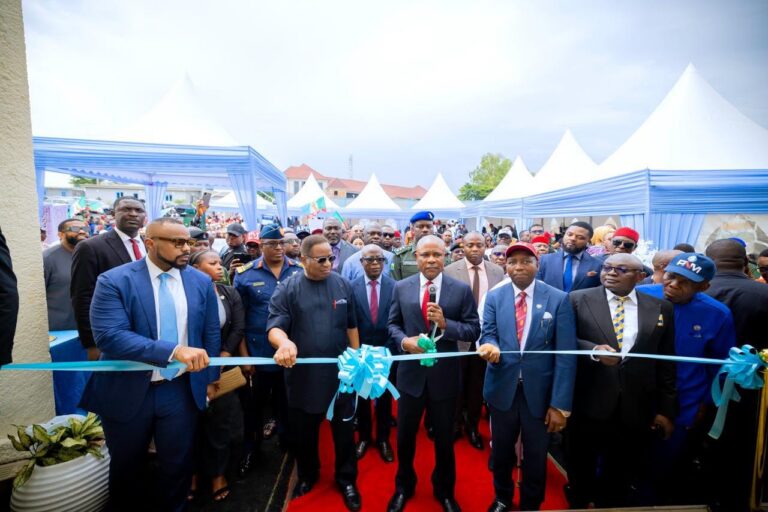
Speaking during the joint assessment ceremony at Sèmè-Kraké, Comptroller-General of the Nigeria Customs Service, Bashir Adewale Adeniyi, said the exercise was designed to assess the operational readiness of the border, review existing processes and facilities, and demonstrate the border-modernisation solutions being deployed to support secure interoperability between the two Customs administrations.
Adeniyi said the Sèmè-Kraké crossing occupies a strategic position on the Abidjan-Lagos Corridor, describing it as one of the busiest land borders in West Africa and a critical gateway for regional trade.
According to him, the corridor carries about 70 per cent of the sub-region’s transit trade, making efficiency at the border crucial to the economies of both countries and the wider West African region.
He said the border operates round the clock throughout the year, stressing that any delay at such a critical trade gateway has consequences far beyond the immediate border community.
“A corridor of that weight does not fail quietly. Every hour lost at this gate is multiplied across thousands of consignments and tens of thousands of travellers, and is paid for in the price of goods in markets from Cotonou to Lagos,” Adeniyi said.
Conversely, he said, every hour saved at the border translates into savings for traders, transporters, consumers and businesses across the region.
“An hour saved here is saved for the whole region. There are few places on this continent where the ratio between effort and effect is as favourable as it is at this crossing,” he added.
Despite the physical integration provided by the One-Stop Border Post, Adeniyi acknowledged that significant technological and operational gaps remained between the two Customs administrations.
He said both administrations currently operate under one roof but do not yet operate on a fully integrated digital platform.
“There is still no seamless real-time exchange of declarations, manifests, transit information, risk profiles or enforcement alerts between us,” he said.
The Customs boss said Nigeria had therefore come to the Sèmè-Kraké border with a specific objective — to close the systems gap and establish a more effective data-sharing arrangement between both administrations.
According to him, work is already underway to interconnect the two Customs administrations through a common data exchange arrangement, building on their experience with regional transit operations.
He said the proposed system would ensure that declarations made on one side of the border could be seen by the other administration in real time, while transit consignments could be tracked from their point of origin to their final destination.
Other News
He added that risk profiles and enforcement alerts generated by one Customs administration would also be transmitted to the other while the information remained operationally useful.
Adeniyi said the digital integration would reduce duplication, improve risk management, strengthen enforcement and make legitimate trade faster and more predictable.
He also highlighted the critical role of women and informal traders in cross-border commerce, saying they must remain central to efforts to modernise the border.
According to him, women account for more than 70 per cent of informal cross-border traders across Africa, making their experience of border procedures an important measure of whether trade facilitation reforms are working.
He said the situation was particularly significant along the Nigeria-Benin corridor, noting that about 22 per cent of Benin’s informal exports are destined for Nigeria.
Adeniyi added that informal trade accounts for a significant share of economic activity in both countries, with its contribution particularly pronounced in Benin.
He said efforts to streamline Customs procedures should therefore not only focus on large commercial operators but also address the challenges faced by small-scale traders whose livelihoods depend on efficient border crossings.
The Customs chief commended the Benin Customs administration for its cooperation and confidence in Nigeria’s leadership in advancing the One-Stop Border Post initiative.
He said stronger cooperation between both administrations was essential to transforming the Sèmè-Kraké crossing into a model of secure and efficient regional trade.
The initiative, he noted, would also support the broader objective of strengthening economic integration within West Africa by reducing unnecessary delays, improving information exchange and making legitimate commerce more competitive.
The Director-General of Benin Customs, Raouf Malehossou, also commended Nigeria for the initiative, describing greater integration of trade procedures between the two countries as critical to regional economic growth.
Malehossou said closer Customs cooperation would help facilitate legitimate trade while strengthening controls against illicit activities along the border.
The joint assessment therefore marks another step towards improving the operational effectiveness of the Sèmè-Kraké One-Stop Border Post, with both countries seeking to move from physical co-location towards deeper digital and operational integration.
For traders and transport operators, the expected outcome is a border where documentation is exchanged faster, transit cargo is tracked more effectively, enforcement agencies share intelligence in real time and legitimate consignments move with fewer delays.
For Nigeria and Benin, the broader objective is to ensure that one of West Africa’s busiest trade corridors becomes a facilitator of commerce rather than a source of friction for businesses and travellers.