Follow Us on Google
The Federal Government and the Niger Delta Development Commission (NDDC) will on Wednesday, July 15, host a high-level agricultural summit in Abuja and launch a $500 million Niger Delta Agricultural Development and Investment Fund, in a move aimed at attracting large-scale investment into the region’s farming sector. Vice President Kashim Shettima is to chair the fund’s Board of Trustees.
The summit, to be held at the Presidential Villa, is the maiden Niger Delta Agricultural Development and Investment Summit, jointly organised by the Office of the Vice President and the NDDC. It is expected to bring together about 500 delegates, including investors, development finance institutions, regional stakeholders and partner institutions, with about 40 resource persons also billed to participate.
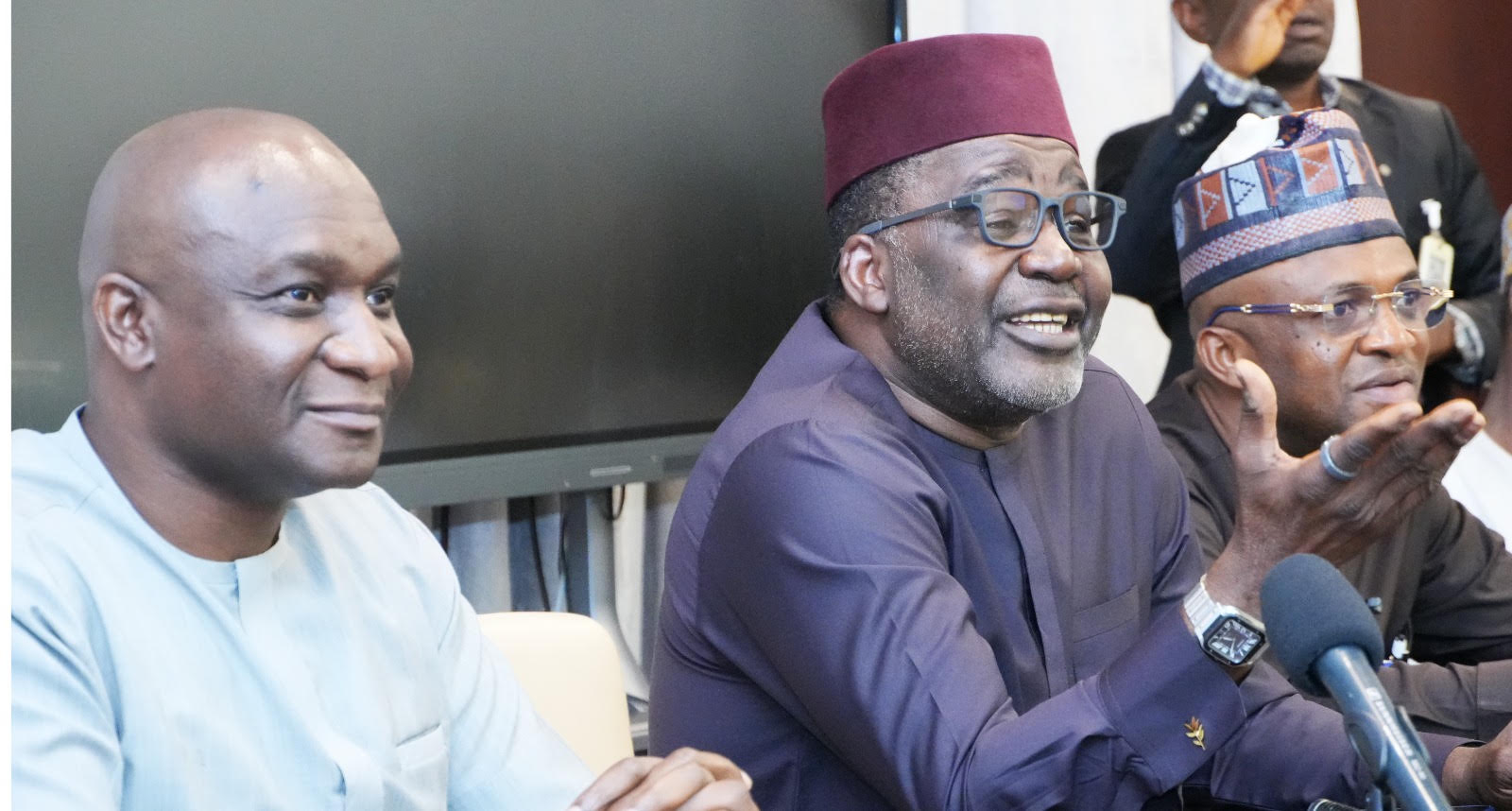
Addressing State House correspondents on Thursday, the Deputy Chief of Staff to the President, Ibrahim Hadejia, said the initiative had received President Bola Tinubu’s endorsement and reflected his administration’s commitment to agriculture “across all parts of the country.”
He said the Niger Delta, while known largely for hydrocarbons, “is also an agricultural treasure trove with significant comparative advantage in various cash and food crops, which have been relegated to the background despite the obvious capacity to contribute to national food security and agricultural export potential.”
According to him, the summit is designed to move the region from ideas to action.
“The Niger Delta Agricultural Development and Investment Summit 2026 represents a strategic shift from potential to performance, from conversation to capital, and from fragmentation to coordination,” he said.
“It aligns squarely with the national vision of building a resilient, diversified and inclusive Nigerian economy, with agriculture as a central driver. We are confident that this initiative will unlock new pathways for investment, create jobs, enhance food security, and position the Niger Delta as a key pillar in Nigeria’s agricultural future.”
Hadejia added that the project had drawn interest beyond Nigeria, describing it as “a global programme” with participation expected from international investment houses, Afreximbank, embassies and the government of Brazil.
He also dismissed concerns that the new arrangement would duplicate the work of the Presidential Food Systems Coordinating Council.
“There is no duplication whatsoever. The Presidential Food Systems Coordination Council was set up by the President to achieve convergence among the various agricultural initiatives when we started having a food security crisis,” he said.
“The Vice President is the chairman; there are six governors involved, one from each region; the private sector, most of the largest agricultural businesses in Nigeria, are members. It simply coordinates food systems, it reports to the President, and that is where it stops.”
He stressed that the new fund serves a different purpose.
“What you are talking about here is not that council. They are raising a $500m investment fund for agriculture, and the whole essence is for that fund to impact positively on agriculture in the Niger Delta region and move it from subsistence agriculture to large-scale agriculture,” Hadejia said.
“The Vice President is chairing the board of trustees that will oversee that fund. So there is absolutely no duplication, no mandate overlap.”
He urged young Nigerians to see farming as a serious economic opportunity, citing agricultural outputs in India and Brazil.
“If it is done right, then just as agriculture was once relegated, maybe oil will now be relegated as agricultural output rises. That is the stuff of visionary leaders,” he said.
For his part, NDDC Managing Director, Samuel Ogbuku, said the summit grew out of a retreat the commission held in Port Harcourt in October 2025, which brought together agriculture and food security commissioners from all nine mandate states to map out a path away from crude oil dependence.
Other News
He said the summit would also inaugurate the Niger Delta Agricultural Development and Investment Council, with the Vice President as Chairman of the Board of Trustees, the NDDC Managing Director as Secretary, and the commission serving as Secretariat.
“A key highlight of the summit is the launch of a $500m Niger Delta Agricultural Development and Investment Fund, a commercially managed investment vehicle designed to finance opportunities across priority value chains, including palm oil, cassava, cocoa, rice, horticulture, marine resources and livestock,” Ogbuku said.
“The summit is convened pursuant to the directive of His Excellency, President Bola Tinubu, who has called for bold and innovative actions to unlock the economic potential of the Niger Delta through increased non-oil investment, recognising agriculture as a key driver of inclusive growth, food security and economic diversification.”
Ogbuku said the region must return to productive farming, noting that agriculture was Nigeria’s traditional economic backbone before oil became dominant.
“Crude oil exploration only eroded our traditional economy, and it became a vicious circle. It brought urban migration, which brought unemployment because the urban cities could not employ everybody,” he said.
He said the NDDC now wants to encourage people to “go back to their communities” and promote large-scale agricultural investments across the region.
On why the summit is taking place in Abuja, Ogbuku said the event is an investment drive, not a routine conference.
“If you are looking for capital, you must go close to where the capital is. All the donor agencies, all those we are expecting to participate, they are here, so you must come to their domain,” he said.
“You go to Ondo State, you have the likes of Olam and other big agricultural investment companies. We don’t have any in the Niger Delta, so why can’t we attract them there? You must give them reasons why they have to come to your region,” he added.
Ogbuku acknowledged some past NDDC agricultural projects had underperformed, citing a rice mill in Elele, Rivers State, which he said lacked sufficient feedstock.
“If you build a rice mill and you don’t have feedstock, then the rice mill is standing on its own; it does not serve its purpose,” he said.
He said the commission had since reviewed its agricultural assets state by state to identify gaps that the summit is expected to address.
He also disclosed that the NDDC recently provided N5 billion to the Niger Delta Chamber of Commerce to support small agribusinesses, explaining that the move was intended to reduce political interference and discourage the notion of support as “free government money.”
Ogbuku added that the commission co-funds the IFAD-backed LIFE-ND programme for small and medium-scale farmers and has also partnered with a private firm on a cassava starch mill in Bayelsa State.
Making a case for the Niger Delta as an investment destination, he said security had improved significantly in the region. The Niger Delta, he said, is now “one of the most secured parts of Nigeria.”
“In some other parts of Nigeria, where agriculture is even their main source of income, we hear that many people are afraid of going to the farm because of herdsmen. But today, in the Niger Delta, nobody is afraid. Capital is selfish. Capital only goes to where it makes money, and we want to showcase that the Niger Delta is safe and secured for investment,” he said.