Follow Us on Google
By Chinwendu Obienyi and Chukwuma Umeorah
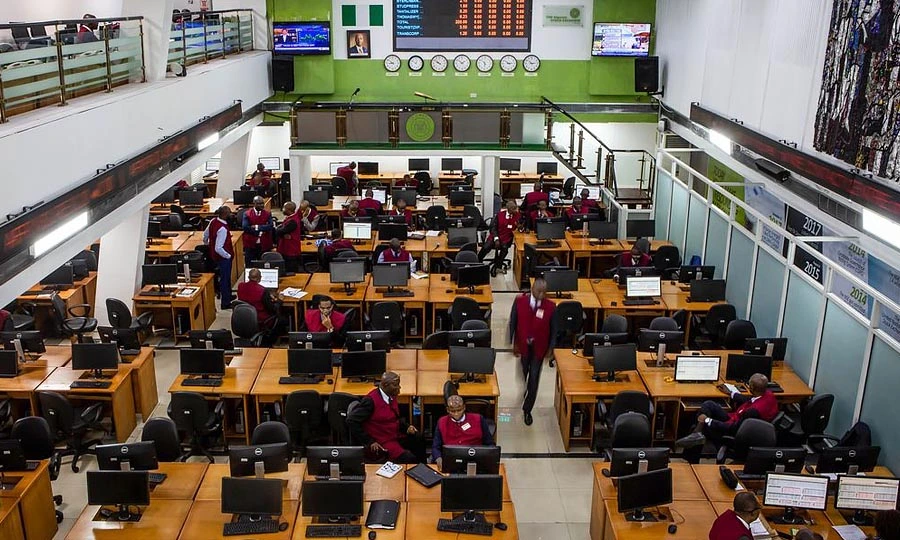
Amid persistent inflation and mild foreign inflows, domestic investors injected more than N4 trillion into the nation’s stock market in the first 11 months of 2025, underscoring a profound shift in how capital is being allocated in Africa’s largest economy.
This is according to the domestic and foreign portfolio investment report. The report is prepared on a monthly basis by NGX Regulation Limited, with trading figures from market operators on their Domestic and Foreign Portfolio Investment (FPI) flows. These transactions are carried out by domestic and foreign investors. The domestic investors are further categorized into retail and institutional investors.
Data obtained from the report indicated that retail investors poured about N1.63 trillion into equities between January and November, while institutional investors, including pension fund administrators and asset managers, added N2.46 trillion over the same period.
This meant that about N4.09 trillion inflow got into market, the figure being one of the strongest domestic participation figures in recent history.
The surge reflects a growing effort by Nigerians to protect wealth from double-digit inflation that has eroded returns on savings accounts and government securities. With treasury bill yields struggling to keep pace with rising consumer prices, investors increasingly turned to equities, especially companies able to pass higher costs to consumers or benefit from currency adjustments.
Although, institutional investors led the charge, accounting for more than 60 per cent of total domestic inflows, market operators say this “smart money” typically moves early in anticipation of earnings growth or valuation re-ratings.
The Vice Chairman, Board, Highcap Securities, David Adonri, said that pension funds and asset managers were clearly repositioning for the medium term. “Many large-cap stocks were still trading below historical valuation multiples in real terms, so institutional investors sort increased their exposure, hence, the reason they contributed about 60 per cent”, Adonri explained.
He added that he was impressed with the fact that retail participation also accelerated, with N1.63 trillion flowing into the market from individual investors. “That rise is particularly notable in a year marked by economic pressure on households from subsidy removals, elevated food prices and a weaker naira all of which had an effect”, Adonri said.
The growing role of domestic investors is helping to cushion the Nigerian market from the impact of weak foreign portfolio flows. Overseas investors had originally been on the sidelines due to concerns over currency liquidity and capital repatriation risks. However, a raft of FX reforms taken by the Central Bank of Nigeria (CBN) restored confidence with foreign transactions rising to N2.189 trillion in 11 months as against N852 billion recorded in the same period of 2024.
In previous years, heavy dependence on foreign inflows often made the domestic bourse vulnerable to sudden sell-offs.
Seasoned chartered stockbroker, Charles Fakrogha, said, “Domestic capital is gradually beginning to finance Nigeria. This reduces volatility and builds resilience into the system, because local money tends to be stickier than offshore hot flows.
If the reforms continue to work, then Nigeria’s stock market may no longer be driven by foreign money, but by Nigerians themselves and this could be a structural shift that could reshape the country’s financial landscape for years to come”
Stronger equity participation is also beginning to filter into the broader economy. With deeper liquidity on the NGX, listed companies especially banks have found it easier to access capital for expansion, acquisitions and working capital, helping to support employment and corporate tax receipts.
However, analysts caution that the rally will only be sustainable if corporate earnings continue to grow. A scenario where retail investors keep buying while institutions start exiting would raise the risk of a sharp correction.
For now, the figure point to a market being rebuilt from within. As inflation pushes Nigerians to search for real returns and institutions quietly accumulate shares, the local bourse is emerging as one of the few places where domestic capital can still find growth in an otherwise challenging economic environment.