Follow Us on Google
From Fred Ezeh, Abuja
Pad Up Africa, a Non-Governmental Organization (NGO) that’s involve in sensitization and support of women and girls with basic reproductive health education and sanitary pads, has decried the discrimination that these people pass through during the routine monthly menstruation.
Also, Braide Boma Lilian Foundation registered its discontent with the unhealthy situation that adolescent girls are subjected to in schools and other work environments especially during their monthly mensural period.
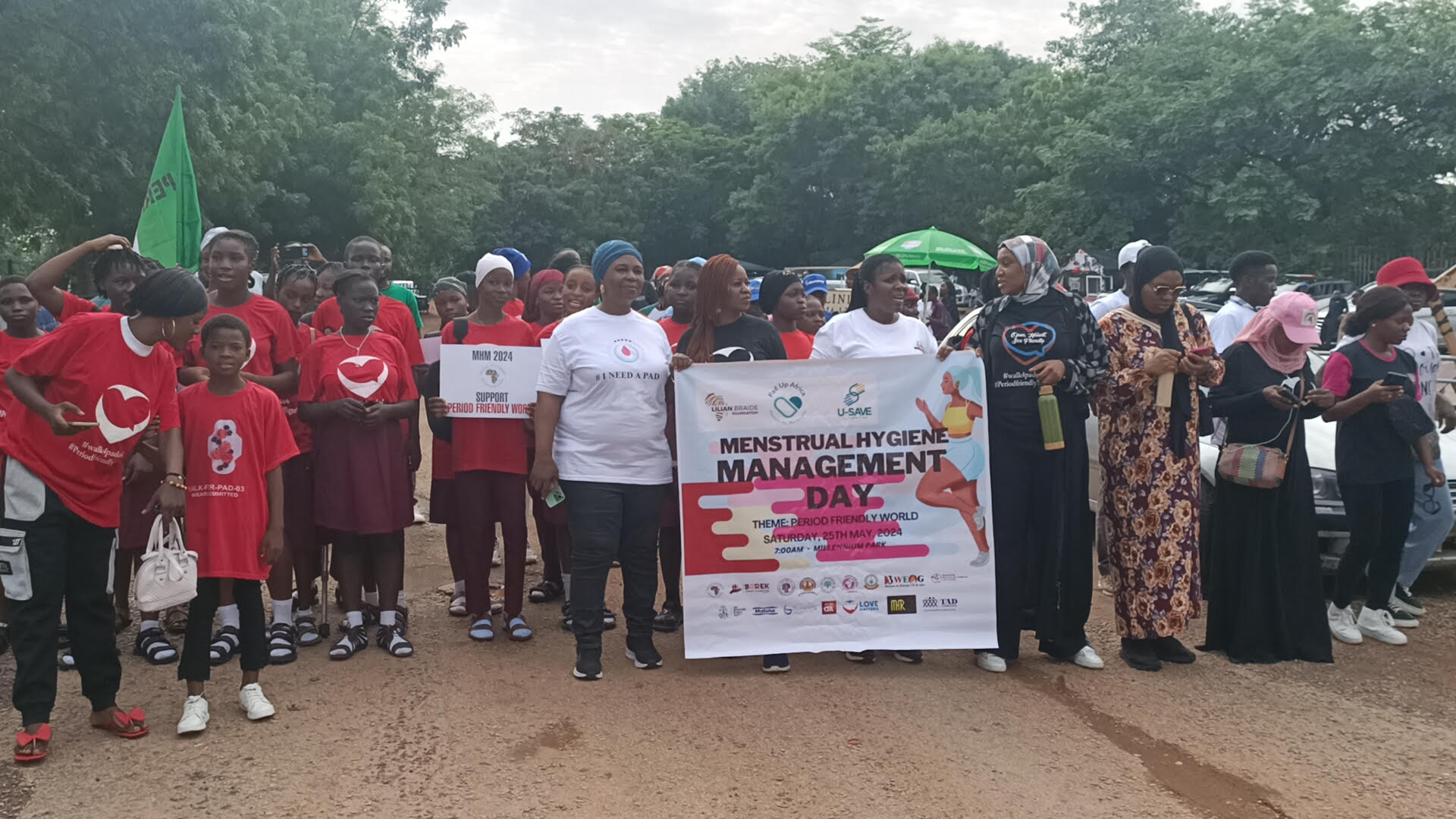
The advocates registered the concerns at a sensitization event organized in Abuja, on Saturday, to raise national and global awareness on the horrible experience of women and adolescent girls during menstrual cycle and the discriminations they are subjected to at different circles.
Andrea Kwen of Pad Up Africa in her submissions said that many people don’t understand the fact behind the monthly mensuration circle of women. “Without mensuration, reproduction might not take place. Sadly, women are not appreciated for this, rather, they are subjected to different kinds of discriminations by, perhaps, people who are limited in knowledge of what these women pass through during the period.
“In some culture and religion, women who are in their mensural period are not allowed to mingle with the public. Even within the houses, some are not allowed to enter the kitchen not to talk of preparing food because they are completely seen as unholy beings that period. That’s an aberration and should be stopped through strong advocacy as being done.”
Tsema Ede, also of the Pad Up Africa, told journalists that the essence of walk was to sensitize the public about the Menstrual Hygiene Management Day with the theme “Period Friendly World”.
She said that Pad Up Africa has been involved the sensitization and donation of sanitary pads to adolescent girls and women over the years, and the organization is happy with the level knowledge that has been impacted on the children over the years.
She explained: “In the cause of the humanitarian work, we have realized the many women and adolescent girls are engaged in unhygienic sanitary actions not because they like it, but because they can’t afford the cost of sanitary pad.
“An average pad cost about N700 to N1,500 depending on the brand, and it’s about seven pieces inside a pack. You are expected to change the pad every five hours for the number of days the circle lasts. You can calculate the cost.
“However, aside what we do in Abuja and environs, similar sensitizations take place across the country at different levels. We have donated sanitary pads to these adolescent girls as much as available. However, we need more support from the government and organizations so we can do more, thus protecting our young girls from consequences of ignorance as regard reproductive health.”
Braide Boma Lilian, the Executive Director, Lilian Braide Foundation, in her submissions, suggested some extra efforts to support young adolescent girls particularly in schools through the provision of Water Sanitation and Hygiene (WASH) facilities.
She also confirmed that the Foundation has been involved in sensitization activities, as well as the provision of sanitary pads to adolescent girls in the schools and other places, in addition to periodic education and enlightenments as regards their reproductive health care.
Olivia Umeukeje from TAD Foundation, asked parents to create a friendly environment with their children particularly the female ones so they can freely have conversations on areas of reproductive health.
An official of Federal Ministry of Women Affairs who identified herself as Mrs. Shaibu, appreciated the NGOs and Foundations for their interest in improving the reproductive health of women and adolescent girls.
She notified them of the active technical working group that are involved in promoting sanitary hygiene, encouraging some of the NGO involved in such outreaches to get involved.
She assured them of the commitment of the Ministry and the Minister to the cause of women development and welfare in Nigeria.
Collectively, they demanded a change in the status quo, and possibly some legislations that would empower women and girls to seek for some privileges or protection during their monthly mensuration circle.