Follow Us on Google

From Isaac Anumihe, Abuja
As part measures to curb losses across the nation’s transmission network, the Nigerian Electricity Regulatory Commission (NERC) has directed the Nigerian Independent System Operator (NISO) to install smart meters at all boundary regional interconnection points by December 2026.
The directive, which is contained in Order No. NERC/2026/026, also mandated NISO to measure and document all energy flows through power transformers at transmission substations.
NERC said that it’s acting on the order provided by the Electricity Act 2023, which empowers it to regulate and enforce standards across the electricity market. According to the regulator, the order, which takes effect from April 13, 2026, establishes a structured framework for tracking regional Transmission Loss Factors (TLF) and strengthening accountability in grid operations.
However, under the new regime, NISO is expected to file quarterly reports on transmission losses to NERC on a regional basis, providing regulators with granular data to monitor performance and enforce compliance.
In same vein, the commission directed Transmission Company of Nigeria (TCN) to submit a comprehensive action plan detailing measures to reduce transmission losses within the 7 per cent benchmark approved under the Multi-Year Tariff Order (MYTO) by July 2026.
Other News
According to the order, TCN is also required to ensure that TLF across all transmission regions does not exceed 6.5 per cent by December 2026.
Industry data from NISO shows that while the national average TLF declined from 8.71 per cent in 2024 to 7.24 per cent in 2025, it remains above the regulatory threshold of 7 per cent.
Similarly, the commission ordered the distribution companies (DisCos) to instal IoT (Internet of Things) metres on their 33kV and 11kV feeders to strengthen their data acquisition, validation and utilisation on real-time basis.
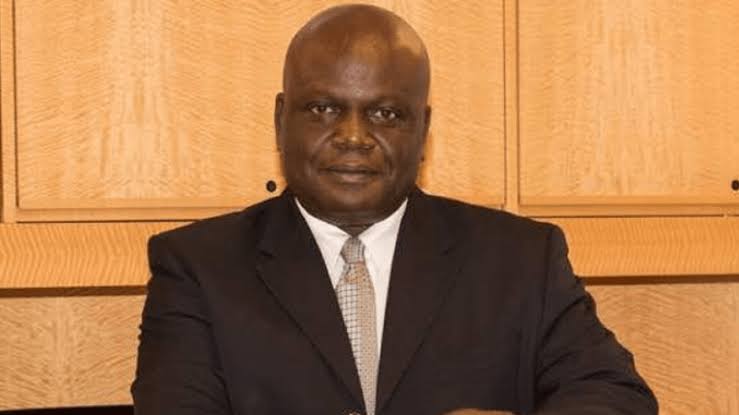
Managing Director of NISO, Engineer Abdu Mohammed Bello, who disclosed this during the one-year anniversary of Nigerian Independent System Operator (NISO), in Abuja, said that the system operator would use the IoT scheme, and part of the completed Supervisory Control and Data Acquisition (SCADA) EMS to track the system on real time basis.
According to him, part of the mandates of the system operator is to ensure a stable and resilient grid, urging the generation and distribution companies to fasttrack the implementation of the free governor model operations of the generating units to improve frequency response.