Follow Us on Google

Once again, we are confronted with news that should never have to be repeated. On September 25, 2025, a two-storey building collapsed in Mangoro, Alimosho, Lagos. Six people were rescued from the rubble. Only weeks earlier, a three-storey structure fell on Bornu Street, Ebute Meta, with even more devastating consequences.
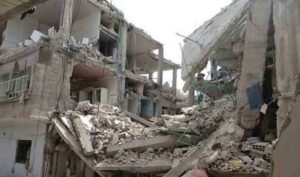
First, I extend my deepest condolences to the families who have lost loved ones and to the survivors whose lives will never be the same. The pain of losing a child, a parent, a sibling, or a friend to something as preventable as a building collapse is unimaginable. These families deserve not only our prayers but our collective resolve to ensure such tragedies are never repeated.
As Nigerians, we must pause and reflect. Something is fundamentally wrong in our real estate sector, and it demands urgent review, reform, and restoration.
The construction and housing sector is not a casual arena; it is one of the most heavily regulated spaces in any society because of what is at stake: human lives. There are building codes, material standards, and regulatory agencies at the federal, state, and local levels. And yet, despite the frameworks on paper, buildings continue to collapse, families are shattered, and public trust erodes further each time.
This is not merely a construction problem—it is a governance crisis. The real estate sector represents the intersection of government oversight, professional accountability, and public safety. When failures persist at this scale, they reveal systemic weaknesses: approvals granted without due diligence, weak oversight, lack of transparency, and insufficient coordination across tiers of government.
Every time a building collapses, it is not only bricks and mortar that fall—it is faith in leadership, trust in public institutions, and confidence in our collective future.
The responsibility is shared:
• At the federal level, standards must be enforced with consistency.
•At the state level, building approval and oversight agencies must rise above compromise.
• At the local government level, inspections and enforcement must be rigorous, transparent, and uncompromising.
When one part of this chain breaks, the results are deadly.
This is where leadership must step forward with more than condolences. We need deliberate, measurable, and accountable governance practices. In my work with leaders across the public sector, I have developed the Productivity Governance Model (PGM)—a framework to help departments deliver results with discipline, accountability, and vision.
Applied to the real estate sector, PGM emphasises three immediate priorities:
1. Risk Assessment: Every building project must undergo rigorous stress testing—from material integrity to environmental suitability—before, during, and after construction. Safety cannot be an afterthought; it must be built into every stage.
Other News
2. Project Management Discipline: Construction projects should follow strict timelines, milestones, and independent audits. Accountability at every stage prevents shortcuts and exposes negligence early.
3. Gap Identification and Remediation: Where failures are identified—be it weak inspections, corrupt approvals, or poor enforcement—gaps must be publicly acknowledged and immediately filled. Citizens deserve to know where the system is breaking down and what corrective actions are being taken.
The PGM is not just theory; it is a practical governance framework that insists leaders run departments with clarity of purpose, precision in execution, and courage in accountability. If adopted by the housing and construction sector, we can move from reactionary crisis management to proactive safety assurance.
Nigeria cannot continue to normalise preventable tragedies. The following actions are urgent:
1. Conduct Immediate Structural Audits: Launch emergency safety audits of high-risk buildings across our cities. Results should be made public, with clear red-flag classifications.
2. Enforce a Moratorium on Unsafe Approvals: No new permits should be issued in sensitive areas until a transparent, robust approval process is in place.
3. Strengthen Inspection Agencies: Equip regulatory agencies with the funding, tools, and independence they need to enforce standards. Inspectors should be rotated regularly to prevent collusion.
4. Introduce Transparency in Approvals: Move permit processes online with public dashboards, making approvals traceable and less prone to manipulation.
5. Hold Professionals and Officials Accountable: Engineers, contractors, or officials found negligent must face sanctions—fines, license revocations, or prosecution where lives are lost.
6. Embed the Productivity Governance Model in Housing Regulation: Risk assessment, performance measurement, and precision record-keeping should be institutionalised across agencies.
7. Citizen Engagement and Oversight: Empower citizens to report unsafe buildings, protect whistleblowers, and create channels for civil society to participate in monitoring.
The recurring collapses in Lagos and elsewhere are not simply the result of poor construction—they are the product of governance that fails to protect its people. Leadership is about safeguarding lives, building systems that inspire trust, and ensuring that public institutions work for the people they serve. The time has come for Nigeria’s public sector leaders—federal, state, and local—to rise to the occasion. This is not the moment for finger-pointing or passing blame; it is the moment for coordinated action, transparency, and courage.
If Nigeria is to earn back the trust of its people, then the government must move from rhetoric to results. Each tragedy must not simply trigger rescue operations but structural reforms. Each collapse must not only lead to mourning but to measures that ensure it never happens again. This is the essence of purposeful governance—leadership that is intentional, disciplined, and committed to delivering results.
To the families grieving loved ones, we mourn with you. To the survivors, we pledge to fight for a safer tomorrow. And to the leaders in charge, the call is clear: this must stop. The lives of our citizens are too valuable to be gambled away on weak governance and unchecked negligence.
• Owodunni is the City Councillor in Kitchener, Canada.