Follow Us on Google
From Juliana Taiwo-Obalonye, Abuja
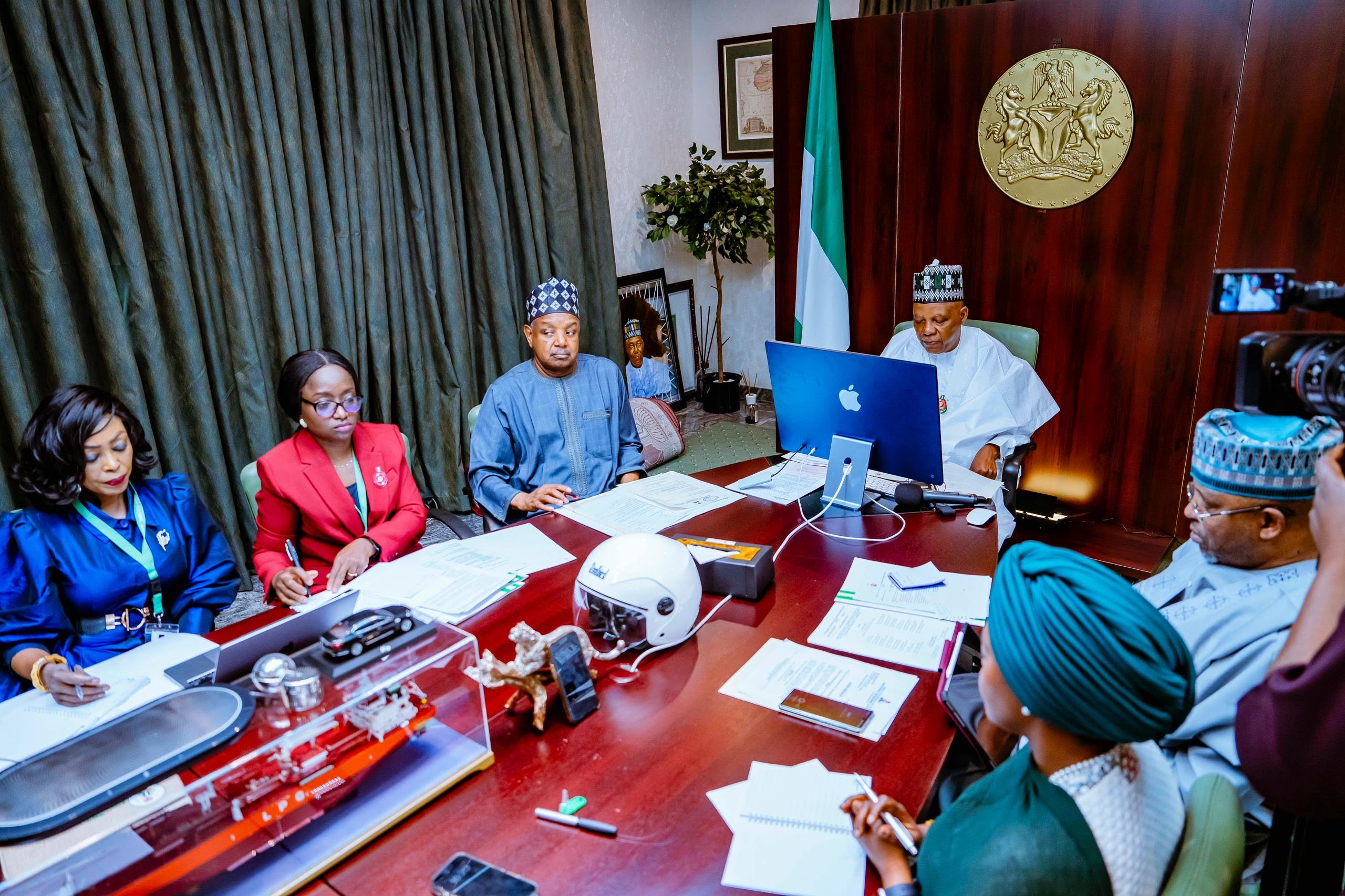
National Economic Council (NEC) has kicked off the new year with bold moves to grow money from farms, factories, and services, cutting back on shaky oil dependence. At their first 2026 meeting – the 156th overall, held virtually on Thursday – Vice President Kashim Shettima, who chairs NEC, pushed for deeper talks with states and businesses to follow President Bola Tinubu’s economic roadmap.
In a statement issued by his media aide, Stanley Nkwocha, President Shettima stressed speeding up the switch to non-oil growth.
“The non-oil economy has emerged as the backbone of Nigeria’s growth story, accounting for about 96 per cent of the country’s GDP and is expanding at about 4 per cent,” he said. “Services, agriculture, and other non-oil sectors are increasingly carrying the weight of the economy. More importantly, non-oil revenues now contribute nearly three-quarters of total government collections. This marks a significant, if gradual, departure from our historic dependence on volatile oil receipts. The task before us is to deepen this transition through competitive manufacturing, export diversification, and private sector investment,” Shettima declared in his opening remarks.
Shettima hailed the Tinubu administration’s reforms, spotlighting 2025’s 3.9% GDP growth – the fastest in over a decade – with quarterly surges from 3.13% in Q1 to 4.23% in Q2 and 3.98% in Q3. “This is the outcome of hard decisions taken in difficult circumstances, and this is not a surprise with a visionary like His Excellency, President Bola Ahmed Tinubu, leading the charge,” he said.
The VP added: “A growth rate of 3.9 per cent, while encouraging, is not sufficient to decisively reduce poverty, generate jobs at the scale our population demands… With population growth at about 2.6 per cent annually, this rate of expansion leaves us with little room to absorb inflationary pressures or external shocks. Our ambition, therefore, must be higher.”
The council set up a committee to deliver Tinubu’s legacy projects, chaired by Cross River Governor Bassey Otu. Members include governors from Sokoto (North West), Gombe (North East), Niger (North Central), Abia (South East), and Lagos (South West).
Deborah Odoh, Permanent Secretary at Budget and Economic Planning, is secretary, with Works and Transport Ministers as members.
NEC gave progressive update on the highways: The Office of the Surveyor-General has shifted to the Presidency, and the Secretary to the Government of the Federation is overseeing setbacks to spur investments. “Council is invited to note the level of implementation of Mr. President’s directive on setting up a committee for actualization of the administration’s legacy projects especially the Lagos-Calabar and the Sokoto-Badagry Coastal Highways,” the briefing stated.
Minister of Finance and Coordinating Minister of the Economy, Wale Edun update highlighted Tinubu’s fixes that steadied the economy and drew global nods, projecting 4.68% growth in 2026. Priorities: strong governance, affordable food, people skills, and prompt payments for debts, salaries, pensions. NEC praised job-creation plans and set a special session on farming productivity for food security.
Shettima hailed 2025’s 3.9% growth – fastest in a decade – crediting President Tinubu for the development. “Growth strengthened from 3.13 per cent in Q1 to 4.23 per cent in Q2, then 3.98 per cent in Q3,” he noted. But he warned it’s not enough against 2.6% population rise: “Our ambition must be higher.”
Other News
The Council also gave account updates: Excess Crude Account $535,823.39; Stabilization N64.65 billion; Natural Resources N97.37 billion.
A World Bank briefing on the new Country Partnership Framework (CPF) drew applause, emphasising state-level programmes, results-based financing, and the “First 2,000 Days” initiative for stunting reduction and early childhood development. “To move into the group of richer nations, we need to invest in Nigeria’s human capital,” it urged, with 2026 agendas like state-driven Early Years programs under NEC’s HCD 2.0.
NEC lauded the framework: “Council resolved to take the lead in efforts to work with the World Bank in implementing President Bola Ahmed Tinubu’s Renewed Hope Agenda, having shown the capacity to effectively channel local and foreign resources.”
On agriculture, the $500 million AGROW program – co-created with states and private sector – promises a unified platform for value chains tied to outcomes. NEC backed it fully.
The Presidential Fiscal Policy and Tax Reforms Committee updated on overhauling a “broken, fragmented, and complex” system that’s “regressive” and burdensome. Priorities target inequity for shared prosperity.
“Council directed the committee to prepare a more comprehensive brief for presentation at NEC’s forthcoming conference in February to prepare the sub-nationals for the robust implementation of the tax laws,” the release noted. States are urged to provide political leadership, enact harmonization laws, adopt presumptive taxes for informal sectors, resource revenue services, and approve the National Fiscal Policy.