Follow Us on Google
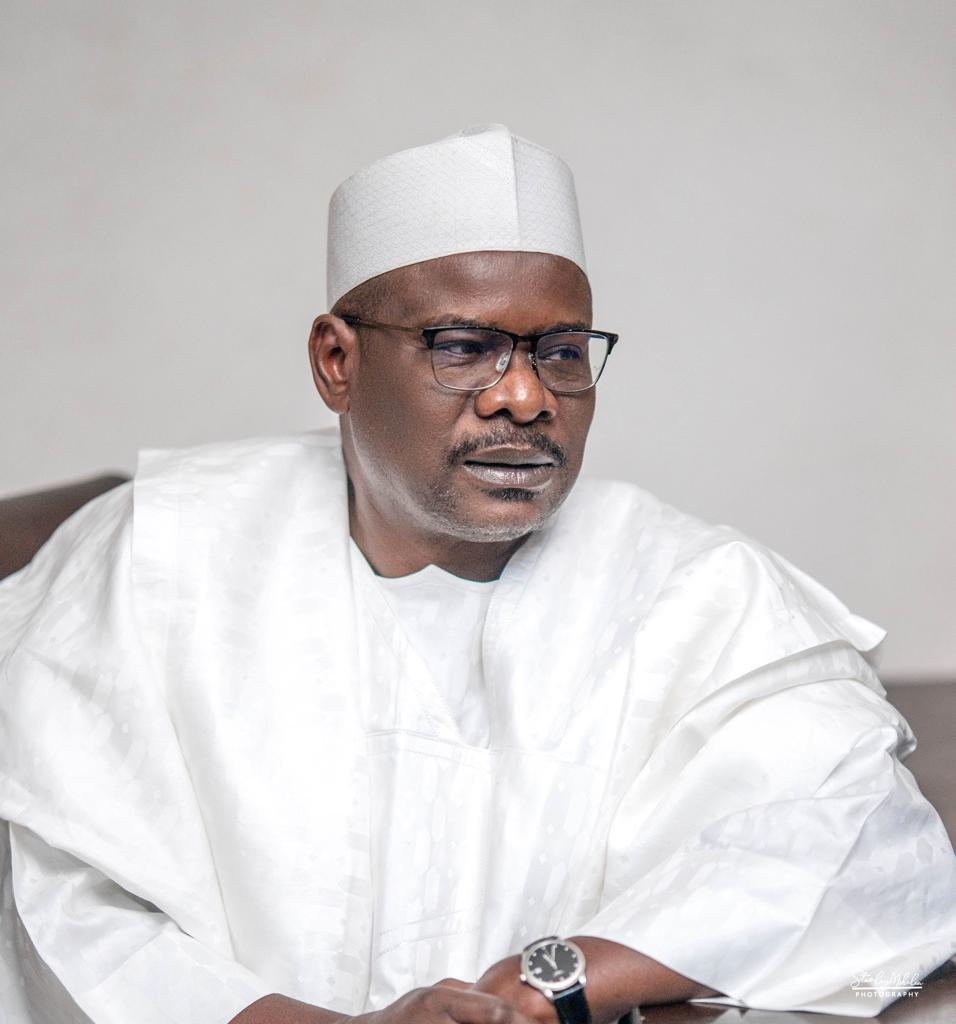
From Adesuwa Tsan, Abuja
Former Senate Leader Ali Ndume has called on the Federal Government and senior statesmen to urgently engage the United States following President Donald Trump’s decision to designate Nigeria as a “Country of Particular Concern” (CPC) over alleged mass killings of Christians.
Trump announced the designation in a post on his Truth Social account on Friday, which was later shared on the White House’s official X handle.
He claimed that “Christianity is facing an existential threat in Nigeria,” alleging that “radical Islamists” were responsible for the mass slaughter of Christians across the country.
According to him, “Thousands of Christians are being killed. Radical Islamists are responsible for this mass slaughter. I am hereby making Nigeria a ‘Country of Particular Concern.’ But that is the least of it. When Christians, or any such group, are slaughtered like is happening in Nigeria (3,100 versus 4,476 worldwide), something must be done! I am asking Congressman Riley Moore, together with Chairman Tom Cole and the House Appropriations Committee, to immediately look into this matter and report back to me.”
Under U.S. policy, a country is classified as a “Country of Particular Concern” if it is deemed to have engaged in or tolerated severe violations of religious freedom or human rights. The designation could lead to sanctions, including suspension of military aid, trade restrictions, or visa bans for senior officials.
In a statement personally signed and issued in Abuja, Senator Ndume, who represents Borno Central, expressed concern that both the Nigerian government and the Senate had been too complacent in responding to earlier warnings from US lawmakers, particularly Congressman Riley Moore, before Trump’s formal declaration.
“I have alerted the government. I even moved a motion on this matter,” Ndume said. “Nigeria is a sovereign state. It isn’t about what the United States can do to us, but about the misconception and ripple effects of classifying us as a country of concern.”
He urged the Tinubu administration to urgently open diplomatic channels with Washington and provide verifiable data to counter the perception of religious persecution in Nigeria.
“We should engage the American government by presenting facts and figures. By engaging the US government, we should demand that they hear the other side of the story—from the Nigerian government and the Muslim community. Muslims have been killed too. The genocide isn’t against Christians but Nigerians generally,” he said.
Other News
The lawmaker stressed that insurgent groups like Boko Haram and ISWAP had attacked both Muslims and Christians indiscriminately, and that the crisis in Nigeria was rooted in terrorism, not religion. He further called on President Bola Tinubu to involve Nigeria’s most respected diplomats and foreign affairs experts in the engagement with the United States to ensure that the country’s case is effectively presented.
“Before things get out of hand, Nigeria should engage seasoned diplomats like Chief Emeka Anyaoku, Professor Bolaji Akinyemi, Babagana Kingibe, Professor Sulu Gambari, and Amina Mohammed at the United Nations. They should also engage the American embassy in Nigeria because they have the facts,” he advised.
Ndume said this could help reframe Nigeria’s global image from being a “country of concern” to a “country of special concern,” which could open the door for more international support in the fight against terrorism.
“We can change the narrative by ensuring that we aren’t tagged a country of particular concern but a country of special concern, so that they can give us all the support, including arms and ammunition, to effectively contain the terrorists. The good thing about America is that if they know the truth, they will stick to it,” he said.
Prior to Trump’s designation, Ndume had moved a formal motion on the Senate floor titled “Urgent Need to Correct Misconceptions Regarding the Purported ‘Christian Genocide’ Narrative in Nigeria and International Communities.”
The motion, co-sponsored by senators Sani Musa, Aliyu Wamakko, and Ibrahim Bomai, sought to forestall or counter any attempt by foreign actors, including the US Congress, to brand Nigeria as a CPC over alleged religious persecution. Ndume’s motion acknowledged that Christian communities had suffered attacks but warned that portraying Nigeria’s insecurity as religious persecution risked inflaming sectarian tensions and harming national unity. He argued that Nigeria’s security challenges stemmed from terrorism, insurgency, banditry, and communal conflicts that affected citizens across faiths.
The motion urged the Federal Government—particularly the Ministries of Foreign Affairs, Information, and security agencies—to adopt a data-driven communication strategy to counter misleading foreign narratives and to release verified reports and casualty figures showing that victims of terrorism cut across religious lines.
It also called for interfaith collaboration and direct engagement with foreign missions and US lawmakers to provide factual context. The Senate consequently mandated its Committees on Foreign Affairs, National Security, and Information to work with the executive to coordinate Nigeria’s response and lead high-level diplomatic engagements to correct misconceptions abroad.