Follow Us on Google

By Chinwendu Obienyi
The Nigeria Deposit Insurance Corporation (NDIC) has affirmed its commitment to reimbursing depositors of closed microfinance and primary mortgage banks by recovering debts from those owing these failed institutions.
This was articulated by NDIC’s Department of Communication and Public Affairs during a phone call with a news agency on Monday.
Following the Central Bank of Nigeria’s (CBN) revocation of licenses for 183 microfinance and primary mortgage banks in May 2023, the NDIC had stated that it secured winding-up orders for 96 of these banks.
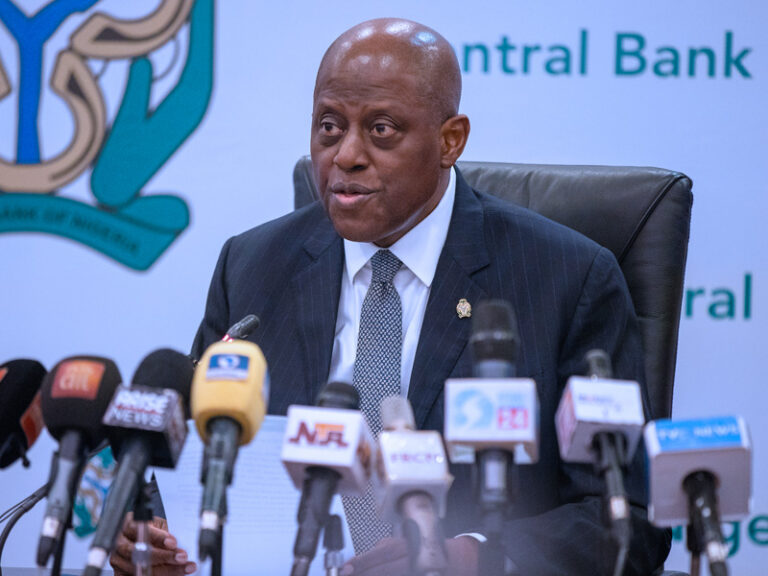
This step was disclosed by the NDIC’s Managing Director, Bello Hassan, during a sensitization seminar for Federal High Court judges in Lagos recently
Hassan emphasized the crucial role of the judiciary in expediting hearings and delivering justice in these cases.
He noted that the NDIC’s intervention is triggered by the CBN’s license revocation, allowing the NDIC to liquidate the banks’ assets to repay depositors.
This process includes selling assets such as buildings and vehicles and recovering debts owed to the banks.
Speaking further on the development, Ijah highlighted that while the NDIC does not control the timeframe for concluding the closure and settlement processes, its systematic approach aims to ensure timely refunds to depositors.
He noted that the NDIC’s job does not crystalize without the CBN revoking the license of affected banks that breached some of the laws of the apex bank regulator.
“When the license is revoked, and we have winding up order, after everything is done, what we intend to do is that it gives us power to get into the banks and realize their assets. In realizing assets, we tend to look for people that are owing the banks, the debtors, their assets and sell so that we can pay depositors.
The (closed) bank already have asset, buildings, cars, etc. When we say realize the asset, we sale the assets to get all the money we can gather to pay depositors their balance.
The (closed) bank already have asset, buildings, cars, etc. When we say realize the asset, we sale the assets to get all the money we can gather to pay depositors their balance.
It is from sale of the assets and realization of debts from debtors that we will use to pay those people”, Ijah explained.
Ijah said the NDIC does not stop at obtaining a winding-up order and added that there are several official and legal steps to be taken to ensure depositors are paid.
There are different things to be done. If CBN has revoked the license, what it tells you is that we are moving to another phase. We have paid depositors. We have gotten license to wind down officially and legally. Then, we start selling assets,” he added.
It will be recalled that ten months ago, Daily Sun had revealed that NDIC announced that it has begun the process of payment of depositors in 179 microfinance banks and four primary mortgage banks across the country.
The commission called on depositors affected by the liquidation to provide alternate bank accounts in commercial banks for their payments.