Follow Us on Google

By Anselm C. Onuorah, PhD
This Sunday the church places before us the radiant voice of Wisdom herself: “Resplendent and unfading is wisdom, and she is readily perceived by those who love her, and found by those who seek her. She hastens to make herself known in anticipation of their desire; whoever watches for her at dawn shall not be disappointed, for he shall find her sitting by his gate… For taking thought of wisdom is the perfection of prudence, and whoever for her sake keeps vigil shall quickly be free from care.” Wisdom 6: 12 – 16.
As the priest carefully unpacked these lines, showing how even the simplest wise choice can make or mar a life, a family, or a people, my mind drifted to our own land. I saw a region once known throughout this continent for its restless enterprise, its refusal to accept mediocrity, its genius for turning scarcity into abundance, the Southeast of Nigeria. A people who once taught the nation what hard work, thrift, and communal solidarity could achieve. And I asked myself: have we, in our political season, been rising early to seek Wisdom, or have we been content to let emotion keep the lamp of prudence unlit?
Wisdom is not sentiment. She is not the loudness of grievance nor the comfort of perpetual protest. She is the clear-eyed calculation that weighs consequences, that prefers the lasting good of the community to the fleeting satisfaction of the moment. She is the same spirit our fathers called Inwe Ndidi, the disciplined patience that prepares the ground while waiting for the right season, and Igwebuike, the strength that is found only in solidarity and complementarity.
What does Wisdom require of Ndi Igbo at this hour? What does justice demand of a people who have waited longest for the full measure of belonging in the Nigerian project? What price do we pay when emotion overrides calculation, when the politics of grievance eclipses the politics of interest? These are not rhetorical questions. They are the questions that confront every serious Igbo mind as the nation approaches another presidential election.
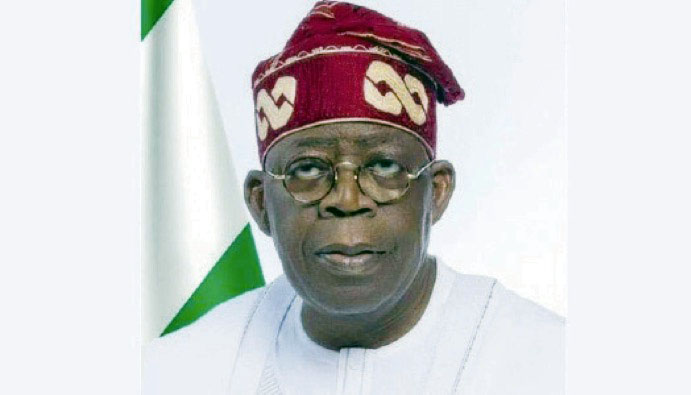
President Bola Ahmed Tinubu seeks a second term. The South-East must decide whether to treat that contest as an opportunity for strategic partnership or as another chapter in the long narrative of protest.
The wiser course is clear: support the re-election of PBAT not out of sycophancy, but out of enlightened self-interest, philosophical maturity, and moral realism, the very realism that Wisdom herself commands.
Hard Reforms, Measurable Results
Tinubu inherited an economy weighed down by multiple exchange rates, a crushing fuel subsidy, fiscal fragility, and declining investor confidence. Within weeks of taking office, he removed the subsidy and unified the exchange rate, painful decisions that produced short-term hardship yet began restoring macroeconomic balance. The results are now measurable.
Real GDP growth has strengthened, reaching 3.89% in Q1 2026 and 4.43% in Q2. External reserves have risen significantly, from roughly $35 billion in May 2023 to levels above $50–55 billion. Capital importation surged. The stock market capitalisation expanded dramatically. Debt-service-to-revenue ratios improved. Non oil revenue has grown substantially, and domestic refining capacity has expanded, reducing chronic dependence on imported fuel.
In education, the Nigerian Education Loan Fund (NELFUND) has disbursed hundreds of billions of naira in interest-free loans, expanding access for students who would otherwise have been shut out.
Medical training capacity has increased markedly. Infrastructure delivery has accelerated, with thousands of kilometres of roads under construction or rehabilitation nationwide, including signature corridors such as the Lagos, Calabar Coastal Highway.
These are not abstract national statistics. They form the fiscal and institutional foundation upon which regional projects become possible.
Gains for the South-East and what lies ahead
For decades, the South-East complained, often justifiably, of infrastructure neglect. Under this administration,that narrative is being rewritten. The appointment of a South-Easterner as Minister of Works has coincided with intensified federal attention to the region’s corridors.
Other News
The Enugu–Port Harcourt and Enugu–Onitsha axes have seen serious intervention. Access roads to the Second Niger Bridge are advancing. The South-East Development Commission was established and is already mobilising resources, including a significant gas pipeline project intended to power industrial clusters in Aba, Nnewi, Onitsha and beyond.
Most strategically for the Omabala zone and the wider South-East, President Tinubu has approved the design and procurement of the dualisation of the Otuocha–Anam, Abaji Road (linking Anambra through Kogi toward Abuja) and the Oba, Nnewi, Uga, Ihube/Okigwe Junction Road that connects industrial Nnewi and surrounding communities to the Enugu, Port Harcourt Expressway. These are not cosmetic announcements. They address long-neglected economic arteries. The Otuocha, Anam to Abaji corridor will shorten the journey from the heart of Anambra and the Omabala area to the Federal Capital, lowering the cost of moving people and goods, opening markets, and stimulating agro-commerce and manufacturing. The Oba, Nnewi corridor strengthens the industrial backbone of the South-East by linking it more efficiently to the eastern seaboard and national highway network.
The proposed Ogbaru, Onne linkage, long discussed as a critical South-East to South-South commercial and port access route, fits the same logic of connectivity. When completed, these projects will generate an economic boom across the Omabala zone and the wider Southeast by reducing logistics costs, attracting investment, and integrating the region more deeply into national and West African trade flows.
Continuity of the present administration is the most reliable guarantee that design and procurement will translate into asphalt and concrete.
Politics as the pursuit of interest, not the theatre of emotion
Politics, at its core, is the organised pursuit of interest. Aristotle understood this; so did the classical Igbo political culture that balanced individual ambition with communal survival. Emotion has its place in democratic life, but when it becomes the sole driver of electoral choice, it produces predictable consequences: protest votes that register dissatisfaction without altering power, fragmented opposition that hands victory to the better organised incumbent, and the perpetual postponement of tangible gains.
The opposition remains divided. Leading figures who once spoke of unity now contest under separate platforms. History teaches that a fragmented field rarely defeats an incumbent who controls the levers of state, has a coherent national structure, and can point to reforms already underway. Moreover, every major contender has held significant power before, as vice president, governor, or senior official and each previously sought or enjoyed the advantages of incumbency and continuity. The demand that Tinubu alone forgo a second term while others have claimed their own is selective rather than principled.
Choosing second place as a badge of moral purity carries a cost. It means forfeiting the ability to negotiate from a position of strength, to secure the completion of the very roads, pipelines, and institutional reforms that will determine the economic fate of the next generation. It means trading the politics of delivery for the politics of perpetual grievance.
Inwe Ndidi and Igwebuike: The Wisdom of Patience and Solidarity
Igbo civilisation has always prized inwe ndidi the disciplined patience that waits for the right season while preparing the ground. It is not passivity; it is strategic restraint. The same civilisation teaches Igwebuike: that number is strength, that the individual flourishes only within the complementary web of community, that isolation is weakness and solidarity is power.
To support Tinubu’s re-election is not to abandon Igbo aspiration. It is to practise Igwebuike at the national level to enter a partnership that multiplies influence rather than dissipating it in isolated protest.
It is to exercise ndidi by recognising that the foundations of greater equity, stronger institutions, better roads, energy access, and fiscal capacity are being laid now, and that continuity is the surest way to harvest them. A people who master both patience and solidarity do not merely survive; they shape the future.
The ballot is not a referendum on past wounds alone. It is a choice about the material conditions under which Ndi Igbo will live, trade, educate their children, and project influence in the coming decade. The roads from Otuocha to Abaji, from Oba and Nnewi to the Port Harcourt corridor, the gas that will power factories, the student loans that expand opportunity, and the macroeconomic stability that underwrites all of them, these are what is on the ballot.
History books recognise a people who choose calculation over catharsis, partnership over isolation, and long-term interest over short-term emotion. That is the path of wisdom. That is the path of Igwebuike. That is the path the South-East should take.