Follow Us on Google
By Simeon Mpamugoh
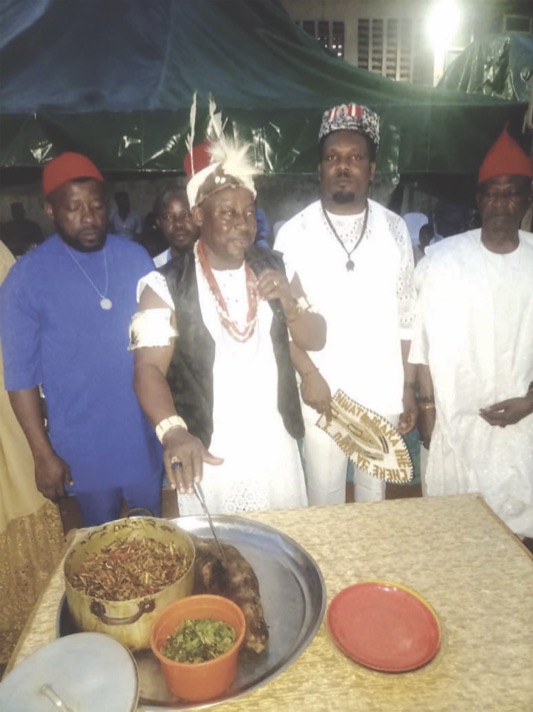
The residents of Omiyale and its environs in Ejigbo, Oshodi/Isolo Local Government Area of Lagos State were recently thrilled as Ndigbo in the community showcased their vibrant culture and breathtaking masquerades during this year’s Iriji (New Yam) Festival. The maiden event also became a platform for renewed calls for unity, political awareness, and investment in the South East.

Flagging off the festival, the special guest of honour, Chief Okezie Ilouga, commended the organizers for keeping Igbo culture and tradition alive. He addressed those questioning why such an event was being held in Lagos, explaining that the Igbo people always carry their culture wherever they go.
His words: “We love our homestead, Igboland. Yet we also know that all of us cannot live there at the same time. We have an estimated 85 percent of us live outside Igboland, while paltry 15 percent live in the villages. So there is a need for those in the diaspora to reenact and celebrate the culture of Ndigbo wherever they are.”
The famed Eze Umuokorobia White Sand urged participants to draw inspiration from the large and diverse crowd in attendance and to remain steadfast in promoting Igbo culture as handed down by their ancestors, ensuring that it does not go extinct in this generation.
Sharing his thoughts about the event, the chief guest of honour, Obe-Elo Mielem 1 of Kingdom Ethiope West, Delta State, Thomas Akpodonor, expressed delight over the successful organization of the festival. He noted that the cultures of the Igbo and Delta peoples were very similar.
He said: “A school of thought teaches that marriage is one of the ways communities acculturalise with one another. So, I married from Abia State. At first, we thought it would be difficult, but we later realized there was no difference. We dress the same way — except that Ndigbo wear Isi-Agu (a cloth patterned like tiger skin) and tie wrappers, while we also tie wrappers. So, both cultures are essentially the same, only with different seasons of celebration. Culture is culture everywhere — the same spectacle: masquerades, dances, and traditional cuisines.”
Akpodonor blamed politicians for using propaganda to sow seeds of division among Nigerians, noting that they were almost succeeding in eroding the shared values that once bound the people together.
“We need to apply common sense to understand that we are all the same. These so-called politicians are fighting for their selfish interests. But by embracing cultural avenues to educate our children, we can help them realize that we are one people. Events like this show that no one cared about where another came from — except perhaps through traditional attire or names. That’s the true spirit of unity our leaders should learn from,” he said.
Chief host, Chief (Sir) Christopher Ibezimakor, who performed the traditional breaking of the kola nut (Iwa Oji) rite, disclosed that since becoming a resident of the community 20 years ago, there had never been an event like the Iriji (New Yam) Festival. He noted that this marked the first of its kind in the history of Ndigbo in the community.
He explained that the event was organized to appreciate God for His grace and to strengthen unity among Ndigbo in the area. He said: “Ndigbo in Omiyale came together this year to celebrate and thank God for the unity among us. The notion that Igbos don’t love themselves is a myth—it depends on individual perception. We speak the same language, even if in different dialects, and that alone is a sign of unity.
“However, in every twelve, there must be a Judas Iscariot. All over the world, there are always people who won’t buy into collective ideas—this is not peculiar to the Igbo; you’ll find it amongother tribes. In fact, I believe the tribe that loves itself the most is the Igbo. Abroad, once an Igbo person meets another, there’s an instant bond of brotherhood regardless of the person’s origin.”
Urging Igbos in Lagos to think home, he said: “Yes, it’s good to develop other parts of the country, but we must start thinking home. What belongs to one is different from what belongs to all of us. We shouldn’t abandon our homeland for what belongs to others. I can recall a remark made by late Ikemba Nnewi Dim Chukwuemeka Odumegwu Ojukwu, when he visited Lagos Trade Fair Complex and commended the magnificent structures built by Ndi Igbo. He lamented that they were unknowingly building away from home. Many of us bought properties in Lagos without due diligence—no survey plans, no visits to government offices to verify encumbrances. That’s why we face insults and ridicule. We must return to the drawing board, think deeply, and call ourselves to order.”
A community leader Jimoh Ade Balogun commended the unity displayed during the celebration, describing it as a symbol of oneness among Nigerians regardless of tribe or political differences. He said: “Fortunately, this is not my first time being in the midst of Ndigbo celebrating their Iriji (New Yam) cultural festival. Over the years, participating in this event has helped me realize an inviolable truth—that the divisions among us were created by enemies of the country. We are all created as one and the same. Therefore, we must show genuine interest in one another’s welfare.”
One of the organizers, Mazi Okwudiri Ani, popularly known as Nwata Chiya Dinanma, emphasized that the Iriji festival is a culture every Igbo man and woman was born into — a tradition and a celebration deeply rooted in their identity. “That is why we, men and women resident in Omiyale in Ejigbo, Oshodi-Isolo local government area decided to mark it in our community.
Okwudiri said: “Some of us travelled to our various villages in the South East to celebrate it with our parents and loved ones. The consensus, was that it must first be celebrated in our different villages before the Lagos spectacle — this year organized at the instance of Ndigbo in Omiyale, Ejigbo, ably supported by the man we fondly call Okeosisi in Igbo land, Sir Jude, and Black, alongside other eminent Igbo personalities in the community.”
Okwudiri explained that the event was organized for recreation, fun, and entertainment — not just for Ndigbo but also for their hosts and friends in the community. He said it was “to show the world that Ndigbo is united in the promotion of their culture and tradition. That understanding guided us to choose the Iriji Yam Cultural Festival as a rallying point. Our culture is our pride.”
He commended Ndigbo in the community for the impressive turnout and overwhelming support that characterized the celebration, noting that: “Everyone who attended saw that the open space was filled to the brim like a market square.”
He urged Ndigbo in the diaspora to remain inward-looking and develop virtues that strengthen their unity and collective bargaining power.