Follow Us on Google

The Niger Delta Development Commission (NDDC) has appealed to royal fathers, youths and women leaders in the region to ensure the sustainability of peace in their respective communities.
According to the NDDC, peace is a prerequisite for development in the oil-rich region.
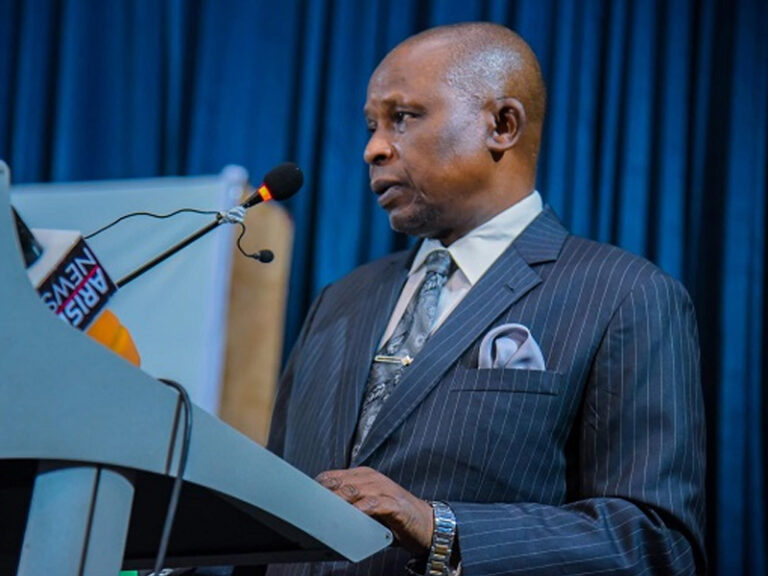
Speaking in Port Harcourt during a training session for community leaders, the NDDC managing director, Samuel Ogbuku, emphasised the importance of peace in the Niger Delta. “As an interventionist agency, we are more interested in the peace of this region. Without peace, development cannot thrive,” he said.
The training session, tagged: “Inclusive Approach to Conflict Management and Transformative Dispute Resolution,” was organised by the Department of Dispute and Conflict Resolution (DCR).
Ogbuku called for stronger synergy among all stakeholders, highlighting the Commission’s interest in regional integration.
The NDDC’s appeal for peace comes at a critical time for the Niger Delta region that has faced numerous challenges in the past.
As an agency mandated to facilitate the rapid and sustainable development of the region, the NDDC recognises the imperative of peace in achieving its goals.
By engaging royal fathers and women leaders, the NDDC aims to build a broad-based coalition for peace and development in the Niger Delta. As Ogbuku noted, the Commission is committed to working with all stakeholders to ensure that the region achieves its full potential.
He said: “We are an interventionist agency. Our intervention is not only limited to road building. The traditional rulers, youths, women and all stakeholders in all the states of the NDDC need to work together. We need to work together to ensure regional integration.
“This is because we know we have a common challenge, which ranges from ecological to environmental and development challenges. Once we are united, we cannot allow a crisis to take over any part when there is peace in other parts of the region.”
Ogbuku stressed that the NDDC was making all efforts to turn a new leaf, adding that it is within the powers of the commission to build the capacity of leaders of the region to manage conflict.
He said: “For us in NDDC, we want to turn a new leaf, having known that the region has been peaceful. I can say for a long period of time now that our region has been the most peaceful in the whole country.
“Having gone through a period of crisis, agitation, based on our people requesting for a fair share, social justice, we had so many experiences. These experiences, some are good, some are bad. One of the lessons we have learnt is that we don’t need to wait for conflict to arise.
Other News
“It is also our responsibility to build the capacity of those who rule our communities in conflict management. The community might be rich enough to send people out for training on how to manage crises.
“The clergy, women leaders, youths and all must synergise to ensure that we have peace in the Niger Delta.”
Also, the NDDC Chairman, Chiedu Ebie, stressed the need for effective conflict resolution in all aspects of life.
According to Ebie, conflict is an inevitable part of daily life, arising in various settings such as homes, offices and communities.
Ebie, who has a background in law, noted that litigations could be frustrating and challenging, often lasting for decades and incurring significant expenses. He attributed this to individuals allowing their egos to prevail, rather than exploring alternative dispute resolution methods.
The NDDC Chairman commended the Commission’s Managing Director, Ogbuku, for promoting initiatives that positively impact the community and foster constructive conflict resolution.
Ebie also highlighted the vital role of traditional institutions and religious leaders in resolving disputes within their communities.
In his remarks, Ebie encouraged stakeholders to adopt alternative dispute resolution methods, emphasising the importance of effective conflict management in achieving sustainable development in the Niger Delta region.
However, the acting Director, DCR, Godwin Ogbedegbe, said the programme was designed to enhance the skills of community leaders in conflict management.
He said: “Today’s programme is designed to enhance your skills and knowledge in conflict management and peace building.
“We will explore inclusive approaches that prioritise dialogue, empathy and collaboration, enabling us to address the root causes of conflict rather than merely its symptoms.
“The emphasis on inclusivity is particularly important; it ensures that all voices are heard, especially those of marginalised groups, who often bear the brunt of conflict, but are rarely part of the decision making process.”