Follow Us on Google

From Adesuwa Tsan, Abuja
The Nigeria Democratic Congress (NDC) is heading towards the January 16, 2027, presidential election amid growing internal disagreements, defections and a struggle for control of the political structures assembled around its presidential candidate, Peter Obi.
Some of the individuals who helped build Obi’s political movement and mobilise support for his 2023 presidential bid are walking away, while competing interests among support groups and the party’s original members threaten the cohesion of the new political platform.

The departure of Dr. Yunusa Tanko, former National Coordinator of the Obidient Movement and Obi’s political adviser on Northern Nigeria, is particularly significant. Tanko was one of the most recognisable faces of the movement that transformed Obi from a relatively less established political contender into a national political phenomenon in 2023.
His departure for the Social Democratic Party (SDP), where he has become National Coordinator of its Presidential Campaign Council for its presidential flagbearer, Adewole Adebayo, has brought renewed attention to questions of loyalty, internal recognition and the management of political relationships in Obi’s camp.
More damaging are the circumstances surrounding his exit. Tanko accused the movement of betraying his trust and loyalty, suggesting that his departure was not simply a decision to pursue another political opportunity.
His exit came amid disagreements between the NDC and support organisations associated with Obi and his running mate, Rabiu Kwankwaso, particularly the Obi-Kwankwaso Movement, popularly known as the OK Movement.
The developments raise questions about whether Obi can reconcile competing interests within the coalition and rebuild the sense of collective ownership that made his 2023 presidential campaign extraordinary.
A major crack in the Obidient structure
Tanko’s departure is significant because of his history with Obi’s political project. He was among the organisers who helped sustain the Obidient identity after the 2023 election, defended the former Anambra governor in public debates and coordinated supporters across the country. He subsequently became Obi’s Political Adviser for Northern Nigeria.
Following his departure from Obi’s political camp on October 30, 2026, Tanko was unveiled as the SDP Presidential Campaign Council’s National Coordinator on November 11. Speaking after his unveiling, he described his experience in Obi’s camp in unusually bitter terms.
“You don’t stay where you are being tolerated; you go where you are appreciated,” he stated, adding, “The only thing I have suffered in that particular movement is betrayal of trust and betrayal of loyalty.”
Tanko also insisted that his departure was not voluntary, saying, “I was exited.”
He did not disclose all the specific incidents that informed his decision, indicating that he would provide more details in a book he intended to publish. He also maintained that he continued to respect Obi and acknowledged the opportunity he had received to serve him.
Nevertheless, his comments raise questions about the treatment of people who invested their time, resources and political credibility in building the Obidient Movement. His new position in the SDP also places him in a position to deploy his political experience in support of Adebayo.
Although there is no evidence that Tanko has transferred the Obidient Movement’s structures to the SDP, losing a former national coordinator with extensive knowledge of its organisation and mobilisation networks is politically significant.
NDC’s internal crisis and the question of loyalty
Tanko’s departure came almost simultaneously with the resignation of Abdulmumin Abdulsalami, the NDC’s erstwhile deputy national publicity secretary. Unlike Tanko, whose departure was from Obi’s political team and the Obidient leadership, Abdulsalami resigned directly from the NDC.
He described himself as a foundation member who played a formative role in establishing the party before the arrival of Obi and Kwankwaso, having served as the party’s Kogi State protem chairman, pioneer spokesperson, deputy national publicity secretary and deputy National director for labour and civil society.
In his resignation letter, he accused influential party officials of frustrating his contributions and allowing vested interests to determine the direction of the organisation.
“My sincere and positive contributions to the meteoric rise and success of the party are at odds with the vested interests of a few powerful officers who call the shots,” he wrote, adding, “I prioritise my peace of mind rather than recurrent complaints at the sight of a series of injustices meted out to me.”
However, the NDC national publicity secretary, Osa Director, dismissed suggestions of internal wrangling, insisting that the departure of one member did not amount to a crisis. He added that the party continued to receive new members.
However, Abdulsalami’s resignation raises an important question about the relationship between the NDC’s original members and the political interests that arrived with its new presidential ticket. Obi and Kwankwaso formally joined the NDC on May 3, 2026, after leaving the African Democratic Congress.
Their arrival brought national political recognition, electoral appeal and established support networks to a party that had existed before their entry but the interests of the original party members have not necessarily disappeared with the arrival of the two politicians.
The emerging tension reflects a familiar problem in Nigerian political coalitions: how to accommodate influential new entrants without alienating those who established the political platform. It also gives substance to the recurring complaint of no reward for loyalty.
The issue may not necessarily be that every volunteer or party official expects a political appointment. Rather, it concerns recognition, inclusion, consultation and a sense of ownership. For a party presenting itself as an alternative to the established political order, complaints of exclusion and vested interests are particularly damaging.
The support-group war: OK Movement versus the NDC
The disagreements between the NDC and the OK Movement provide another indication of the organisational problems confronting Obi’s campaign. The dispute concerns political ownership, control of grassroots structures, recognition of organisers and the authority to determine how support organisations should operate.
OK Movement, led by its national director-general, John Ughulu, has maintained that it is an independent political organisation with structures across the country. However, the NDC insists that support groups must operate within the party’s organisational framework rather than establish parallel political structures.
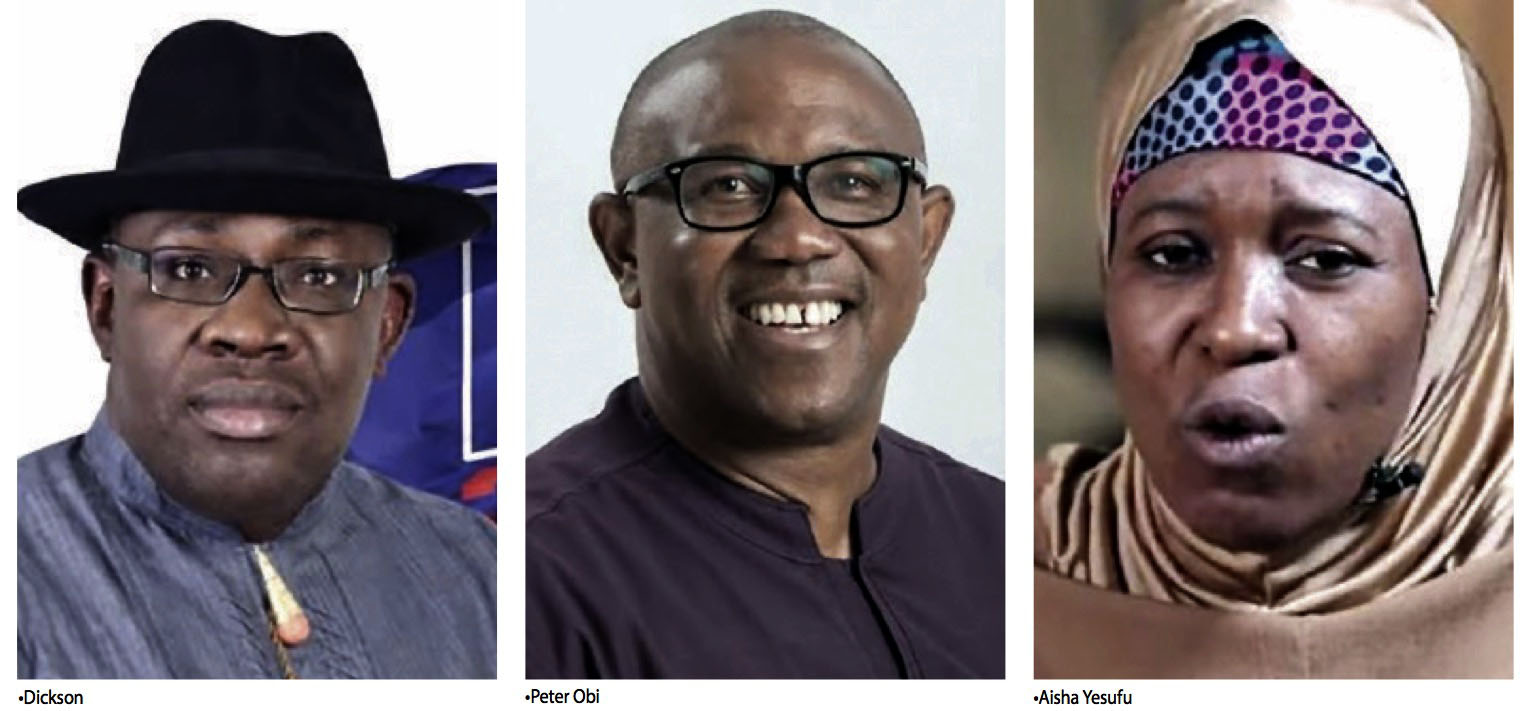
The disagreement became public when the movement rejected suggestions that its national, state, local government and ward structures should be subsumed under the party. Ughulu maintained that the organisation would not surrender its structures to the NDC or any other organisation. The party’s National Leader, Dickson, maintained that support groups should complement the party rather than compete with it.
The rift escalated after the OK Movement established its own presidential campaign council, a decision Dickson reportedly described as “unheard of” and “nonsensical”.
On his part, Obi made it clear that the party, rather than support groups, should control the formal political structure.
“First, NDC is the political party we all belong to,” he said, agreeing that the Obidient, Kwankwasiyya and OK movements should operate as support groups.
The position is understandable from the standpoint of party supremacy. However, the support organisations existed independently, developed their own structures and invested resources in mobilising supporters before Obi and Kwankwaso joined the NDC. Their leaders therefore have their own constituencies and expectations.
On the side, the United Kingdom Coordinator of the OK Movement, Adebayo Brown, accused the NDC campaign leadership and the Obidient Movement of fuelling divisions rather than concentrating on mobilisation.
“Two appointments have been given to individuals who now appear more interested in political disputes than in the responsibilities of their offices,” he stated, in reference to the Obidient Movement’s coordinator, Dr Moses Paul, and the NDC campaign’s Director-General, Ibrahim Abdulkarim.
He also cautioned against attempts to undermine Ughulu, saying, “His commitment should not be misrepresented as a pursuit of personal gain.”
The NDC Presidential Campaign Council spokesperson, Dr. Constance Ikokwu, fired back, dismissing Brown’s intervention as a distraction.
“We’re heavily focused on the campaign right now. We don’t need unnecessary distractions,” she said.
The disagreement has exposed the absence of a clearly accepted coordinating mechanism for the various support groups. The situation was compounded by complaints from NDC state chairmen who accused the Obidient and Kwankwasiyya movements of sidelining existing party structures.
Former allies abandon Obi’s political camp
The departures of Tanko and Abdulsalami are part of a wider pattern involving former campaign officials, support-group organisers and political associates who have either resigned, moved to other political parties or openly questioned Obi’s leadership.
Other News
One of the earlier warning signs came from Dr. Peter Agada, the former Director of Finance of the Obidient Movement, who resigned in March 2026. Agada announced his departure at a press conference in Abuja, where he also unveiled a new political organisation, The Movement Nigeria.
He complained about his former movement’s lack of organisational discipline and coordination.
“I’m sorry to say that the lack of structure (in Obidient Movement) does not fit with my personality,” he said.
“They have not been informing me of meetings and activities for a while now.”
Agada, who had served as the movement’s Director of Finance for more than a year, said his new organisation would not be built around any presidential candidate.
“The Movement Nigeria is not built on any personality,” he declared. His departure followed that of Morris Monye, the Obidient Movement’s Director of Mobilisation, in November 2025. Monye cited frustration, harassment and the absence of structural support as reasons for his resignation.
Another prominent departure was that of Kenneth Okonkwo, the actor, lawyer and former spokesperson of the Obi-Datti Presidential Campaign Organisation.
Okonkwo was among the most vocal defenders of Obi during the 2023 presidential campaign. However, he left the Labour Party in July 2024, accusing Obi of failing to provide the leadership required to resolve the party’s internal crisis.
Isaac Balami, former Deputy Campaign Manager of the Obi-Datti presidential campaign, also moved to the APC after the 2023 election. In July 2026, he led a delegation of former Obidient Movement members to meet Seyi Tinubu in Abuja, where they declared support for President Tinubu and the APC ahead of the 2027 election.
His July outing was significant because he presented himself as leading former Obidient supporters, including representatives of support groups, professional associations and social media influencers.
The emergence of the Batified Obidients in October 2026 provided another striking illustration of the political realignment. Led by Adesina Fagbenro-Byron, the group comprises former Obidient Movement members who have abandoned their support for Obi and declared allegiance to Tinubu and the APC.
The group formally announced its support for Tinubu’s re-election, presenting itself as a coalition of former Obidient supporters now prepared to mobilise for the incumbent President.
But the decision to retain the Obidient label while supporting Tinubu raises questions about the ownership and continuing political identity of a movement once almost exclusively associated with Obi.
Although the Batified Obidients cannot be taken as representative of the wider movement, their public realignment gives the APC an opportunity to project the defections as evidence that some former supporters have become disillusioned with Obi.
These departures should not, however, be interpreted as evidence that every former associate or prominent Obidient supporter has abandoned Obi. Aisha Yesufu, one of the most recognisable faces of the 2023 mobilisation, has not been established as having formally defected from Obi’s political camp though her absence, alongside several other prominent Obidient figures, from the NDC Presidential Campaign Council unveiled in October attracted attention.
Those reported to be missing from the council included Yesufu, political commentator Isaac Fayose, Moses Paul, Precious Oruche, popularly known as Mama Pee, and Peter Akah, popularly known as Randy Peter.
Their absence does not establish that they have withdrawn their support. It does, however, raise questions about the extent to which the people who helped build the 2023 movement are involved in the current campaign’s decision-making.
No reward for loyalty: The political cost of exclusion
The complaints of Tanko, Abdulsalami, Agada and Monye reveal a recurring problem: the feeling that contributions to the political movement have not translated into recognition, inclusion or influence.
The Obidient Movement was not initially a conventional party organisation in which supporters were motivated principally by political appointments or access to government patronage. Many of its supporters were young professionals, students, entrepreneurs and volunteers who believed that their participation could change the direction of Nigerian politics.
They contributed money, time, communication skills and organisational resources. Some travelled to campaign locations at their own expense, while others coordinated social media campaigns, produced campaign materials, mobilised voters and defended Obi during the 2023 election.
Its strength was its decentralised character. People who had never previously participated actively in party politics suddenly found themselves involved in political conversations and mobilisation. But the transition from a mass volunteer movement to a formal political organisation has exposed unresolved questions about ownership, leadership and inclusion.
Who controls the movement? Who makes appointments? Who determines the direction of the campaign? What happens to people who invested years in the political project but have no meaningful role in its decision-making?
These are the questions NDC’s original members are now raising following the arrival of Obi and Kwankwaso. It is not realistic to expect every volunteer, campaign organiser or support-group leader to receive a political office but a movement that depends on voluntary participation must provide a credible system of consultation, recognition and inclusion.
Has Obi lost the 2023 magic?
The more consequential question is whether Obi can recreate the political enthusiasm that powered his 2023 presidential campaign.
That election was unusual because his appeal went beyond the traditional support structures of the Labour Party. He attracted young Nigerians who had previously been indifferent to elections, first-time voters, professionals, students, members of the diaspora and people who viewed his candidacy as an opportunity to challenge the dominance of the APC and PDP.
The Obidient Movement became a political identity and an expression of dissatisfaction with the established political order. Its mobilisation drew heavily from the political consciousness generated by the #EndSARS protests, demands for accountability and frustration with unemployment, insecurity, corruption and poor governance.
Obi’s emphasis on prudence, public accountability, production, education and responsible management of public resources resonated with young Nigerians who wanted a different kind of leadership. The scale of youth participation was reflected in the voter registration figures.
According to INEC’s report on the 2023 general election, Nigeria had 93,469,008 registered voters. Of this number, 37,060,399, representing 39.65 per cent, were young people between 18 and 34 years. The European Union Election Observation Mission also found that young people aged 18 to 34 accounted for 76.6 per cent of new voter registrations during the registration exercise preceding the election, while the International Foundation for Electoral Systems reported that 9,518,188 first-time voters were registered for the 2023 elections.
These figures demonstrate the extraordinary level of youth participation in the build-up to the election. However, it would be inaccurate to attribute the entire increase in youth registration to Obi or the Obidient Movement. The figures reflected a broader national mobilisation involving civil society organisations, youth activists and voter education campaigns.
Nevertheless, Obi became the most prominent political beneficiary of that enthusiasm. He secured 6,101,533 votes, representing 25.4 per cent of the total valid votes, and won 12 states, including Lagos, the Federal Capital Territory, Anambra, Enugu, Abia, Imo, Delta, Edo, Cross River, Plateau, Nasarawa and Ebonyi.
For a candidate running on the platform of a party that had not previously been a major contender in presidential politics, the result was extraordinary but the political environment of 2027 is different.
A changing electorate
INEC’s figures for the 2027 general election show that the number of registered voters has increased to approximately 103.43 million. However, young people are no longer the largest demographic group on the register. Voters aged between 35 and 49 now constitute the largest category, with 43,265,946 registered voters, representing 41.83 per cent. Those aged between 18 and 34 number 29,777,576, representing 28.79 per cent.
In 2023, young voters accounted for 39.65 per cent of the register. The reduction in their share does not necessarily mean that young Nigerians have lost interest in politics. Part of the change reflects the ageing of the population that registered in 2023, with many voters moving into the 35-49 age bracket.
Nevertheless, the figures demonstrate that Obi cannot approach the 2027 election as though the electorate has remained unchanged.
Does Obi still have the Obidient support?
It would nevertheless be premature to conclude that Obi has lost his political appeal or that the Obidient Movement has collapsed. His alliance with Kwankwaso is an important advantage. The former Kano governor brings the Kwankwasiyya political network, a substantial following in the North-West and an established grassroots structure.
The combination of Obi’s support in parts of the South, the Middle Belt and urban centres with Kwankwaso’s influence in Kano and neighbouring northern states gives the NDC ticket a broader geographical reach than Obi enjoyed under the Labour Party in 2023.
The continued presence of supporters at NDC activities also indicates that his political movement has not disappeared. The November 12 attack on NDC supporters during a town hall meeting in Lagos, which the party condemned, demonstrates that Obi’s campaign is still capable of mobilising supporters and attracting political confrontation.
However, political activity is not necessarily evidence that the mass enthusiasm of 2023 has been replicated. A candidate may retain millions of loyal supporters even when some of his former political associates leave.
The issue, therefore, is not simply whether Obi still has supporters. It is whether those supporters possess the same enthusiasm, organisational coordination and determination that characterised the 2023 campaign.
The January 16, 2027 presidential election will test whether Obi can transform his personal popularity into a coherent national political organisation.