Follow Us on Google
From Romanus Ugwu, Okwe Obi and Idu Jude, Abuja; Scholastica Hir, Makurdi
Political alignments and realignments are already defining the direction of the pendulum ahead of next year’s general elections, with the North Central geopolitical zone emerging as one of the most closely watched battlegrounds in the country.
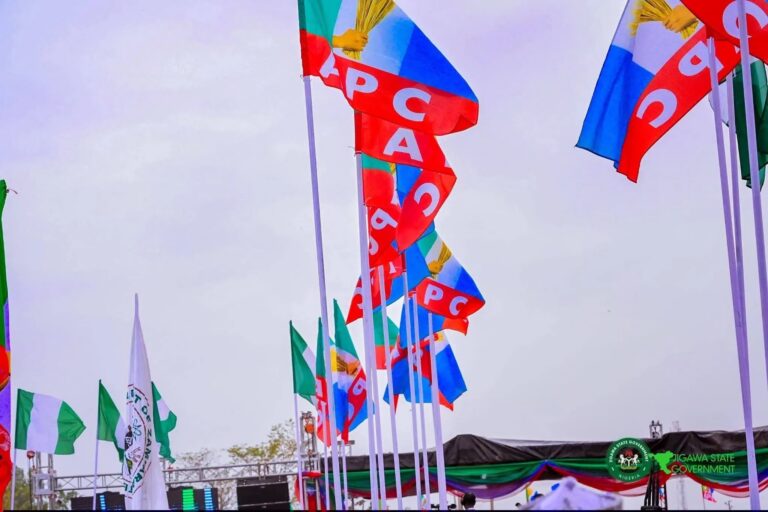
Across Benue, Kogi, Kwara, Nasarawa, Niger and Plateau states, as well as the Federal Capital Territory, candidates of the All Progressives Congress (APC), the African Democratic Congress (ADC), the Nigeria Democratic Congress (NDC), and the Peoples Democratic Party (PDP) are scheming to outdo one another for control of governorship seats, senatorial districts and House of Representatives constituencies.
While the ruling APC currently governs all six states in the zone, a rare feat that party officials have openly celebrated, the road to 2027 is proving far from smooth. In state after state, governors have moved to anoint preferred successors, only to run into fierce resistance from rival aspirants, disgruntled kingmakers and zoning agitations that refuse to die down.
In Benue, Kogi and Nasarawa in particular, endorsement politics has already triggered open revolt within APC structures, while in Kwara and Plateau, the contest has taken the form of a delicate balancing act between long serving governors and newly-absorbed political heavyweights.

Voters across the zone, meanwhile, are weighing the economic climate, the security situation and the democratic dividends of the last three and a half years of the current administration to determine their choices. Nowhere is this more pronounced than in Benue, where the worsening security situation has always shaped political discourse, and where insecurity linked to herder violence is likely to be one of the most influential issues shaping voter sentiment in 2027.
For many residents, particularly in rural communities that have suffered repeated attacks, the election may well become a referendum on security and the government’s response to the crisis.
The living conditions of internally displaced persons across Benue and Plateau present another critical electoral variable, since both states host thousands of residents in camps and host communities following years of violence, and their ability to participate in the polls will depend heavily on measures taken by the Independent National Electoral Commission (INEC) and security agencies.
Meanwhile, in the Federal Capital Territory (FCT), an altogether different contest is unfolding, shaped by the enduring dispute between indigenes and non-indigenes over political representation, and by the influence of the Minister of the FCT, Nyesom Wike, who has emerged as arguably the most consequential political figure in the territory’s fortunes.
Taken together, the picture across North Central Nigeria for 2027 is one of a dominant ruling party contending as much with itself as with the opposition, even as the PDP, the ADC and the NDC manoeuvre to exploit whatever cracks emerge. The outcome in each state will hinge on a distinct mix of security performance, zoning grievances, godfather politics and the credibility of opposition alternatives, and it is this mix that the rest of this analysis sets out to examine in detail.
Security and the Benue factor
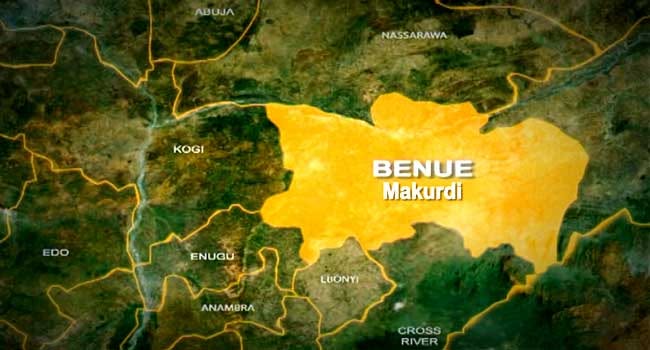
In Benue State, insecurity has always influenced political discourse, and as the 2027 general elections approach, the case is no different. Areas affected by attacks, displacement and humanitarian crises are increasingly demanding leaders who can effectively lobby for federal intervention and stronger security measures, and this has heightened scrutiny of governors’ and lawmakers’ performance while strengthening calls for change in some constituencies.
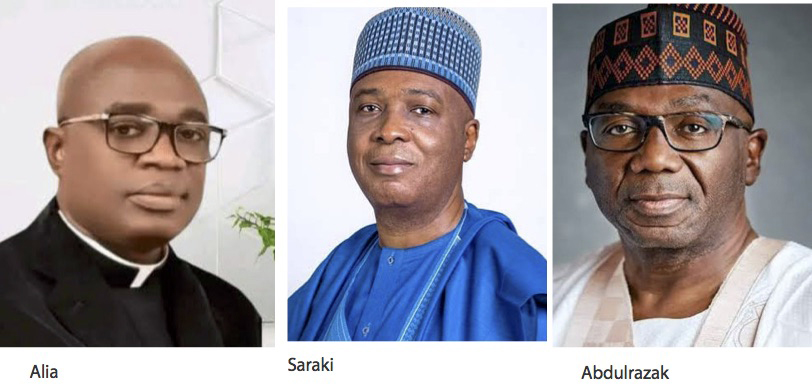
Over time, the Governor Hyacinth Alia led APC administration, as the ruling party in the state, has carried the burden of public expectation. Despite several security efforts and measures put in place by the state government, many communities believe the government has failed to prevent attacks, protect lives and farmlands, or facilitate the return of displaced persons.
Political analysts believe that the people may express their frustration through the ballot box, and opposition parties, especially the PDP and any emerging coalition such as the NDC and the ADC, are expected to campaign aggressively, cashing in on security failures and portraying themselves as better positioned to protect farming communities and restore stability.
However, the APC could counter such criticism if it succeeds in improving security conditions before the elections, something most analysts consider almost impossible within the remaining time frame. Any visible reduction in attacks, successful military operations against armed groups, rehabilitation of affected communities and resettlement of displaced persons could strengthen the party’s standing among voters. Consequently, security outcomes between now and 2027 may significantly influence whether voters reward or punish the ruling party in Benue.
Displacement, IDPs and the fight for inclusion
The living conditions of internally displaced persons present a critical electoral hiccup for Benue State, which hosts thousands of displaced residents in formal camps and host communities following years of violence. Their ability to participate in elections will depend largely on actions taken by INEC, security agencies and government authorities, and the reality remains that many displaced persons have lost their voter cards, while others reside far from their registered polling units. If special arrangements are not made in time, a significant number could be effectively disenfranchised.
The INEC Public Relations Officer in Benue State, Peace Ogoyi, has assured eligible voters that the commission is taking proactive measures to ensure IDP inclusivity. According to Ogoyi, INEC, in partnership with the non governmental organisation All Rights Foundation Africa, has intensified efforts to ensure that IDPs in Benue State are not excluded from the democratic process by taking the ongoing Continuous Voter Registration exercise directly to displaced communities, including a recent mobilisation drive at the Mega IDP Camp in Makurdi Local Government Area.
The organisation used the occasion to create awareness of the importance of voter registration while enabling eligible displaced persons to register, replace lost Permanent Voter Cards, update their records and prepare for future elections.
The Senior Monitoring and Evaluation Officer at the foundation, Terfa Tyokase, said displacement should never deprive any Nigerian of the constitutional right to vote, arguing that democracy could only be truly inclusive when every citizen, irrespective of disability, displacement or social status, is given equal opportunity to participate in electing leaders.
A political analyst, John Ivever, described IDPs as an important voting bloc, noting that their experiences of displacement, loss of livelihoods and prolonged stays in camps could strongly influence their voting decisions, and that parties perceived as offering credible solutions to insecurity, resettlement and reconstruction may gain substantial support among these voters. He argued that in a society where elections are keenly contested, the participation or exclusion of displaced persons could have a meaningful impact on outcomes, particularly in a state with such a large displaced population.
Benue’s widening three way contest
According to Ivever, Benue politics is heavily influenced by ethnic identities and security concerns rather than national political calculations alone. For the NDC to make meaningful inroads, it must present a candidate credible enough to wrestle with the power of incumbency, offer a credible alternative on security, address concerns over displaced communities and build strong local structures capable of competing with both the APC’s incumbency advantage and the PDP’s entrenched grassroots machinery.
The defection of political heavyweights, notably former Governor Gabriel Suswam, who dumped the PDP for the APC and briefly emerged winner of the last APC primary for the Benue North East Senatorial District before losing the ticket on appeal to Senator Emmanuel Udende, is worth noting in this regard. Equally significant is the strategic partnership that has developed between the PDP and a faction of the Senator George Akume led APC, which saw the former Attorney-General and Minister of Justice, Mike Aondoakaa, emerge as the party’s governorship candidate.
Aondoakaa was himself part of Akume’s camp before joining the PDP. The contest for Benue in 2027 may therefore evolve into a genuine three way struggle among the APC, a resilient PDP and an emerging NDC coalition seeking to capitalise on voter discontent and opposition realignment, with the added complication that the ruling party itself remains bitterly divided between the Alia and Akume camps following the National Working Committee’s decision to overturn several senatorial and House of Representatives primary results in the state in favour of Akume loyalists.
The battle for the Federal Capital Territory
In the Federal Capital Territory, it is a different ball game altogether. Residents, particularly eligible voters, are enlightened and do not simply defer to the body language and direction of the ruling party. The conclusion of primaries by the various political parties, and the desperation for tickets to represent the territory, was visibly one of the most hotly contested exercises across the political landscape.
From the NDC, where the senatorial ticket given to political activist Aisha Yesufu almost tore apart the opposition party, to the ticket the APC graciously offered Senator Philip Aduda after his defection from the PDP, the long running contention between indigenes and non indigenes over who deserves the right to represent the territory has persisted.
Other News
Judging by the events in the build up to next year’s general elections, and from the hindsight of history, particularly the 2023 presidential election in which the Labour Party’s Peter Obi swept the FCT votes, almost all the political parties appear to have deployed tactical measures aimed at swaying the FCT electorate to their side.
While the APC wears what critics describe as a toga of superiority, the PDP, through the FCT Minister, Nyesom Wike, has been talking tough, and the NDC is still banking on the residual Obi wave to carry the day. The performance of the senator representing the FCT, Ireti Kingibe, and the member for Abuja Municipal and Bwari Constituency, Joshua Chinedu Obika, has divided voters. For some, Wike’s overwhelming influence dwarfed and affected the performance of both lawmakers, while for others they simply had little to offer, since their impact was not felt in most ramifications. That alone is seen as reason enough to work against them as the ADC and the NDC push for their re election.
Court judgements and counter judgements have further unsettled supporters of the NDC, leaving the political future of opposition parties looking bleak in the territory. This carries even greater consequences given that the mantra of securing twenty five per cent of the vote for President Bola Tinubu’s return favours the opposition in principle, considering what amounts to a standing order given to Minister Wike to ensure the opposition does not upset the APC once again.
A political pundit, Stephen Ajiya, explained that it is on this basis that indigenous residents have resolved to bring back Senator Philip Aduda, who lost the 2023 poll to Senator Kingibe. Ajiya, who is the Director of Turning Point Nigeria, argued that despite concluded opinions favouring indigenous people for political positions in the FCT, politicians continue to place their hopes in parties facing serious legal and organisational challenges, including registration irregularities.
According to Ajiya, it is constitutionally the duty of INEC to register political parties in accordance with the law, and when the fate of a party depends on prolonged litigation, uncertainty inevitably follows, leaving candidates and supporters unsure of their political future. He described the moment as a defining one for the indigenous people of the FCT, urging them to set sentiment aside and embrace practical politics that guarantees representation, stability and a stronger voice in government, adding that Wike has demonstrated a commitment to protecting the political interests of the indigenous people, and that Aduda’s emergence as the APC candidate reflects that commitment.
Ajiya expressed confidence that the APC will win the FCT election because of the calibre of persons piloting the affairs of the six area councils, particularly the Abuja Municipal Area Council, whose chairman, Christopher Maikalangu, defected from the PDP to the APC and is expected to be rewarded with a second term for his development record. He also called for a constitutional amendment to introduce an elective mayoral position for the FCT, arguing that appointees who know little about the territory should not continue to be imposed on its people.
Kogi: Zoning anger and a fragmented opposition
Beyond Benue and the FCT, the contest across the rest of North Central Nigeria carries its own distinct pressures. In Kogi State, the APC under Governor Ahmed Usman Ododo enters 2027 still governing, but facing a rekindled zoning agitation from Kogi West, which has produced no governor since the state’s creation and continues to argue that both Kogi East, with roughly sixteen years in power, and Kogi Central, approaching twelve years, have had their turn.
Senator Sunday Karimi, who represents Kogi West, has become a lightning rod for this agitation, drawing both support and, more recently, an alleged vote of no confidence from some ward chairmen loyal to the state government, illustrating how zoning tensions can quickly curdle into internal APC discipline battles.
The PDP, for its part, insists Kogi remains its stronghold historically, with its state chairman recently vowing to reclaim Lugard House in 2027 and reminding supporters that the party governed the state for years before the APC’s rise. Whether the PDP can translate that historical claim into a credible, united challenge remains uncertain, particularly given the fragmentation that has characterised opposition politics in the state in recent cycles.
For the APC, the central risk is less the opposition than its own internal cohesion, since a failure to satisfy Kogi West’s demand for the governorship could push aggrieved politicians towards the PDP, the ADC or the NDC, any of which would happily absorb disaffected APC figures ahead of the polls.
Kwara: A chess game between Saraki and AbdulRazaq
In Kwara State, the succession battle to replace the term limited Governor AbdulRahman AbdulRazaq has turned into what analysts have described as an elaborate chess game between the APC and a reinvigorated PDP under former Senate President Bukola Saraki. AbdulRazaq’s endorsement of Ambassador Abdulfatai Yahaya Seriki as his preferred successor initially triggered street celebrations among PDP supporters, who saw a Kwara Central candidate from the governor’s own axis as an opportunity to consolidate opposition support in Kwara North and Kwara South.
The governor’s subsequent switch of support to the Speaker of the State House of Assembly, Yakubu Danladi Salihu, a Kwara North politician, who went on to win the APC primary decisively, reshaped the contest once again.
Reading those permutations, Saraki’s PDP moved quickly to rally its aspirants behind a consensus candidate, Sulaiman Bolakale Kawu Agaka, a politician of Yoruba speaking Fulani heritage from the Ilorin Emirate, in an apparent bid to consolidate the traditional Kwara Central bloc against an APC standard bearer from the north. The ADC has meanwhile settled on Zakari Mohammed, a former House of Representatives member also from Kwara North, while the NDC is reportedly weighing candidates linked to the governor’s own family circle.
The eventual outcome will likely turn on how effectively each party manages the delicate arithmetic between Kwara North, Kwara Central and Kwara South, a calculation that has defined Kwara politics for decades and shows no sign of losing its potency in 2027.
Nasarawa: Endorsement politics and a restless APC
Nasarawa State offers perhaps the starkest illustration of how endorsement politics can unsettle even the most dominant ruling party structure. Governor Abdullahi Sule’s declaration of Senator Ahmed Aliyu Wadada as his preferred successor, framed around the argument that the governorship should rotate to Nasarawa West, provoked immediate and sustained resistance from more than thirty other aspirants and from senior party figures, including former Governor Umaru Tanko Al Makura, who complained publicly that he had not been consulted. Despite that resistance, Wadada went on to win the APC primary comfortably, defeating his closest rival, former Inspector General of Police Mohammed Adamu, by a wide margin.
Whether that primary victory heals the divisions it exposed remains to be seen. The PDP, which mounted a strong challenge in the state in 2023 through its candidate David Ombugadu, is expected to remain competitive, while the ADC is also attracting interest from figures such as retired General Nuhu Bala Angbazo.
Analysts warn that the manner of Wadada’s emergence, more than the outcome itself, could prove decisive, since attempts to control succession outcomes without broad consensus have historically provoked resistance in Nasarawa politics with consequences that extend beyond party lines.
Niger: Bago’s consolidation
Niger State presents a rather different picture, one of relative consolidation around the incumbent. Governor Mohammed Umaru Bago secured the APC’s 2027 governorship ticket unopposed, affirmed by consensus at the state party secretariat after no rival aspirant purchased nomination forms against him. That show of unity was reinforced by an unexpected endorsement from Isah Liman Kantigi, the PDP’s own 2023 governorship candidate, who publicly backed Bago’s re-election from Dubai and urged PDP members not to waste resources contesting against him, a move the state PDP swiftly disowned as personal rather than the party’s position.
Even so, cracks are visible beneath the surface of Bago’s apparent dominance. A senior APC chieftain in the state has warned that the party’s recent primaries produced an almost entirely Muslim slate of candidates and urged the governor to pick a Christian running mate for 2027 to avoid alienating Christian voters and handing sympathy support to the opposition. Whether the PDP, still smarting from Kantigi’s endorsement of the governor, can mount a credible alternative candidate remains an open question, but the religious balance of the eventual APC ticket could yet prove consequential in a state with a significant Christian minority concentrated in its southern local government areas.
Plateau: A battle within the APC
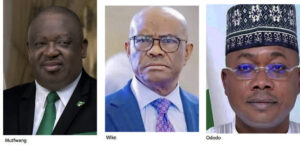
Plateau State rounds off the picture, and arguably offers the most dramatic realignment in the entire zone. Governor Caleb Mutfwang’s defection from the PDP to the APC in December 2025 completed the ruling party’s sweep of all six North Central states, a milestone APC leaders were quick to celebrate. Yet, the defection has reopened old rivalries rather than settled them, since Mutfwang’s arrival has unsettled a Legacy Group of long standing APC loyalists who argue that those who built the party during difficult years should not be sidelined simply because a sitting governor has joined their ranks.
The APC’s own National Chairman, Nentawe Yilwatda, who contested against Mutfwang in the bitterly disputed 2023 governorship election before the Supreme Court ultimately ruled in Mutfwang’s favour, adds a further layer of unresolved history to the internal contest.
The PDP, weakened by Mutfwang’s exit but still commanding residual structures across the state’s 17 local government areas, has itself split into rival factions, with the faction backed by Minister Wike nominating Kefas Ropshik and a rival faction led by Tanimu Turaki nominating Sunday Biggs, a development that could badly dilute whatever opposition challenge the party might otherwise mount.
The ADC, for its part, is positioning itself as a genuine third force, banking on the national profile of former Minister of Sports Solomon Dalung and the grassroots mobilisation of state chairman Hannatu Gagara to make Plateau a genuine three way contest between the APC, the PDP and the ADC, even as the fiercest battle for now continues to play out inside the ruling party itself.
Outlook for 2027
Taken together, the six states and the Federal Capital Territory paint a picture of a North Central zone where the APC’s formal dominance, all six governorships and a commanding share of National Assembly seats, masks a striking degree of internal fragility. In Benue, Kogi and Nasarawa, governors’ attempts to anoint successors or reward loyalists through the appeal process have provoked open revolt rather than unity.
In Kwara and Plateau, long time rivals and recent defectors are jostling uneasily within the same party structure. Only in Niger does the ruling party appear to have avoided a serious internal contest, though even there, concerns over religious balance suggest the calm may be more apparent than real.
For the PDP, the ADC and the NDC, the opportunity lies precisely in these fractures. Aggrieved aspirants denied tickets, whether in Kwande, Kabba, Ilorin, Keffi, Minna or Jos, represent a ready pool of defectors that opposition parties are already working to absorb, much as the PDP has done with Akume loyalists in Benue and the ADC has done in Plateau.
Yet, the opposition’s own divisions, whether the factional split within Plateau’s PDP, the uncertain legal status confronting the NDC in the FCT, or the historic fragmentation that has long weakened the PDP in Kogi, mean that no single alternative to the APC has yet emerged with the coherence needed to mount a zone wide challenge.
Ultimately, the outcome across North Central Nigeria in 2027 will likely turn on three intertwined factors – how effectively the ruling party manages its own zoning and succession disputes without haemorrhaging support to rivals, whether worsening insecurity in Benue and Plateau translates into punishment at the ballot box, and whether opposition parties can convert scattered pockets of grievance into organised, well resourced campaigns capable of contesting seats the APC currently takes for granted.
As consultations, defections and reconciliations continue across the zone, the contest for governorships, senatorial seats and House of Representatives constituencies in North Central Nigeria promises to remain one of the most closely watched aspects of the country’s evolving political landscape ahead of the 2027 general elections.