Follow Us on Google
By Adebowale Johnson
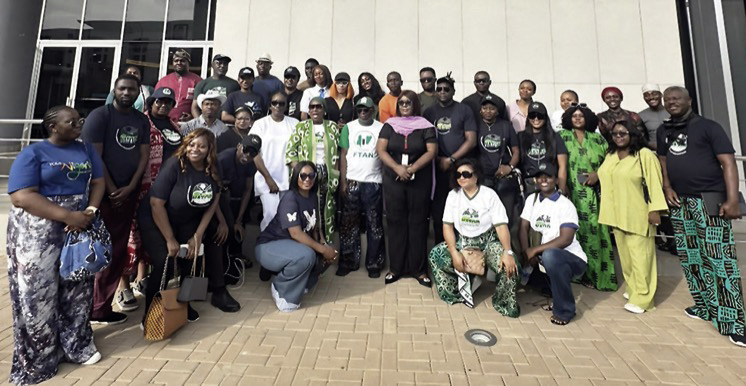
On a bright April morning in Nigeria’s capital, a section of tour operators, transport advocates, and tourism stakeholders gathered for an experience that went beyond sightseeing. The Abuja Green City Tour, organised by the National Association of Tour Operators (NATOP), was designed not just to showcase the city’s attractions, but to reframe how tourism can evolve in an era of sustainability.
Held on April 30, 2026, the initiative brought together industry professionals, partners, and sponsors in a coordinated effort to highlight the Federal Capital Territory’s potential as a model for eco-friendly tourism and integrated transport systems.
For NATOP, the objective was clear: shift the narrative from conventional tourism promotion to a more strategic, sustainability-driven approach.
“We are not just organising a tour; we are building a framework for the future of tourism in Nigeria,” said NATOP President, Bolaji Mustapha. “This initiative demonstrates how environmentally responsible transport systems can enhance tourism experiences while preserving our cultural and natural assets.”
The carefully curated itinerary reflected that vision. Participants explored a mix of historical, cultural, and recreational sites, including the National Assembly Museum and the Garki Palace, alongside visits to religious centres and art galleries that capture Abuja’s diverse identity.
The tour also extended into the city’s green corridors, with a guided drive through environmentally significant zones and a stop at BMT Gardens, a growing symbol of Abuja’s urban ecological landscape.
But beyond the destinations, the underlying message was about systems, specifically, how transportation infrastructure intersects with tourism development.
According to Mustapha, integrating sustainable transport into tourism planning is no longer optional. He noted: “Tourism cannot thrive in isolation. Mobility, accessibility, and environmental responsibility must work together. When we align these elements, we create not just destinations, but experiences that are efficient, inclusive, and sustainable.”
This perspective resonated strongly among participants, many of whom see Nigeria at a critical juncture in redefining its tourism value chain.
Stakeholders at the event emphasised that while Nigeria boasts significant tourism assets, unlocking their full economic potential will require deliberate investment in innovation, policy alignment, and environmentally conscious practices.
One participant, a tour operator based in Lagos, observed that initiatives like the Abuja Green City Tour are essential for industry-wide reorientation. She said: “We’ve talked about tourism development for years. What NATOP is doing here is practical, showing us how sustainability can be embedded into real operations, not just policy documents.”
The role of partnerships also came into sharp focus. NATOP acknowledged the contributions of sponsors and collaborators who supported the event, noting that cross-sector cooperation remains critical to scaling such initiatives.
“Collaboration is at the heart of this movement. No single organisation can drive transformation alone. We need government, private sector players, and local communities working in sync,” Mustapha added.
As global tourism trends increasingly favour eco-conscious destinations, Nigeria faces both a challenge and an opportunity: to align its tourism offerings with sustainability benchmarks while maintaining cultural authenticity.
The Abuja Green City Tour, according to industry observers, represents a step in that direction, a pilot model that, if replicated, could redefine how cities across Nigeria position themselves within the broader African tourism landscape.
For NATOP, the journey is just beginning. The association says the initiative is part of a broader, ongoing effort to position Nigeria as a leading destination for sustainable tourism on the continent.
And if the Abuja experience is any indication, the future of Nigerian tourism may well depend on how effectively it integrates green thinking into every mile traveled.