Follow Us on Google
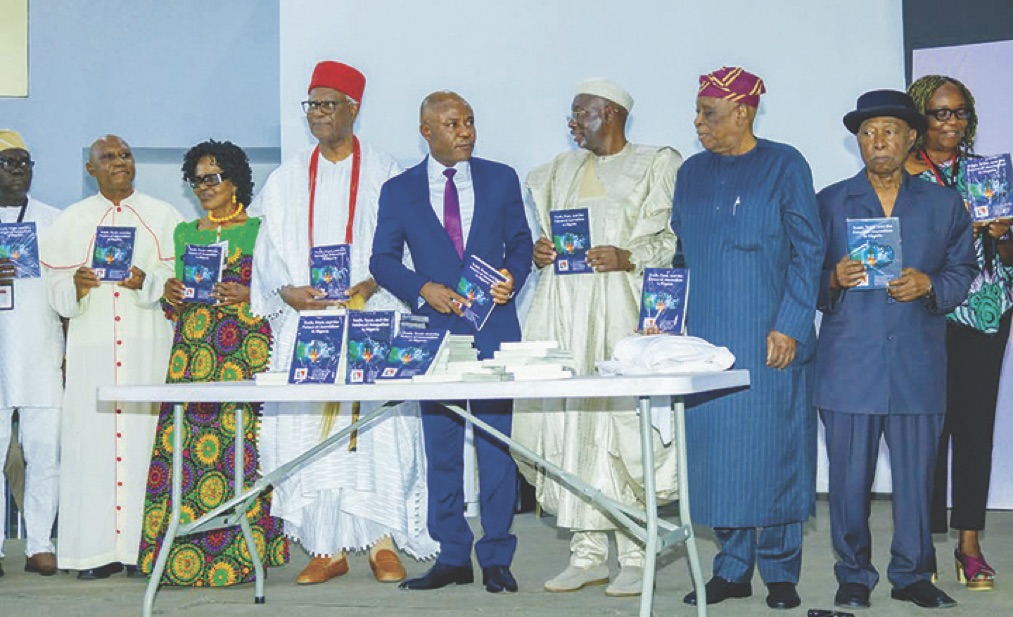
By Kenneth Ofoma
For five days, spanning September 23 to 27, 2026, Enugu, the Coal City State, once again became a meeting point for Nigeria’s media establishment as the Nigerian Guild of Editors (NGE) held its 22nd All Nigeria Editors Conference in the state. The gathering was significant for more than the size and stature of the participants. It marked the second major national gathering of the Guild to be hosted by Enugu within a little over a year under the administration of Governor Peter Ndubuisi Mbah.
In June 2025, the state hosted the Guild’s Biennial National Convention, which attracted more than 400 editors and media executives. The convention, themed “Building a Secure and Cohesive Nigeria: The Role of Dialogue, Inclusion and the Media,” also witnessed the election of Eze Anaba as president of the Guild for another term.
The 2026 conference therefore had something of a homecoming character.
But unlike the previous gathering, which centred strongly on security, cohesion and the media’s role in national integration, this year’s conference confronted the future of Nigeria’s democracy in an increasingly digital and politically charged environment.
With the theme, “The Ballot, the Media and the Task of Keeping Democracy Alive,” and the sub-theme, “When Lies Look Real: Detecting and Debunking AI Disinformation Before, During and After Elections,” the conference brought together editors, media executives, academics, public officials, political actors and other stakeholders to examine some of the most consequential questions ahead of the 2027 elections.
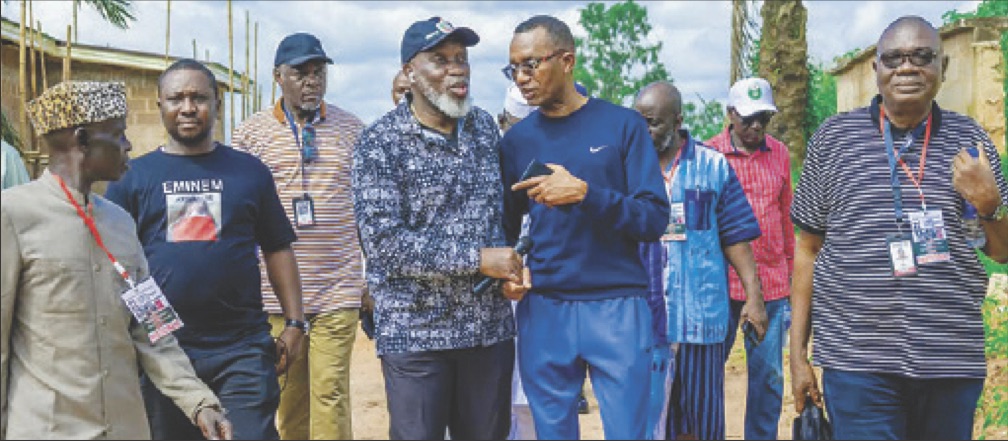
More than 300 editors and senior media practitioners participated in the programme and its associated activities, while earlier announcements had projected attendance of more than 500 participants across the broader conference gathering.
Yet, beyond the conference halls, Enugu offered the editors another story to interrogate — the story of a state government attempting to use infrastructure, technology, tourism, education, transportation, healthcare and security as interconnected instruments of economic transformation. That story unfolded during a tour of major projects across the state.
From the conference hall to the field
The transition from deliberations on democracy to physical inspection of projects was perhaps the most distinctive feature of the 2026 gathering.
After listening to speeches about the responsibility of the press to interrogate power, verify claims and hold institutions accountable, the editors had an opportunity to see some of the projects being presented by the Enugu State Government as evidence of its development agenda.
The inspection included the Enugu International Hospital, major road projects, the rehabilitated Hotel Presidential, Smart Schools, the Ngwo tourism project, the Integrated Livestock Hub and the state’s Command and Control Centre, among others.
For Eze Anaba, the significance was not merely in the number of projects but in what he considered their potential economic impact.
“There’s a solid infrastructure on ground that will grow the economy, that will expand the state,” Anaba said during an interactive session with Governor Mbah at Government House. He recalled that when the Guild visited Enugu in 2025, members had already seen Smart Schools, roads, transport terminals, rehabilitated industries and water projects. This time, he said, the editors returned to find some of those projects completed or significantly advanced.
Among the projects that particularly caught his attention was the 40-kilometre Owo-Ubahu-Amankanu-Umualor-Ikem dual carriageway, which the state government says will provide another strategic connection towards the North-Central. The editors also inspected the revived Hotel Presidential, the Enugu International Hospital, the tourism development at Ngwo Pines, including its zipline, the Integrated Livestock Hub and the Command and Control Centre.
Anaba said the experience had given substance to Governor Mbah’s declaration at the opening ceremony that “Tomorrow is here.”
“With what we saw today, I believe you,” he told the governor.
The remark was significant coming from a professional body whose central responsibility is, in part, to scrutinise claims and determine what deserves public attention.
Beyond commendation: the economic argument
Governor Mbah’s explanation of the projects was that they should not be viewed as isolated achievements. For him, roads, security, transport, tourism, healthcare, education and investments are parts of one economic architecture.
“When we took office, we laid out a few things. One was to grow the economy of the state exponentially. We also undertook to eradicate poverty and also to create a state where people can live, work, invest, and build futures,” the governor said.
The administration has repeatedly framed its development agenda around transforming Enugu from what it describes as a predominantly civil-service economy into a more diversified investment and production centre.
Mbah told the editors that the projects were designed around the objective of growing the state economy from about $4.4 billion to $30 billion. He also presented the administration’s revenue strategy as an effort to activate government assets and reduce dependence on conventional taxation.
According to the governor, the state’s revenue increased to about N406 billion in the preceding year, compared with about N205 billion in 2023. He attributed the growth largely to the activation of government-owned assets and businesses, citing entities and facilities including United Palm Products, Sunrise Plants, Niger Gas, the International Conference Centre and airport terminals.
The governor’s argument was that productive assets should generate both revenue and employment rather than remain dormant. That philosophy was visible in the project tour, where infrastructure was repeatedly presented not simply as public works but as economic enablers.
A tourism economy in the making
Tourism was another major component of the conversation. Mbah told the editors that Enugu was developing six major tourism sites, with the ambition of attracting about three million visitors to the state. Among the projects highlighted was the development around Ngwo and the Trani Forest, including a zipline and a proposed 5.6-kilometre cable car. The administration has also spoken of preserving historical attractions such as the Nsude Pyramids and ancient iron-smelting sites.
The underlying proposition is straightforward: Enugu’s history and natural assets can be converted into economic opportunities if they are deliberately developed, connected and marketed. That would mean tourism serving not merely as recreation but as a source of employment, hospitality activity, transportation demand, investment and revenue.
Education as an economic intervention
Education occupied another major space in the governor’s presentation. Mbah said his administration was constructing more than 7,000 classrooms within two and a half years, alongside approximately 464,000 pieces of furniture and supporting infrastructure such as solar power and data systems.
The Smart Schools, he explained, were intended to move students beyond a system dominated by memorisation towards technology-driven and practical learning. This was consistent with the administration’s broader argument that infrastructure must ultimately translate into human capital and economic opportunity.
The governor linked the education programme to a larger demographic concern: the migration of young people out of Enugu after graduation in search of employment.
Other News
“We don’t want our boys to come back to Enugu when they want to attend funerals or weddings,” he said.
The objective, therefore, was to create an economy capable of retaining young people by providing opportunities for them to live, work and build wealth within the state.
Security and the regional dimension
Security emerged as another important element of the project inspection. At the Command and Control Centre, the editors saw the technology being deployed by the state in surveillance and security operations.
Former Ogun State governor and media veteran, Chief Segun Osoba, later praised the administration’s security architecture at the conference gala. He referred specifically to the response to a kidnapping incident at Affa in Udi Local Government Area, where security assets were deployed to track the perpetrators and secure the release of two hostages.
Osoba urged other states to develop comparable technology-driven security systems.
Mbah, however, went beyond Enugu’s borders in discussing security. He argued that security threats do not respect state boundaries and disclosed that discussions were ongoing around the possibility of an integrated security system for the Southeast, including a common command and control structure for intelligence and operations.
It was at this point that the Enugu development narrative acquired a distinctly regional dimension.
From Enugu model to Southeast agenda
Mbah told the editors that he believed the transformation underway in Enugu should ultimately contribute to a broader Southeast development agenda. He cited the establishment and operationalisation of the Southeast Development Commission as an important platform for pursuing projects that transcend individual state boundaries.
Among possible areas of regional collaboration, he mentioned infrastructure, including a proposed pressure gas pipeline linking major ports in the Southeast and an integrated Southeast railway project. The Akanu Ibiam International Airport, he said, was also being positioned as a major aviation hub for the region, with the international wing concessioned and efforts continuing towards full operationalisation.
This regional outlook also informed his comments on peer review. Anaba had observed that some state governments were sending officials to study policies and projects being implemented in Enugu.
For the NGE president, such peer review was evidence that governors could accelerate development by learning from one another rather than operating in isolation. The implication is important: successful sub-national development does not necessarily have to remain within the boundaries of the state where it originates.
The media’s own transformation challenge
But perhaps the most important lesson from the Enugu gathering was not about roads, hospitals or tourism.
It was about truth. The conference theme placed the media at the centre of the challenge of keeping democracy alive at a time when artificial intelligence can generate convincing photographs, videos, voices and documents.
Mbah urged journalists to deepen their reporting and rely on investigation, evidence and context rather than predetermined political positions.
Minister of Information and National Orientation Mohammed Idris similarly warned against the misuse of AI and urged newsrooms to make verification a permanent practice.
Cardinal John Onaiyekan, delivering the keynote address, focused on electoral safeguards and advocated reforms to strengthen the independence of the Independent National Electoral Commission and improve the speed with which electoral disputes are resolved.
The convergence of these arguments was unmistakable. Nigeria’s democracy requires credible elections, but credible elections also require credible information. And credible information requires a professional media willing to verify before publishing, investigate before concluding and distinguish fact from assertion.
A conference that became a conversation
In the end, the 2026 NGE gathering was more than another annual professional conference. For five days, Enugu became both a newsroom and a field laboratory.
Editors debated the future of democracy, artificial intelligence, electoral credibility, misinformation and the responsibilities of journalism. They also left the conference venue to inspect infrastructure and interrogate the claims surrounding a state government’s development agenda.
The sequence was almost symbolic.
First came the questions: What is government doing? How should the media scrutinise it? How can citizens distinguish truth from fabrication?
Then came the inspection: What exists on the ground? And finally came the conversation with the governor: What is the larger objective?
The Guild’s commendation of Enugu’s infrastructure was its own assessment after the inspection, while the governor’s presentation offered the administration’s rationale for the projects.
Between the two lies the continuing responsibility of journalism — to observe, verify, question, contextualise and report.
That may ultimately be the most enduring significance of Enugu’s historic double hosting of the Nigerian Guild of Editors.
In 2025, the Coal City hosted the Guild as it examined security, cohesion, dialogue and the media’s role in nation-building. In 2026, it hosted the editors again as they confronted the ballot, artificial intelligence, misinformation and the survival of democratic credibility.
And in between those two gatherings, the state itself became part of the conversation. The five-day encounter provided something valuable to both government and media: an opportunity to move beyond claims and counterclaims, out into the field, where policies acquire physical form and where the public can eventually judge their consequences.
For a profession built around seeing, questioning and telling the story, there could hardly have been a more fitting setting than Enugu.