Follow Us on Google
By Abdulkabir Muhammed
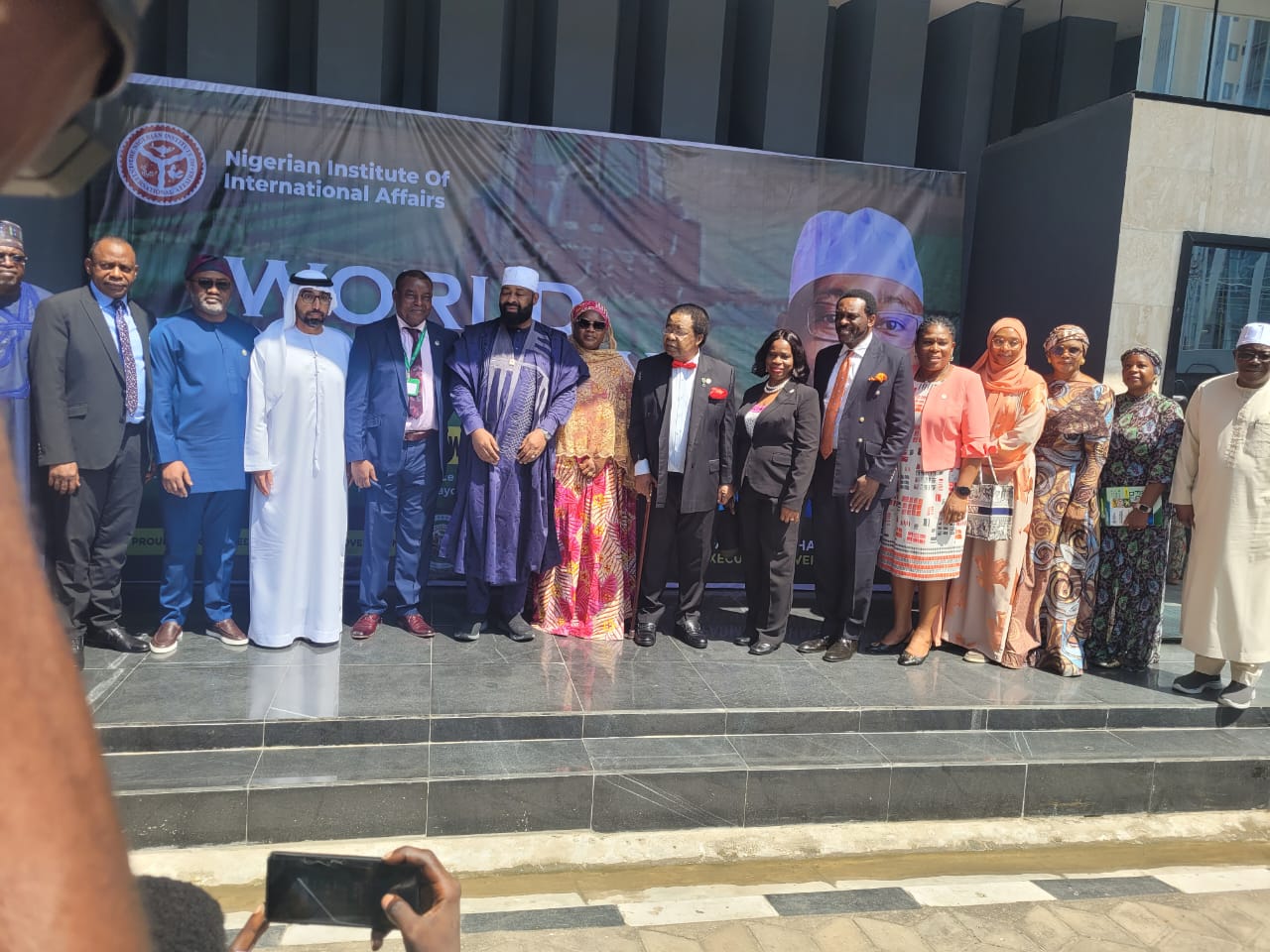
The executive governor of Niger State, Farmer Mohammed Umar Bago, has argued that Nigeria needs a national agenda for food security and sovereignty if the country is to be free from the negative effects of climate change. In a lecture delivered at the Nigerian Institute of International Affairs (NIIA) on 16 October 2025, in commemoration of World Food Day, Bago, who doubled as the Guest Speaker, decried the difference between Nigeria’s potential and its realities.
The lecture, titled “Food Security to Food Sovereignty: How Far Has Nigeria Gone?”, emphasised how Nigeria can leverage its arable land, and agro-friendly climate to tackle food insecurity in a globalised world. Bago noted that Nigeria is home to several resources highly sought after in Europe and across the world. Bago noted that Nigeria could utilise globalisation by determining our production processes. He said:
“Indeed, globalisation, for all its promise, has become an agricultural conduit for food and imperialism, a process through which certain countries have been systematically nudged, if not coerced, into dependency on food they neither produce nor control. This is the paradox we must dismantle. The pathway forward as a sovereign people begins with decolonising our food systems, asserting strategic autonomy over what we eat, how we produce it, and who reaps the benefits of agricultural enterprise.
“This is the essence of food sovereignty. Anchored in such autonomy, Nigeria can engage the world not as a passive beneficiary, but as a confident equal partner collaborating with nations and global actors on fair, reciprocal and mutually beneficial terms. With our immense agro-ecological diversity, fertile land, water resources, climate and vibrant entrepreneurial spirit, Nigeria has the potential to become a global food power.”
The Guest speaker also urged the government to engage its vibrant youthful population in agriculture. He advised that Nigeria harness its human capital by equipping Nigerians with the necessary capital to cultivate plants and rare livestock. He argued that Nigeria could utilise livestock diplomacy with countries like Saudi Arabia and the United Arab Emirates, as their thirst for livestock products grew high during Islamic festivals.
Other News
“Livestock sector is not empirical but fundamental to a resilient agricultural economy. It is indispensable to our pursuit of food security,” he argued.
Bago also lamented the manufacturing cost in Nigeria, while calling on the government to address issues of logistics and the lack of access to modern technologies in food production.
“We must now address a salient but crippling challenge within our agricultural system. The staggering level of value chain losses. Multiple technical analyses revealed that between 30 to 50% of certain commodities are lost at various stages of production. Either from the farm to the market, whether from the market to the warehouse. You know, a lot of our farmers end up with a loss.
“Because there is no logistics support, there is no transportation support, there are no modern techniques of harvesting and storage support from the system. And if a farmer invests his sweat and his resources into a farm and loses 15% even before going to the market, you can just take it that he has lost for that year.
“This is not merely inefficiency. It is a monumental waste of resources. Such losses undermine the very foundation of our food systems and reminds us that increased production alone is insufficient without strategic investment in storage, mechanization, irrigation logistics and agro processing infrastructure.”
However, Farmer Bago recommended that Nigeria increase investment in mechanisation, irrigation and water management, contract farming, land clearing and preparation, seed production, infrastructural development, and social security.