Follow Us on Google
- Senate passes N58.47trn 2026 budget through second reading
- Version passed for second reading differs from N58.47 trillion approved by FEC with N290bn
- Vows rigorous scrutiny to drive economic growth
- Adjourns to January 27, 2026
From Adesuwa Tsan and Ndubuisi Orji, Abuja
Both chambers of the National Assembly on Tuesday extended the implementation of the capital component of the 2025 budget to March 31, 2026.
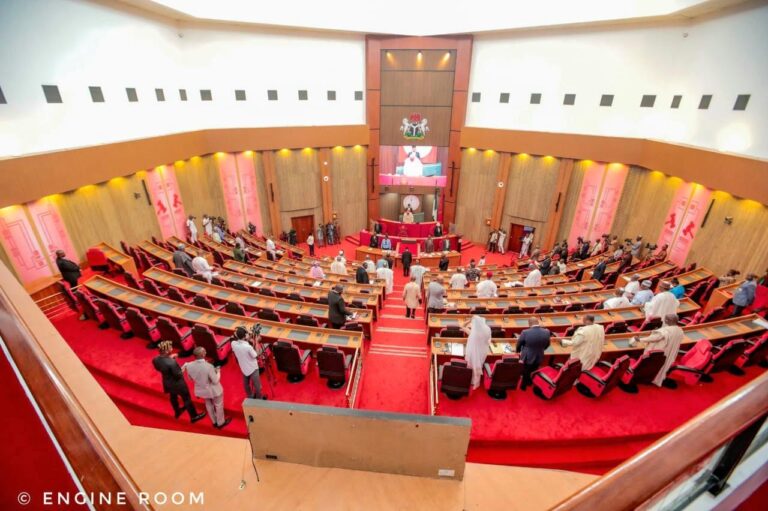
This is just as the Senate approved for second reading the N58.47 trillion 2026 Appropriation Bill, with lawmakers pledging rigorous legislative scrutiny to ensure transparency, fiscal discipline, and tangible economic outcomes for Nigerians.
The extension of the capital component of the 2025 budget followed the passage of the 2024 and 2025 Appropriation (Repeal and Re-enactment) Bills, which were transmitted to the House last week by President Bola Tinubu, after the reports of both Appropriation Committees on the two bills were considered and approved at the Committee of Supply respectively.
The first bill repealed and re-enacted the 2024 Appropriation Act of N35,055,536,770,218 and authorised the issuance from the Consolidated Revenue Fund of the Federation of the total sum of N43,561,041,744,507, comprising N1,742,786,788,150 for statutory transfers, N8,270,960,606,831 for debt service, N11,268,513,380,853 for recurrent (non-debt) expenditure, and N22,278,780,968,673 for capital expenditure/development fund contributions for the year ending 31 December 2025.
While the second bill repealed and re-enacted the 2025 Appropriation Act of N54,990,165,355,396 and authorised the issuance from the Consolidated Revenue Fund of the Federation of the total sum of N48,316,242,591,785, comprising N3,645,761,358,925 for statutory transfers, N14,317,142,689,548 for debt service, N13,588,009,682,673 for recurrent (non-debt) expenditure, and N16,765,328,860,640 for capital expenditure/development fund contribution for the year ending 31 March 2026.
Earlier, the Chairman, House Committee on Appropriation, Abubakar Bichi, while presenting the committee’s report on the two bills, said the panel met with President Tinubu’s Economic Team to get insight into the rationale for the repeal and re-enactment of the 2024 and 2025 Appropriation Acts.
The lawmaker explained that the repeal and re-enactment of the 2025 budget will balance responsiveness with fiscal responsibility, ensuring that urgent expenditures do not weaken legislative oversight or undermine fiscal freedoms.
According to him, the sum of N16.765 trillion was reduced from the 2025 capital allocation and rolled over to the 2026 fiscal year owing to funding constraints.
Bichi said: “The initiative is expected to make the budget effective, reducing the expenditure of governance, given the anticipated increase in revenue-generating properties in the next fiscal year.”
The Appropriation Committee chairman noted that the practice of rolling budget cycles, which results in running two budgets concurrently, weakens fiscal discipline.
In the Senate, the 2026 money bill passed second reading. The N58.18 trillion figure debated by the Senate differs slightly from the N58.47 trillion earlier approved by the Federal Executive Council under its amended Medium-Term Expenditure Framework, a gap of about N290 billion.
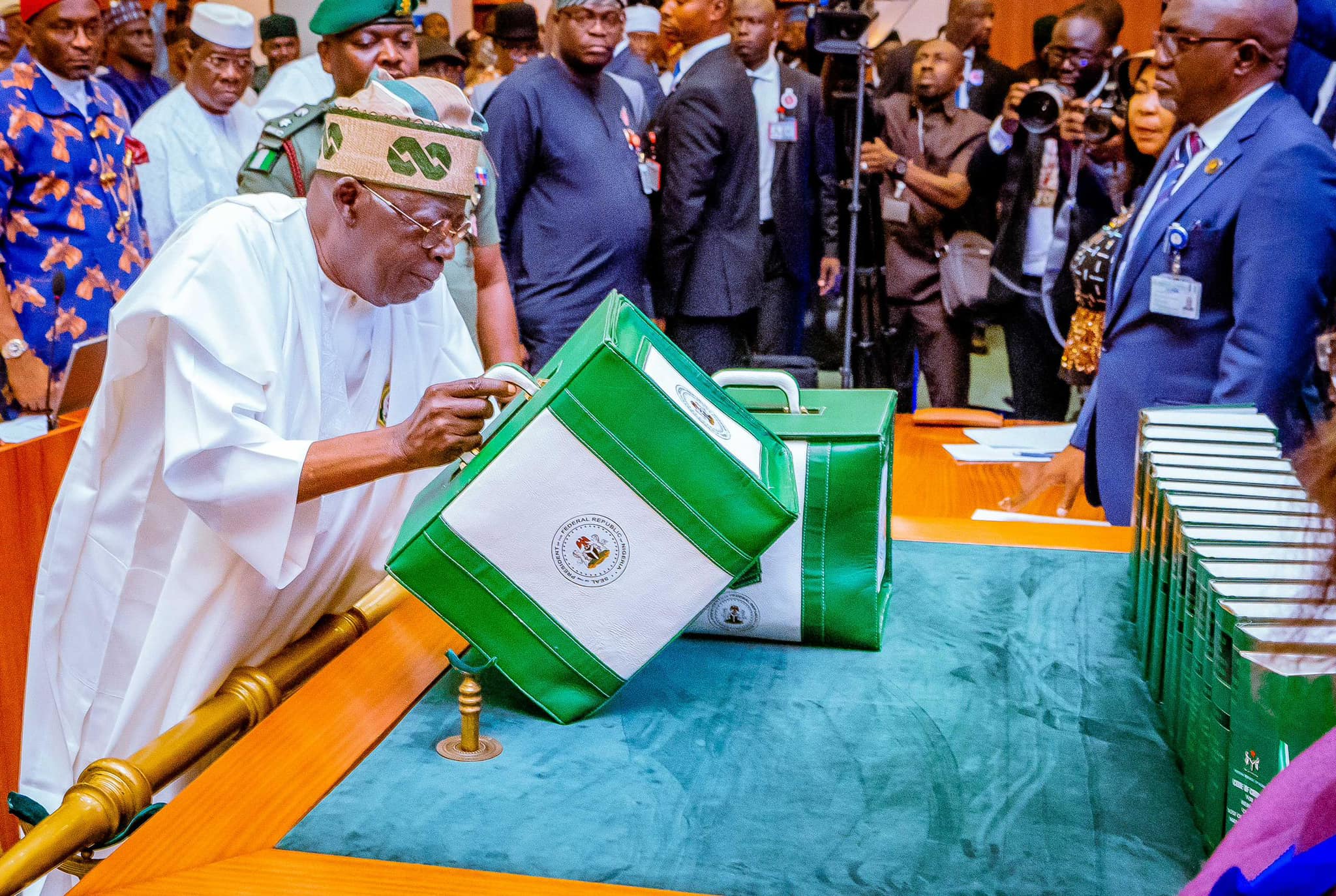
While the FEC’s version was based on updated macroeconomic assumptions, including a revised exchange-rate benchmark, the version formally presented by President Bola Tinubu to the National Assembly and now passed by the Senate for second reading retains the N58.18 trillion total.
Lawmakers noted that the bill before them reflects the executive’s official budget submission to parliament, with any adjustments expected to arise during committee-level scrutiny rather than at the second-reading stage.
Senate Leader Opeyemi Bamidele, while leading the debate on the bill, said the National Assembly bears a responsibility to align government spending with national priorities and the aspirations of citizens, stressing that the credibility of the budget would ultimately be measured by its impact on the economy.
“The responsibility before us is to subject this Bill to rigorous legislative scrutiny, ensure transparency, and align appropriations with national priorities and the aspirations of our constituents,” Bamidele said. “The true test of a budget is not in its presentation, but in its delivery.”
Other News
He noted that, through effective oversight, the Senate must ensure equity, realism, and value for money, while protecting the most vulnerable and strengthening public trust in the fiscal process.
The proposed 2026 budget puts total expenditure at N58.472 trillion, made up of N4.097 trillion for statutory transfers, N15.909 trillion for debt service, N15.252 trillion for recurrent non-debt expenditure, and N23.214 trillion for capital expenditure through the Development Fund.
Bamidele said the structure of the spending plan reflects deliberate prioritisation, with capital expenditure emerging as the largest component of discretionary spending.
“This composition reflects a clear commitment to growth, productivity, and infrastructure development,” he said, adding that the capital-heavy budget is designed to stimulate economic expansion and improve living standards.
Sectoral allocations in the budget, he explained, are targeted at addressing Nigeria’s most pressing challenges. Security tops the priority list, based on the recognition that economic growth cannot thrive without peace and stability.
“Security receives primacy, rightly so, because without peace and safety, no economy can thrive,” Bamidele said, noting the President’s commitment to a restructured national security architecture and a firm stance against terrorism, banditry, kidnapping, and violent criminality.
Beyond security, he continued, the budget makes substantial provisions for education and healthcare, reflecting a focus on human capital development. Investments in student financing, healthcare expansion, and partnerships with international donors are aimed at improving productivity and long-term economic competitiveness.
Infrastructure, agriculture, and industrial productivity also feature prominently, with the goal of job creation, food security, and enhanced private-sector participation.
The Senate Leader described the budget as a continuation of ongoing economic reforms, framed as a “budget of consolidation” rather than experimentation. He said the 2026 fiscal plan seeks to stabilise key economic indicators, consolidate earlier reforms, and accelerate growth through targeted public investment.
“The philosophy of the 2026 Budget is anchored on consolidating macroeconomic stability, improving the business and investment environment, promoting job-rich growth and poverty reduction, and strengthening human capital while protecting the vulnerable,” he said.
While acknowledging challenges encountered in the implementation of the 2025 budget, including revenue shortfalls and execution pressures, Bamidele said the executive has committed to stronger fiscal discipline in 2026, highlighting measures such as digitised revenue mobilisation, stricter control of government-owned enterprises, and zero tolerance for leakages as steps expected to improve fiscal performance and reduce reliance on borrowing over time.
With expected revenues of N34.33 trillion against total expenditure of N58.18 trillion, the projected deficit of 4.28 per cent of GDP, he noted, remains within the medium-term fiscal parameters approved by the Senate. Capital expenditure of over N26 trillion, he added, signals a strong development orientation that could unlock private investment, expand productive capacity, and support sustainable economic growth.
Describing the Appropriation Bill as a “national compact,” the Senate Leader said it is realistic, reform-aligned, development-focused, and “balances fiscal constraints with growth imperatives and reflects a clear policy direction for the Nigerian economy.”
The bill was referred to the Committee on Appropriation for further legislative action, to report back in one month.
Meanwhile, the Senate and House of Representatives both adjourned plenary until 27 January 2026 for the Christmas and New Year festivities.