Follow Us on Google
Record improved yields, healthier soils, better nutrition
_________________________________________________________
About 18,000 smallholder farmers in Nasarawa State are adopting climate-smart agricultural practices to tackle the effects of changing weather patterns while improving crop yields, soil fertility and household nutrition.
The intervention is being implemented by the Sasakawa Africa Association (SAA-Nigeria) under its SAA-NG programme, with funding support from the NIPPON Foundation of Japan.
During a two-day media field day in communities in Lafia and Obi Local Government Areas, farmers demonstrated the impact of improved seeds, precision planting, biochar application, crop intercropping and nutrition-sensitive agriculture.
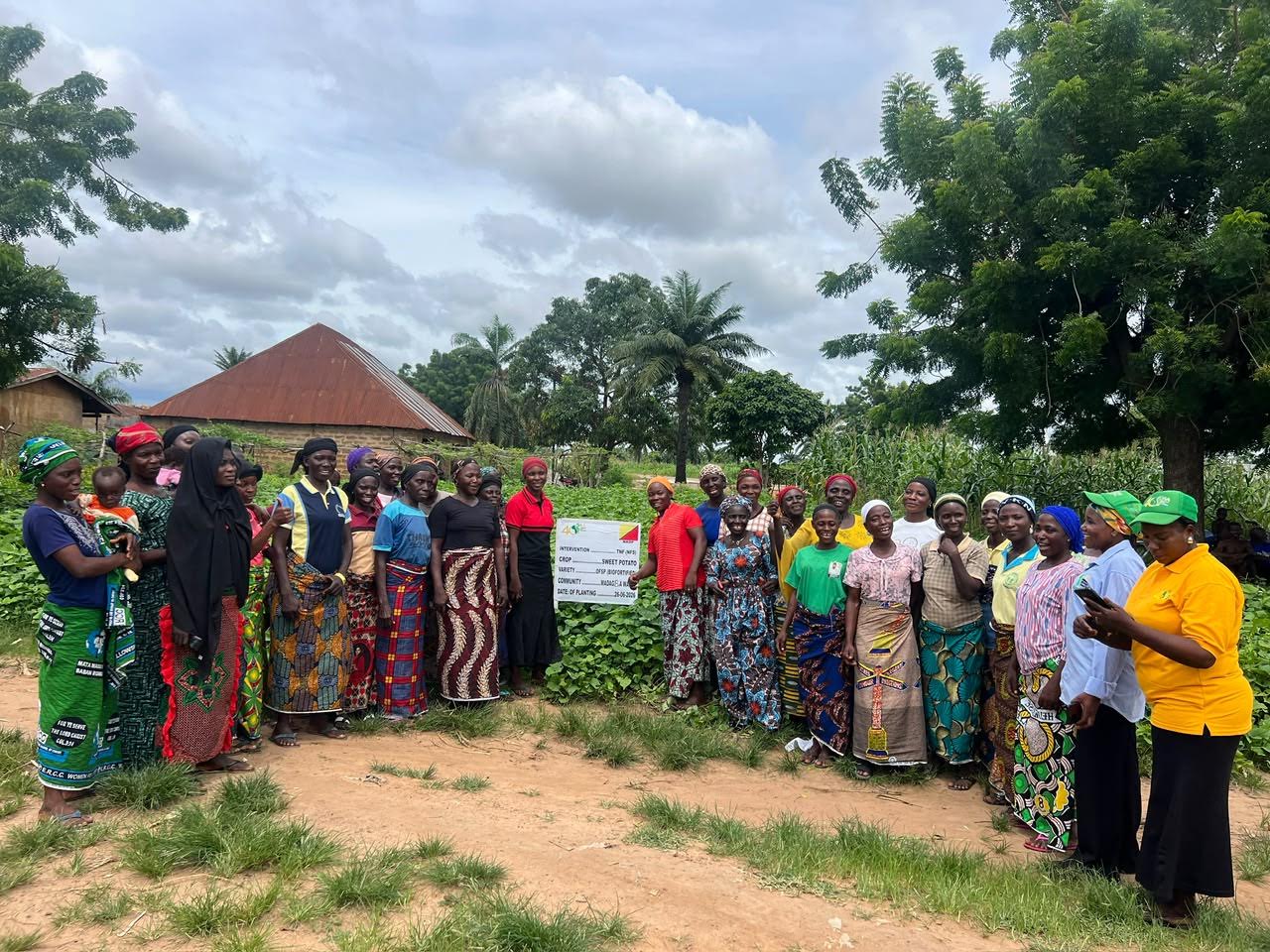
At Madagba Watta in Lafia, Mrs Felicia Alaku, leader of a women farmers’ group, said the programme introduced them to Orange-Fleshed Sweet Potato (OFSP), a crop previously unknown in the community.
“When Sasakawa came, they met with us and introduced this sweet potato variety. They taught us to plant at 25 by 25 centimetres spacing and explained its health benefits, especially how it provides Vitamin A for us and our children,” she said.
Alaku said the women had also been trained to process the crop into porridge, juice, chips and flour, while a dry-season seed plot had been established to preserve planting materials.
At Tundun Adobu in Obi LGA, farmer Jibril Elayo said precision planting had reduced seed wastage and production costs.
“We adopted the SAA technology of planting one seed per hole at 25-centimetre spacing to achieve optimal plant density, which directly saves seeds, reduces cost and increases yield,” he said.
He said the farmers were also benefiting from SAMMAZ 52, an early-maturing, Vitamin A-biofortified maize variety, which could allow farmers to complete their harvest before early cessation of rainfall.
Another beneficiary, Mrs Adama Rabiu, said the intervention had improved not only farm production but also household diets through the cultivation of nutritious crops.
“Our diet has completely changed. We used to eat very few leafy vegetables, but now we grow fluted pumpkin around our compounds to add to our soups. It has made a 100 per cent difference in our lives,” she said.
Other News
SAA Coordinator for Climate Resilience and Agrifood Systems Technical, Dr Nathaniel Otene, said the organisation was connecting smallholder farmers with improved technologies and varieties developed by agricultural research institutions.
“Our focus is to enhance productivity, which directly increases income and improves livelihoods,” Otene said.
He explained that SAA was promoting drought-tolerant, early-maturing, high-yielding and pest-resistant varieties, as well as regenerative practices such as biochar, composting and cereal-legume intercropping.
“Biochar is produced through pyrolysis and, when applied, it helps to retain soil moisture, while legume intercropping fixes nitrogen naturally into the soil,” he said.
Otene also dismissed misconceptions that the biofortified crops being promoted by SAA were genetically modified organisms, saying they were developed through conventional plant breeding.
On nutrition, SAA Programme Officer for Nutrition-Sensitive Agriculture, Dr Moshood Sulaiman, said the organisation was promoting pro-vitamin A crops to combat micronutrient deficiencies, particularly among pregnant women, nursing mothers and children under five.
He said Orange-Fleshed Sweet Potato and pro-vitamin A maize could provide important nutrients while improving food security in rural communities.
Meanwhile, SAA Programme Officer for Market-Oriented Agriculture, Jonathan Yassah, said the organisation was establishing decentralised seed production networks to ensure farmers could access quality seeds within their communities.
“Farming is a business. Farmers sell these high-quality seeds to their neighbours right at their doorsteps rather than relying on external supply chains,” Yassah said.
The media field day brought together farmers, agricultural officials, research institutions and development partners to inspect demonstration farms and assess the impact of climate-smart agriculture on rural communities.
For the beneficiaries, the emerging results are offering a new approach to farming as climate variability, declining soil fertility and rising production costs continue to threaten food production across the state.