Follow Us on Google
From Okwe Obi, Abuja
National Agency for the Prohibition of Trafficking in Persons (NAPTIP) has pledged to work with the Daurama Foundation to ensure the protection of women and girls.
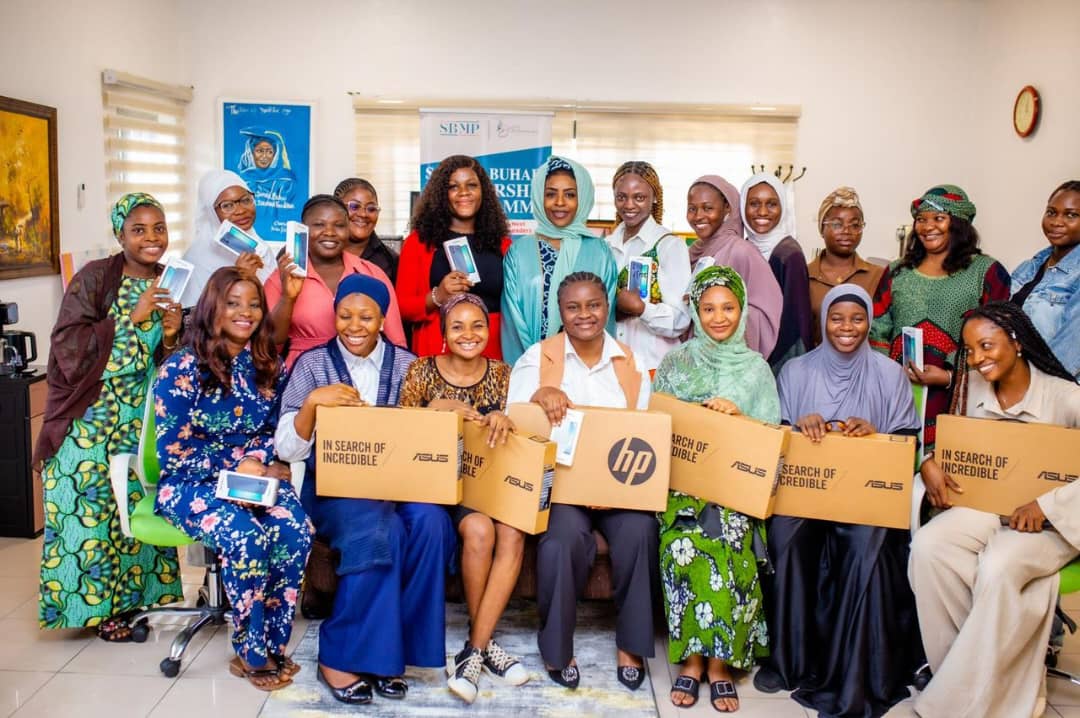
NAPTIP director general, Professor Fatima Waziri-Azi, made the commitment yesterday at the virtual graduation of 39 young women from the Samira Buhari Mentorship Programme (SBMP), a 12-week capacity-building initiative focused on leadership, career development and digital literacy.
Waziri-Azi, represented by the Director of Counselling and Rehabilitation, Angela Agbayekhai, noted that the era of marginalisation, domestic violence and illiteracy among women and girls was gone.
She praised the programme’s efforts to equip young women with skills and opportunities, saying it aligned with national strategies to protect women and girls.
“Across our communities, girls and women face vulnerabilities that can echo across generations. What the SBMP is doing, taking young women off the margins and empowering them, is timely and essential.
“NAPTIP stands ready to partner so this momentum translates into safer, stronger futures.”
Founder of the Daurama Foundation, Samira Buhari, explained that the mentorship scheme was launched to provide training in leadership, entrepreneurship, public speaking, business development and the use of digital tools.
According to Buhari, participants also engaged in mock interviews, one-on-one coaching and networking sessions designed to prepare them for professional and entrepreneurial pursuits. She further noted that the initiative aimed to equip participants with the confidence and skills to take on leadership roles in their communities and beyond.
“This is far more than a ceremony; it is a celebration of courage and possibility. Mentorship should open doors, nurture confidence and ignite a fire that lasts well beyond the classroom.
“When we invest in women, we transform communities, economies and nations. Women’s voices must be at the table, at the helm and at the heart of progress,” she said.
More so, she said the SBMP would continue to serve as a platform for building a network of women leaders and promoting skills development as part of broader efforts to address gender inequality and economic marginalisation.
Mercy Ajeh, a mentor who facilitated sessions on digital productivity, commended the participants for their dedication, saying, “these young women were eager to learn and often went beyond class activities; sharing calendars, drafting documents and even taking minutes. The structure pushed them to meet high standards and they rose to the challenge.”
One of the graduates, Fatima Shema, reflected on how the mentorship experience had impacted her career path.
“The SBMP gave me confidence and direction. The day after our mock interviews, I passed a real interview and got the job. I have found my voice and I’m building a creative enterprise that creates opportunities for other women,” she said.