Follow Us on Google
By Cosmas Omegoh
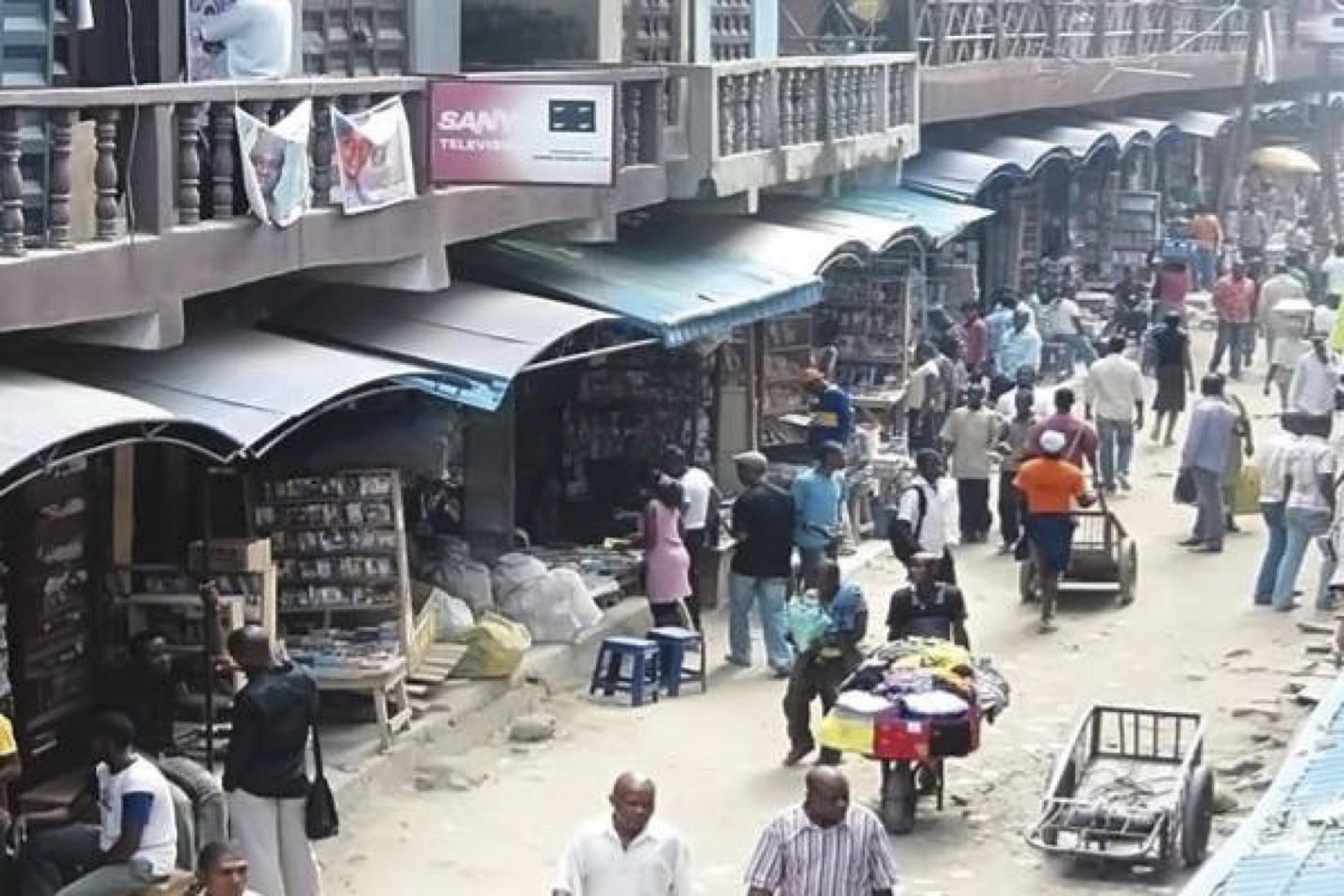
Over the past months, traders and the consumers of their goods have been feeling hurt. This was caused by the instability in the prices of goods and services in the market, a development that has been blamed on the continuing fluctuation in the value of the naira.
Traders and a cross section of Nigerians, those who frequent the markets, are emphatic in their claim that they have been finding it difficult buying and replacing goods – whether imported or locally made – because of the ever-changing prices.
Ordinarily, traders are happy selling their goods and making profits.
But in this disturbing period, not many of them are really happy. They are worried that at the prices they sell, they might not be able to replenish their stock the next time they visit the market.
On the other hand, their customers are highly perturbed that the price of goods they purchased in the morning can change by the next day or even in the evening of the same day.
Sunday Sun learnt that prices of some goods have been changing at dizzying speed. Like the colours of the chameleon, they have maintained an upward swing, changing in some instances daily or even every six hourly in response to the prevailing exchange rate of the naira to the dollar and other foreign currencies.
Consumers/traders lament situation
Traders and buyers of goods complained that the prices of goods and to some extent services have maintained such unpredictable movement that has left the market so unstable, so unsure. And everyone concerned has been unhappy about the unfolding scenario.
“I was at Trade Fair market in Lagos to buy spare parts to fix my car in the penultimate week.
“We had concluded on the price and the young man was about to do me an invoice. Then something snapped when he put a call through to someone who informed him about a change in the price of the item I had already paid for.
“Just then, his countenance changed and he turned to me and said: ‘Oga, you have to pay extra N5,000 for this ooo. The price has changed.’
“Well, I tried to protest, but he responded: ‘Are you not in the country? Everything right now is responding to the changing value of the naira. That is the dilemma we are going through,’” a distraught customer, Anthony Igwe, recalled.
According to him, the trader added: “I will advise you to buy this item now because the price is most likely going to change by the time you come back here the next hour.”
Igwe noted that the trader told him with a note of regret that they too were not happy selling off their stock as they were not sure of what would happen next.
“He told me that they were not sure of getting the commodity to buy after selling all they had in the shop because they didn’t know at what price they might buy the same goods by the time the importers returned from China a week after.”
Similarly, Mr Onyeka Alakwem narrated how he ended up paying extra N4,000 on a commodity that sold for less just within days before he bought it.
He said: “I needed to purchase four packs of PVC ceiling sheets for my housing project at home. The cost of the item was N26,000 up from N5,000 when I purchased it the last time in 2019. So, I sent money for four packs to my nephew and asked him to help me purchase them.
“Surprisingly, he called me from the market, saying I needed to send additional N16,000. He said the traders insisted that the N26,000 each we budgeted was the price they sold a week before, citing the changing naira value. I had no option than to send the extra amount,” he stated.
Also, Mr Chukwunyem Okonji in Asaba, narrated how he ended up paying extra N100,000 to build an overhead water tank platform for his house in the city, and more for cement and other materials for its installation.
“The builder and I had agreed for N500,000 a week before. But I delayed in forwarding the money to him.
“I was surprised when he told me the price had changed. He said the cost of steel went up within two days, insisting I had to add N100,000 to the previously agreed price. I was forced to comply because we all know what is going on.
“It was not the cost of steel alone. About that time, the cost of cement had risen to N12,500 per bag up from the N11,500 we previously calculated, the same for the price of a truck load of sharp sand which went up to N100,000. The cost of nine inches building blocks too went up to N600 from N550.”
In Lagos, a welder, Yusuf Alimi, also shared his experience, relaying how he had an altercation with one of his customers over changing prices of materials.
“As soon as I received payment for the job, I rushed out to purchase the materials. I noticed a slight increment, but felt I could accommodate that.
“But as soon as I completed work on the gate, I went for paint to add a coat of colours to the work. There, I discovered a sharp rise in cost which was by far beyond what we bargained for. So, I returned to inform my customer about the development, but he would have none of that. I further informed him that we needed to make haste otherwise the price might further climb.
“It took the intervention of neighours before he would listen and agree to accommodate the extra cost involved,” he recalled.
Explaining why traders have to jack up the prices of their commodities, a used-car dealer in Lagos, Nnamdi Okpa, told our correspondent that the danger in dealing with shifting prices of goods is that a trader who missteps is at risk of losing his investment over a short period.
“If you are trading with a certain amount of money, N5 million for instance, let’s assume that can fetch you 100 units of goods. By the time the same N5 million is only able to fetch you 90 units of the same goods, it means you are retrogressing. Over time, you might completely lose your entire investment and subsequently go out of business.”
He said that was why every smart trader has to sell his goods at the prevailing market rate in order to make steady his feet firmly on the ground.
In response to the unstable naira exchange regime development, it was learnt that some business outlets decided to add extra amount of money to their commodity prices tagging it “replacement cost.”
“That was what I observed at a neigbourhood supermarket in Ajaa area of Lagos recently.
“I had discovered that the price tag on the items on the shelf were way out of the ones I earlier saw somewhere. So, when I protested, a lady attendant told me the mark up was replacement cost.
“She stated that because of the uncertainty in the prices of goods these days, they had to add a mark up to ensure that they accommodate the price differentials they were likely to encounter when next they returned to the market,” a man, Osaro, told our correspondent.
Naira and its exchange rates
Following the floating of the naira last year by the Central Bank of Nigeria (CBN), the naira-dollar exchange rate has continued to move up, racing speedily to catch up with the exchange rate at the parallel market. Consequently, the rate which hovered around N750 to the dollar about June last year began jumping to the skies.
Some weeks ago, the naira to the dollar rate hit N1,900, making observers to fear it might hit over N2,000 threshold in matter of days.
Amid the uncertainty, no one was sure of what the exchange rate would be the next hour.
But following series of desperate CBN interventions targeted at stabilising and saving the naira, the currency had staged a rebound.
The naira has been exchanging at rates between N1,300 and N1,255. Yet the air of uncertainty doesn’t seem to have shifted.
According to Sunday Sun investigation, the performance of the naira against the dollar has such a telling effect on businesses that cannot allow businessmen, manufacturers and producers to fix appropriate prices for their goods.
That also does not let them know at what prices they will buy their raw materials after their last production.
Analysts believe that trouble will not be over yet until the naira finds a stable anchor that will enable everyone to plan based on an exchange rate that will prevail for a good length of time.
The place of inflation
Over the past months also, inflation has been driving the prices of goods upwards.
According to the National Bureau of Statistics (NBS), inflation rate in the month of March stands at 32.63 per cent.