Follow Us on Google
From Ndubuisi Orji, Abuja
The National Agency for Food and Drug Administration and Control (NAFDAC) has said it realised N2.537 billion from its recent raids on fake drug markets in Lagos, Onitsha, and Aba.
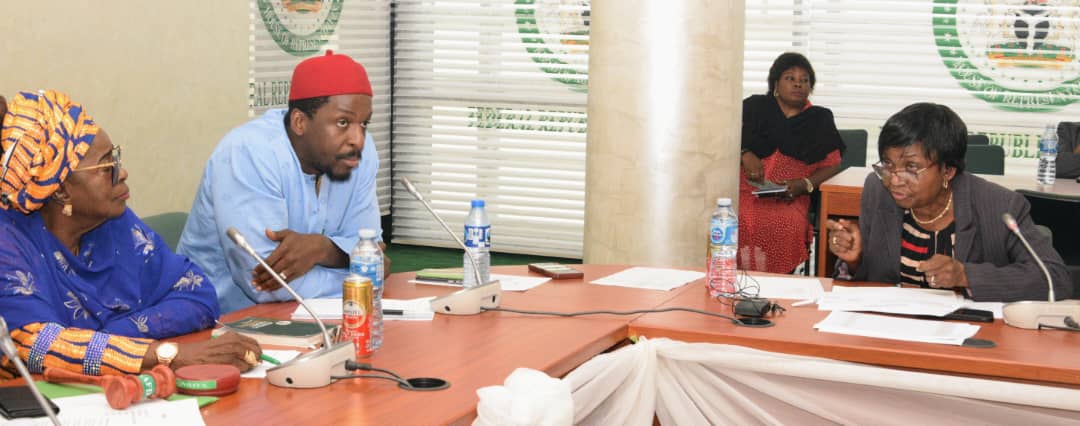
The Director-General of NAFDAC, Professor Mojisola Adeyeye, stated this on Tuesday, July 29, when she appeared before the House of Representatives Committee on NAFDAC. Adeyeye said the revenue was generated from fines collected from traders found culpable of selling fake and substandard drugs.
The NAFDAC boss explained that, during the raids, which lasted four weeks in some locations, some shop owners were caught distributing banned substances like tramadol and selling expired or unregistered drugs.
Nevertheless, she explained that the agency has only N207 million left in its coffers from the N2.537 billion realised from the raids, stating that N996 million was spent on the operations, N159 million was borrowed from a donor grant, and N1.175 billion was spent on regulatory expenses.
Adeyeye said, “The charges collected were paid directly into a NAFDAC account. The total amount was about N2.5 billion—roughly N2.537 billion. For the operation in the three markets—Lagos, Onitsha, and Aba—about N996 million was spent.
“We had to borrow N159 million from an existing grant because we didn’t have funds. In addition, regulatory expenses amounted to N1.175 billion. So, out of the N2.537 billion, we have only about N207 million left in the account.”
Other News
She added, “These charges were not punitive but necessary. The standard fine for violating Good Distribution and Storage Practice (GDSP) is N2 million, but in many cases, we reduced it to N500,000.”
The NAFDAC boss, while speaking on the agency’s 2024 raid in Kano, said the operation was significantly different from the agency’s clampdown in Lagos, Onitsha, and Aba, as it was necessitated by a judgment of a Federal High Court, which ordered the relocation of the open drug market in the city to the newly constructed Coordinated Wholesale Centre (CWC).
Regardless, she explained that no administrative charges or fines were collected during the Kano operation due to the urgent and court-directed nature of the operation.
“The traders [in Kano] initially resisted. There were real threats of violence. But we had no choice; we had to act. They padlocked their shops, but we bought bigger padlocks and sealed them. To reopen, they had to agree to relocate,” she said.
“These are the lives we are trying to save. We had no funds at the time; our accounts had just been shut down and reopened with zero balance at the start of January 2024. Yet, we had to carry out the court judgment and move over 1,300 shops into the regulated centre.”