Follow Us on Google

The National Agency for Food and Drug Administration and Control (NAFDAC) has intensified its nationwide crackdown on alcoholic beverages packaged in sachets and PET/plastic bottles below 200ml, warning manufacturers, distributors and retailers that continued violation of the ban will attract severe sanctions.
Director-General of NAFDAC, Prof. Mojisola Adeyeye, disclosed this in Lagos yesterday, saying the enforcement was already yielding results, with prohibited products becoming less prevalent as manufacturers shut down production of the banned pack sizes.
Adeyeye said seven manufacturers had fully complied with the ban, while the three largest manufacturers, which account for about 80 per cent of the market, had complied within the last two weeks.
She said the agency was adopting a tiered enforcement strategy, moving from manufacturers to distributors and eventually retailers to ensure that prohibited alcoholic beverages were completely removed from circulation.
“The steps we are taking are no small steps. Using the tiered approach, you start from the source, then go to the distributor, and then to the retailers. So if the source is getting drier, then it will be drier on the streets,” she said.
The DG explained that the ban followed years of consultations among the government, regulators and industry stakeholders and was not an abrupt policy decision.
According to her, NAFDAC first raised concerns in 2018 over the widespread availability of high-alcohol-content beverages in sachets and small bottles, which regulators considered cheap, easily concealed and readily accessible to minors.
She said a five-year moratorium was subsequently agreed in December 2018, giving manufacturers until January 31, 2024, to reconfigure their production lines, move to larger packaging and phase out sachet alcohol and other small-volume containers.
When the deadline expired, NAFDAC commenced enforcement, but resistance from industry stakeholders and intervention by the National Assembly resulted in another extension until December 31, 2025.
“The ban took full effect on January 1, 2026, covering alcoholic beverages packaged in sachets, PET/plastic bottles below 200ml and glass bottles below 200ml.”
Adeyeye said the policy was aimed at curbing underage drinking, alcohol abuse and easy access to highly concentrated alcoholic beverages, particularly among children and young people.
Other News
She cited research indicating that 47.2 per cent of minors and 48.8 per cent of underage persons procured alcoholic drinks in sachets, while 41.2 per cent of minors and 47.2 per cent of underage persons procured them in PET bottles.
She said the agency began first-tier enforcement at the manufacturing level in January, evacuating and destroying prohibited products found in facilities.
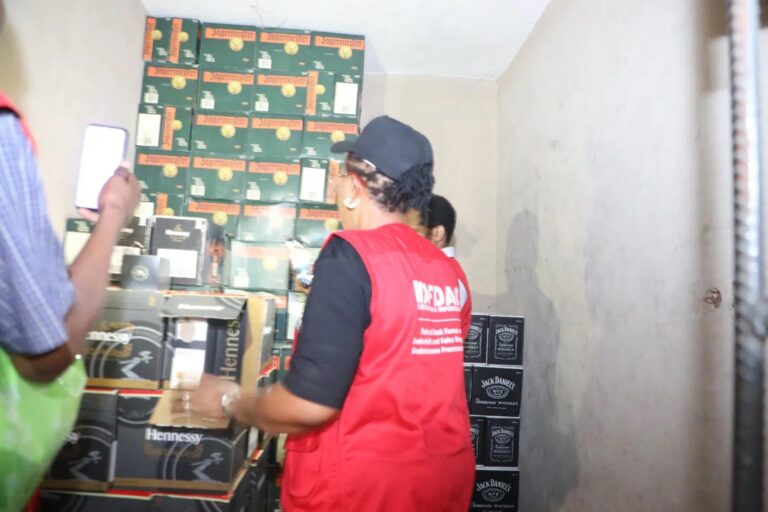
By July, she said, the operation had been expanded to nationwide mop-up exercises targeting markets, motor parks, retail outlets, bars and distribution centres.
The crackdown, according to the agency, has resulted in factory closures and arrests in cases where continued production of sachet alcohol was discovered.
Adeyeye said the Distillers and Blenders Association of Nigeria (DIBAN) and the Association of Food, Beverage and Tobacco Employers (AFBTE) had been required to sign Irrevocable Enforcement Undertakings on behalf of their members, committing them to stop manufacturing the prohibited products.
Affected manufacturers, she added, were required to recall banned alcoholic beverages from distributors, warehouses and other points across the supply chain and submit periodic compliance reports to NAFDAC.
The recalled products would subsequently be verified and destroyed under the agency’s supervision, with the manufacturers bearing the full cost, she said.
Adeyeye warned that sealed facilities would only be reopened after production lines used for prohibited pack sizes had been dismantled, permanently disabled or reconfigured to prevent further production.
“Defaulters risk continued closure, placement on NAFDAC’s Regulatory Watchlist, suspension or revocation of product registrations and criminal prosecution where applicable,” she warned.
The DG stressed that NAFDAC was not opposed to alcohol consumption but was concerned about the proliferation of high-alcohol-content products in cheap, small containers that make them easier for children and young people to access.
She urged members of the public to report the manufacture, distribution or sale of sachet alcohol and sub-200ml PET alcoholic beverages through NAFDAC’s official channels or at the nearest NAFDAC office.