Follow Us on Google
From Adanna Nnamani, Abuja
For a family whose daily survival depends on fishing, farming or gathering food from the land, the arrival of a major development project can mean hope for a better life. It may bring promises of jobs, improved roads, electricity and new economic opportunities.
But when the water becomes polluted, the soil loses its productivity or traditional livelihoods are disrupted, those same promises can give way to hardship. The people who once looked forward to development may find themselves struggling to protect the very resources that sustain their families.
This is the reality confronting some communities in Nigeria’s oil-producing Niger Delta, where decades of oil pollution have left residents grappling with environmental degradation, damaged farmlands and declining sources of livelihood.

In May 2025, the consequences became painfully clear for Daniel Kpoobari-Bani, his wife and their four children in B-Dere, Gokana Local Government Area of Rivers State, when a crude oil pipeline ruptured close to their home.
According to a Premium Times investigation, the family had to leave their home as crude oil gushed from the pipeline, spreading into residential areas and farmland. Crops, including cassava, cocoyam, banana and plantain, were damaged, while concerns over contaminated well water added to the family’s ordeal.
For a household that depends on its immediate environment for food, water and economic survival, the incident was a threat to the family’s ability to sustain itself and disrupted the security and comfort a home should provide.
Kpoobari-Bani’s experience reflects the wider challenges confronting communities where environmental safeguards and enforcement have struggled to prevent pollution and protect livelihoods.
Data from the National Oil Spill Detection and Response Agency (NOSDRA) shows that more than 9,890 oil spill incidents were recorded across Nigeria between 2015 and July 2025. Rivers State accounted for 4,184 of the recorded incidents, while Bayelsa State recorded 2,118.
Although the incidents vary in cause and severity, the figures illustrate the scale of the environmental challenge facing the country.
Just last month, 29-year-old Joy Amos, a resident of Bille community in Degema Local Government Area of Rivers State, sustained severe burns when a gas explosion occurred inside her room. She was reportedly using her phone in bed when the blast occurred at about 8am, shattering windows and setting part of the building ablaze. She later died on September 22 after receiving treatment. The incident heightened concerns over reported gas seepage in the community and calls for an investigation into the source of the emissions and the explosion.
For farmers, pollution can mean damaged crops and lost income. For fishing families, it can threaten access to fish and other aquatic resources. And where wells or other local water sources become contaminated, households may face additional difficulties obtaining safe drinking water.
A 2011 assessment by the United Nations Environment Programme (UNEP) found serious hydrocarbon contamination in parts of Ogoniland. In Nisisioken Ogale, benzene in well water was measured at more than 900 times the World Health Organisation guideline. UNEP recommended emergency action to protect residents and estimated that comprehensive environmental restoration could take 25 to 30 years.
The assessment demonstrated that environmental damage is not always resolved when a spill is stopped or a project is completed. Contamination can persist, requiring sustained monitoring, remediation and investment before affected communities can regain confidence in their surroundings.
For people whose livelihoods depend on the land and water, this prolonged uncertainty can be as troubling as the initial incident.
Now, as Nigeria prepares to expand investments in renewable energy, green hydrogen, battery storage, critical minerals and other emerging technologies, environmental stakeholders are warning that the country must not repeat the mistakes of the past.
Their concern is that changing the source of energy will mean little to ordinary Nigerians if the people living closest to new projects continue to shoulder the environmental and social costs without having a meaningful say in decisions affecting their lives.
For host communities, therefore, the conversation about Nigeria’s energy transition is not merely about solar panels, wind power, cleaner energy or the reduction of carbon emissions. It is also about the safety of their water, the future of their farms, the survival of their businesses, access to information and whether development will improve their standard of living.
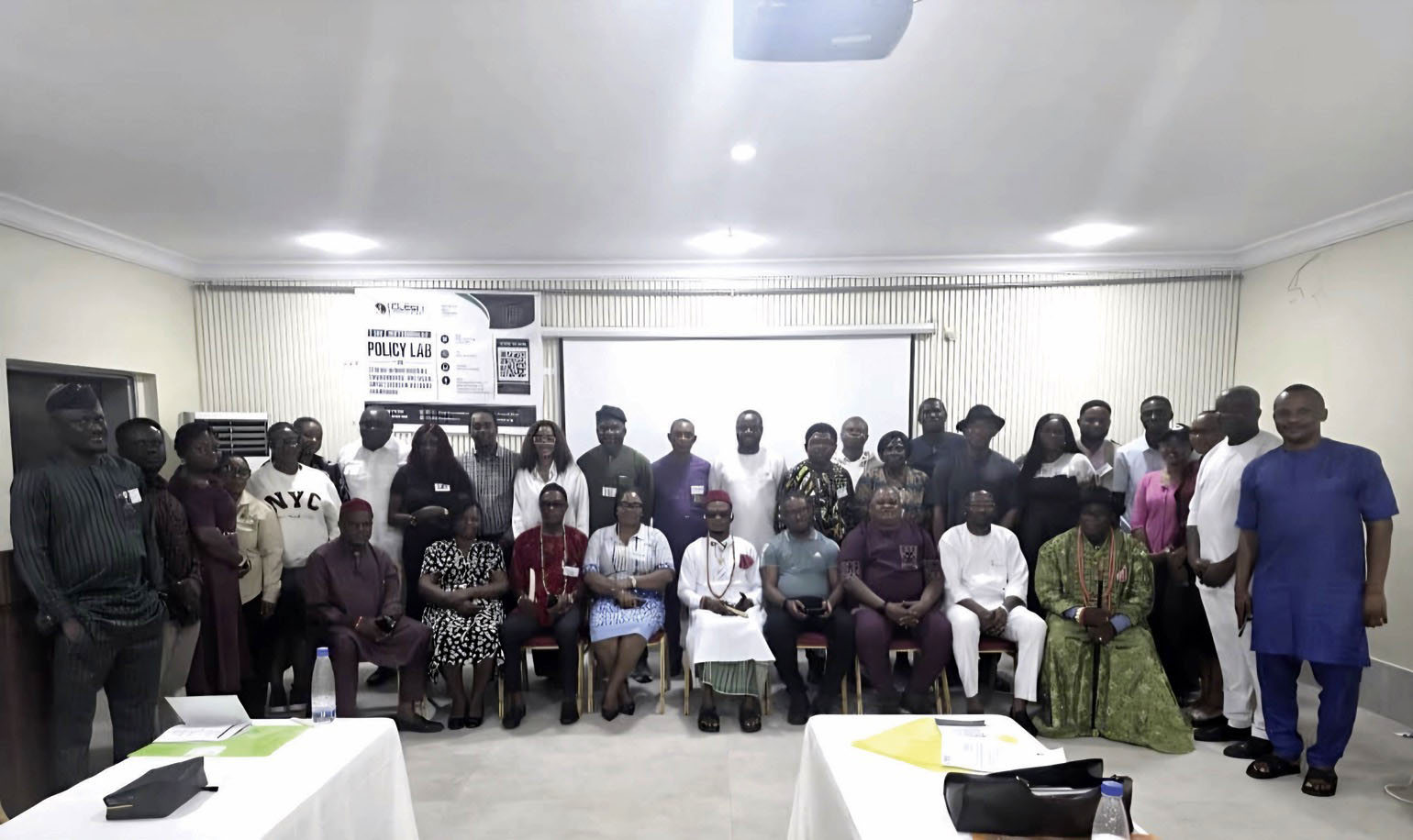
These concerns formed the basis of a two-day multi-stakeholder policy lab on strengthening Nigeria’s Environmental and Social Impact Assessment (ESIA) framework for a future-ready and just energy transition, organised by the CLEEN Foundation with support from Heinrich Böll Stiftung.
At the end of the meeting held in PortHarcurt, 25 organisations, including government institutions, regulatory agencies, civil society groups, traditional institutions, women’s and youth organisations, academia and representatives of host communities, issued a 12-point communiqué calling for urgent reforms to Nigeria’s environmental assessment system.
Their message was that communities must no longer be treated as passive recipients of development decisions but recognised as partners whose voices, rights and livelihoods matter.
The stakeholders want environmental protection to move beyond paperwork and approval stamps to a system that follows projects from planning and construction through operation, closure and, where necessary, environmental restoration.
For communities whose livelihoods depend on their natural surroundings, the difference between these two approaches could be significant.
An environmental assessment conducted before a project begins may identify potential risks, but the real test is whether the recommendations are implemented, the promised safeguards are maintained and affected people have a way to seek redress when things go wrong.
The Programme Director of the CLEEN Foundation, Dr Salaudeen Hashim, said Nigeria was entering a different development and energy landscape while still relying on an environmental assessment law enacted in 1992.
According to him, the challenge is not the absence of an environmental assessment framework but its failure to evolve sufficiently to address present-day realities, including climate change, cumulative environmental impacts, biodiversity loss, emerging technologies and the social dimensions of a just energy transition.
“The issue is therefore not that Nigeria has no environmental assessment framework; rather, the framework has not evolved sufficiently to address climate change, cumulative impacts, biodiversity, emerging technologies and the social dimensions of a just energy transition,” Hashim said.
The implications extend beyond regulatory procedures. Where communities lack access to environmental information or the capacity to understand technical reports, they may struggle to determine how a proposed project could affect their health, land, water and livelihoods.
Even when consultation meetings are held, residents may still have little influence over the final decisions.
“The study also makes an important distinction between consultation and participation: holding a meeting with affected people does not necessarily mean their concerns have influenced the project.”
Other News
“For a community member worried about the effect of a proposed industrial facility on a nearby river, for instance, being invited to a meeting is not the same as having the concern investigated, receiving a clear explanation and seeing appropriate safeguards incorporated into the project,” he stated.
He said it is why the stakeholders are demanding that public participation should begin at the planning stage and continue throughout implementation, monitoring and project closure.
They also want environmental impact assessment reports, monitoring data, compliance records and regulatory decisions made publicly accessible through digital platforms. Such access, they argue, would enable residents to understand the projects around them and hold developers and regulators accountable.
Beyond information, the question of economic survival remains central. Communities hosting major projects often hope that the investments will translate into jobs, infrastructure, improved healthcare, educational opportunities and better living conditions. Yet stakeholders say these benefits must not be left to vague promises or arrangements that are difficult for local people to enforce.
The communiqué called for stronger Community Development Agreements, transparent benefit-sharing arrangements and accessible grievance mechanisms through which affected people can raise complaints without intimidation.
Such measures, the stakeholders believe, would help ensure that communities do not simply provide the land and resources on which investments depend but also share fairly in the benefits.
For Hashim, protecting communities and attracting investors should not be competing objectives.
“Investors need certainty, and communities need confidence that development will not leave them carrying the environmental and social costs while others capture the benefits,” he said.
The stakeholders are therefore calling for dedicated assessment guidelines for renewable energy infrastructure, battery energy storage systems, green hydrogen, carbon capture and storage, critical minerals and potential future nuclear energy projects. They also want regulators to receive specialised training to assess the risks associated with these technologies.
Their argument is that a transition intended to support a more sustainable future must not create new environmental problems or leave vulnerable communities exposed to risks they do not understand.
They noted that women, young people, persons with disabilities, indigenous populations and other vulnerable groups must also have opportunities to participate meaningfully in decisions affecting their future.
The experience of the Niger Delta remains a major warning in this regard. The communiqué noted that weak environmental oversight, poor enforcement and limited community participation had contributed to decades of pollution, ecosystem degradation and social conflict in the region.
For communities affected by these problems, environmental damage is not simply a matter of regulatory failure. It can mean a loss of income, uncertainty about the safety of natural resources and the disruption of established ways of life.
The stakeholders want policymakers to draw lessons from these experiences before Nigeria expands investments into new energy sectors.
They are also demanding stronger environmental institutions, adequate funding and equipment for regulators, improved coordination among government agencies, independent environmental audits, community-based monitoring and meaningful sanctions for developers who fail to comply with approved environmental management plans.
Hashim said strengthening monitoring, compliance and enforcement alongside legislative reform should be an immediate priority.
“A modern law without credible enforcement simply creates better rules on paper,” he said.
He argued that Nigeria must move away from an approval culture to an accountability culture, in which granting environmental approval marks the beginning rather than the end of regulatory oversight.
For ordinary Nigerians, the ultimate test of these reforms will not be the number of policies adopted or meetings held, but whether development improves their daily lives without exposing them to avoidable harm.
Hashim said a genuinely just energy transition should translate into cleaner air and water, reliable and affordable energy, jobs and livelihoods, community infrastructure, protection of land and natural resources, and a meaningful voice in decisions affecting their future.
The Federal Government, National Assembly, regulatory agencies, industry players, development partners and civil society organisations are being urged to implement the proposed reforms without delay.
The stakeholders included the Rivers State Ministry of Environment, Rivers State Ministry of Energy and Natural Resources, National Environmental Standards and Regulatory Enforcement Agency (NESREA), National Oil Spill Detection and Response Agency (NOSDRA), Nigeria Electricity Regulatory Commission (NERC), University of Port Harcourt, traditional institutions and host communities.
Others are Green Leaf Advocacy and Empowerment Center, Rights
Advocacy and Development Centre
(RADEC), Environmental Defenders
Network, Rainbow Watch and Development Centre, Hope for Tomorrow Initiative, Miideekor
Environmental Development Initiative, Women’s Forum for Sustainable Green Development.
The remaining are Kebetkache
Women Development & Resource
Centre, SDN, Social Action, OLEGH
Centre for Community Development, Kallop Centre, Community Conciliation and Development Initiative, Voices for Change, Media Awareness and Justice Initiative (MAJI), Guardian and Goi Community.