Follow Us on Google
By Deborah Usman Abakurin
There is little or no doubt that one of the biggest challenges besetting our tertiary institutions today is the inability of the chief executives to effectively steer the affairs of such institutions and create an enabling environment for growth and development.
When you have leaders who lack the basic leadership experience, passion, commitment, and political will to change the status quo, the system either remains static or completely diminishes. Of course, societies hardly rise above the capacities of those who have been saddled with the responsibility of lifting them. But with visionary leaders who are proactive, pragmatic and possess the spirit and willpower to transform institutions and shape their future, great things often happen. Sadly, in Nigeria today, leaders with such features are becoming increasingly rare.
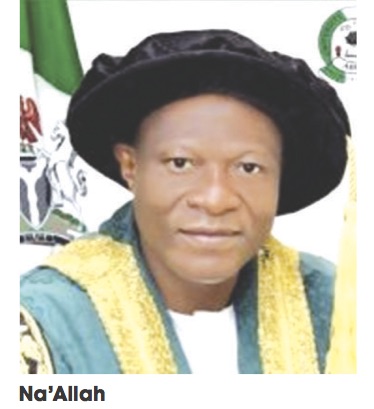
Professor Abdul-Rasheed Na’Allah, whose tenure as vice-chancellor of the University of Abuja has so far been marked by an exceptional track record of progress and innovation, will comfortably join this rare league of great university leaders with the spirit and force to achieve organisational goals, not least for his increasingly transformative strides that are fast propelling the University of Abuja to new heights.
Na’Allah was sworn in as vice-chancellor of the university on July 1, 2019, following his sterling performance as the pioneer vice-chancellor of Kwara State University (KWASU) for 10 years, lifting the young university even at the most critical time to become one of the best universities in the country. You hardly make such a mark and are not be sought out by people who desire meaningful change somewhere.
Upon assuming office, Vice-Chancellor Na’Allah wasted no time in hitting the ground running, outlining a bold strategic vision for the university’s future. He immediately initiated faculty visits, the first in this university, then set up a listserve that integrates the whole university community including students and staff whom he communicates with on a regular basis.
In the last four years, he has sent several dozen emails to the university community, receiving robust feedback, a good demonstration of his appreciation of a two-way communication strategy. Once, I was in a situation in which only a father would understand, and a senior student in the university had told me immediately, “Please, reach out to no one else but the vice-chancellor, all you need is to send an email to him.”
I got a beautiful shock when I sent the email and a few minutes after he was there to respond to my email. And that was it; the solution came immediately. I think that when students here call Na’Allah “Digital VC,” they don’t do it for nothing.
In May 2023, when the UofA students were about to protest the hike in fees by the university, the vice-chancellor addressed them via an email, explaining reasons why there was need for the review and asking for their understanding and cooperation. Understandably, that protest never took place because his message resonated with them.
Perhaps, one of the most visible breakthroughs of the VC is his remarkable infrastructural transformation of the university. Recognising the importance of state-of-the-art facilities, Na’Allah spearheaded numerous projects, breathing new life into outdated buildings and creating cutting-edge spaces aimed at the evolving needs of students and researchers.
You can easily point to a few of these projects on campus: construction and furnishing of Academic Staff Office Complex for Faculty of Agriculture, construction of male hostel, construction of fence wall phase II, asphalting of road to staff quarters, construction and furnishing of Academic Conference Centre and associated facilities phase I, construction of 5 nos of 2-bedroom semi- detached and 3 nos of 3-Bedroom semi-detached staff housing, construction of Staff Club, construction of Indoor Sports Hall, construction of Micro Finance Bank with massive fencing round it, and construction and furnishing of 500-capacity lecture theatre for Faculty of Law. Others are construction and furnishing of Academic Staff Office Complex for Faculty of Law, construction and furnishing of 150 capacity lecture theatre for Faculty of Veterinary Medicine, construction and furnishing of Faculty of Environmental Studies, and provision of solar security lights at the main campus.
There are also some ongoing projects, including construction of College Building for the Faculty of Health Sciences, external infrastructure and landscaping of College Building for the Faculty of Health Sciences, and construction and furnishing of 250-capacity twin lecture theatre.
Aside from infrastructure, there is a kind of re-engineering in the academic sphere with focus on research and development. Between 2020 and 2022, for instance, some academic staff won over N2 billion in grants in both local and foreign currency for the university. Even students, through the University Centre for Undergraduate Research, won almost N5 million grants within this period, and this is quite unprecedented in the history of the university. This emphasis on research has not only enriched the academic environment but promises to contribute to groundbreaking discoveries and solutions to real-world challenges.
Na’Allah’s administration has also introduced numerous programmes to expand the university’s base. In July 2023, the university received panels of National Universities Commission for verification of 28 programmes, including geology and mining, aeronautical engineering, railway engineering, pharmaceutical sciences, agricultural science, management sciences, zoology, medical laboratory, communication and media studies, environment sciences, and tourism and hospitality management.
What is also striking is the vice-chancellor’s visionary approach to the integration of advanced learning technologies, facilitating online education, virtual classrooms and interactive platforms for enhanced distance learning, especially during the COVID-19 pandemic, which has now been fitted into the learning process of the students in the university.
To blend academic and professional expertise, the university has established strategic partnerships with many institutions in the country and abroad. In Nigeria, of particular note are the Abuja Chamber of Commerce and Industry (ACCI), and National Automotive Design and Development Council (NADDC) engaged in collaborative programmes, exchange initiatives, and joint research ventures to foster a global outlook, exposing students and faculty to diverse perspectives and expanding the university’s impact on an international scale.
You will not discuss the modern University of Abuja now without the implementation of student-centric initiatives, such as the student employment and mentorship programmes, that have seen to the employment of over 1000 students at the last count; career counseling services, and the entrepreneurship centre through which over a thousand students have registered their own companies at the Corporate Affairs Commission, while the internship and linkages service unit has exposed many students and connected them to thriving companies in the country.
Vice-Chancellor Na’Allah’s tenure at the University of Abuja has been nothing short of exceptional. Interestingly, he has only one year more to round off his five-year single tenure. Moving forward, I will advise that he should not only work harder to consolidate on the achievements so far, but continue to churn out new ideas and policies that are helping the university now becoming an academic institution to reckon with both in and outside the country.
• Abakurin writes from the Department of Environmental Education, Faculty of Education, University of Abuja.