Follow Us on Google

•Economists, others say FG should subsidise public transportation, create jobs
By Our Reporters
Across Nigeria, the recent announcement of a planned intervention by the Federal Government to cushion the painful aftermaths of the withdrawal of subsidy on premium motor spirit (PMS) has not been met with encouraging comments by large sections of Nigerians.
As part of the intervention, the Federal Government said it would make the sum of N8,000.00 would be made available to 12 million very poor households in the country for six months. The government said for transparency purposes, the money would be transferred digitally to the households.

But not many Nigerians seem comfortable with the idea, which they see as lacking in critical thinking. Not a few have wondered how the government would be able to identify 12 million poor households in a country of more than 200 million people. Some also wonder how much intervention the sum of N8,000.00 would make in a month for entire families in the face of skyrocketing prices of goods and spiralling inflation.
The Tinubu administration has promised to review the policy. But that has not stopped Nigerians from expressing their anger and frustrations.

Reporting from Makurdi, Benue State, SCHOLASTICA ONYEKA noted that the policy does not sit well with Benue residents.
Those who spoke to Saturday Sun in the state urged the Federal Government to provide palliatives that will give an immediate relief to both poor households and all Nigerians by providing affordable mass transit buses and reducing school fees. They said if this is done, everyone will feel the relief immediately.
A lecturer at the Department of History, Benue State University, (BSU), Makurdi, Dr Elijah Ikpanor noted: “We have seen how previous fuel subsidy removal palliatives served as conduit pipes for embezzlement where the rich only got richer and the poor poorer.”
He opined that the disbursement of N8,000.00 will not only be arbitrarily done but also be siphoned by people who will be mandated to do so.
“What was our experience with SURE-P under President Goodluck Jonathan? What was our experience with Conditional Cash Transfer under President Mohammadu Buhari? We should be able to learn from our past mistakes to impact the lives of Nigerians in a better way,
“I will suggest that the government should, basically, intervene in the area of public transportation and make it really public. If we have intra and inter-states public buses that can serve Nigerians better, we would have reduced the hardship of Nigerians significantly.
“Government should not only make buses available but affordable too. Nigerians should be able to buy affordable intra-city bus tickets that will serve them for 24 hours. These could serve workers better. Once we solve the problem of transportation, it will trickle down to other sectors.”
The expert in economic history also urged government to look at the minimum wage of workers with a view to cushioning their hardship as a result of the removal of fuel subsidy.
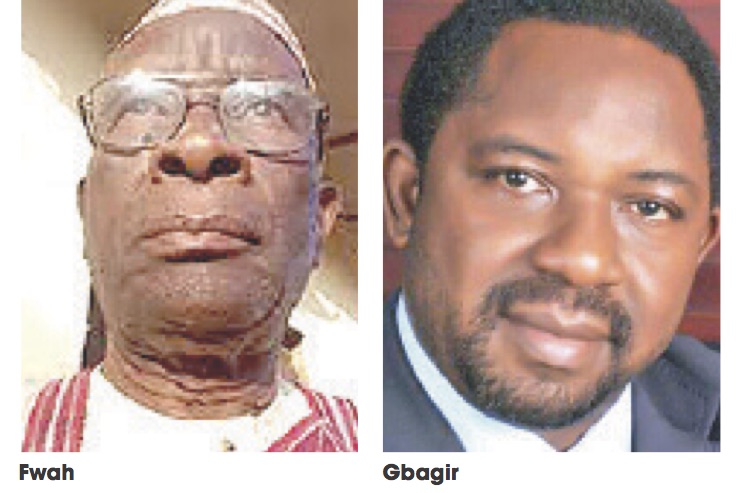
In his remarks, the immediate past President of Nigeria Bar Association, (NBA), Makurdi Branch, Justin Gbagir said since the Federal Government has already earmarked and approved the money, “the issue now is whether the money is adequate.”
Hear him: “I think the sharing of N8,000.00 to 12 million poor Nigerians households is just one of the palliatives and not the only palliative. I’m yet to see other palliatives that the government intends to roll out for the public.
“For instance, for someone who is homeless and also hungry, if you are providing him shelter, he will also need food. Since the government said this money will be for six months, we are hoping that within the six months, the Federal Government will come up with tangible measures that will cushion the effect of this subsidy removal. That is my thinking, that after the six months they will still roll out other palliatives that will take pains off not only the 12 million vulnerable households but the entirety of the Nigerian population.”
Also speaking, an economist at the Department of Economics, BSU, Makurdi, Prof. Ayila Ngutsav charged the Federal Government on better measures to cushion the effects of the subsidy removal. He said transferring N8, 000.00 to poor households will not make any meaningful impact on their economic lives.
“I don’t believe in transferring N8,000.00 to poor households. I never supported that cash transfer programme done by Buhari administration because it made no difference to those people,” he said.
Professor Ngutsav, who noted that as at November 2022, the Federal Government announced that about 133 million Nigerians were in poverty, said the number will rise with the subsidy removal.
“With the removal of oil subsidy, I believe that that number will increase to over 180 million and you’re transferring N8000 to just 12 million vulnerable households. I don’t see any impacts of that on the economy or lives of those families, so I don’t support it at all.
“If I were in their position, I will do something that will immediately effect households. The major problem people have now is that of transportation. The first thing I would have done is to ease that transportation by buying mass transit buses.
“I expected that before the decision to remove the subsidy, the government would have commissioned some companies here in Nigeria and elsewhere to produce mass transit buses for us to ease transportation.”
He lamented that roads that used to be busy in Makurdi, the Benue State capital, in the past are almost empty. “People are finding it difficult to move due to the high cost of transportation. That is my immediate concern; provide mass transit buses for people to move about.
“Secondly, they should have reduced school fees because that will have immediate effect on households. But instead, they are talking about increasing school fees. What will N8000 do in this situation,” he wondered.
The situation is the same in Kaduna where Nigerians have expressed mixed feelings and disappointment over the decision, as reported by NOAH EBIJE.
Those who expressed concerns over the palliative told Saturday Sun that there is no formula that the Federal Government will adopt that will adequately ensure distribution of the money to 12 million very poor households at N8, 000.00 per household in six months.
Some described the decision as absurd and a misstep by the government, adding that similar actions taken by the immediate past administration did not alleviate the problem but rather pushed the economy to its brink resulting in terrible economic hardships and inflation and other negative consequences on the citizens.
Professor Mohammed Bello Magaji, a senior lawyer and university teacher and researcher said: “Earlier, I had hope with some actions taken by the Tinubu administration on assumption of office. However, this decision on N500 billion palliative, if eventually implemented, will be the most absurd and a misstep by the administration. A similar action taken by the immediate past administration did not alleviate any situation. Rather, it pushed the economy to its brink.
Better options include purchase of and subsidizing fleet of transportation buses, repair of roads, subsidizing agricultural inputs and reviving moribund industries to create jobs. The so-called distribution of N8, 000.00 to only 12 million households doesn’t make sense at all, as it’s an inherently defective plan with no substantial impact on the general situation of the majority of Nigerians impacted negatively by the subsidy removal.
But the spokesman, Coalition of Northern Groups (CNG), Abdul-Azeez Suleiman, slightly disagreed with the professor.
His words: “At least, this offer is by far better than what was offered as palliative by the previous administration of Muhammadu Buhari which offered N5,000 per household. The amount offered is not what really matters here but the transparency in the method of disbursement. The previous administration could not satisfy the population on how the palliatives were disbursed and who were the actual beneficiaries. If Tinubu, as is expected, could get the amount, no matter how little, transparently distributed across the target beneficiaries, it would provide succour to a lot of families. Unfortunately, the country is today cracked between very rich exploiter elites with dubious sources of income and an extremely poor population who are made poorer at every turn of events. This is perhaps why some people think N8, 000.00 is not big enough to give smiles to households, because the elite is far detached from the realities in which the poor Nigerian families live.
“Nigerians all understand that a combination of past abuses and mismanagement of the economy in the name of fuel subsidy, and sabotage of oil and gas facilities, have created a most challenging environment for the management of the economy.
“The current administration would therefore need to go beyond the immediate and focus on building an economically secure future by providing revolutionary policies for the long-term”.
For John Fwah, “the Federal Government has shown that it is following the footsteps of past Buhari regime when it declared that the fund would be shared by 12 million very poor households at N8000 per household in six months. This is unfortunate to say that the same mistake by the past APC government is being repeated and even worse. The basic truth is that the FG has refused to face the reality on ground.
“The truth is that there are more than 100 million very poor Nigerian households groaning and languishing in abject poverty in this country. The decision by the Federal Government smacks of total negligence of the poor masses who, incidentally, are the people who voted them into office only to be relegated behind. The decision to dole out N8, 000 per household of 12 million is nothing but outright insult on Nigerian families. It’s very glaring that the N8,000 is a scratch on the myriad of problems weighing down millions of Nigerians. There are better ways of managing and spending this fund. One major step is to provide each state of the federation with 215 big luxurious buses as part of the palliatives to ease transportation occasioned by the subsidy removal which sent cost of PMS to more than 300 per cent high. Nigeria is credit worthy to import vehicles at a short notice from manufacturers. Recall Sure-P during the era of former President Goodluck Jonathan, among other palliatives. It is obvious that this meagre N8000 per household in six months is like scratching the issue on the surface in the era of high school fees, drugs and medication among others.”
In his reaction, Anthony Sani, former Secretary General of Arewa Consultative Forum (ACF) said: “I have said it several times that subsidy could be put for better use than consumption. To me, the subsidy could be put in a Trust Fund for exclusive improvement of the quality and volume of education and health services with a view to reducing the inequality in the economy, considering education and health are instruments of empowerment. Hence the name Human Capital. Whatever sacrifices we make as a result of removal of subsidy would be worth it as our contribution to the development of education and health.
“Therefore, the issue of spending N500 billion for palliative may not be helpful in the sense that palliative may still be consumption and add nothing to productivity.”
In Delta State, the people are also not happy with the Federal Government’s proposal.
Saturday Sun’s PAUL OSUYI, reporting from Asaba, noted that a cross section of residents in the have described the plan by the Federal Government to disburse N8,000.00 to 12 million vulnerable households in six months as mockery of the governance system.
The respondents said with the high rate of inflation and alarming rising cost of commodities, N8,000.00 is grossly insignificant and would not make any meaningful impact even on a daily basis within an average household.
Mr. Kelvin Osemene, an Asaba-based lawyer, told Saturday Sun that the arrangement is already riddled with flaws, particularly with the lack of adequate statistics in the country.
“In the first place, who are the vulnerable? How did you arrive at that? We all know that one of our problems in this country is the issue of lack of statistics, particularly as to the population.
“Besides, what is N8,000.00 in a month? You and I know how much a plate of food is in a canteen. How much is a bowl of rice, and all that? So the arrangement cannot help to reflate the nation’s economy.
“In fact, what should be done is that they should flow with the generality of the poor masses. This money should be used to set up projects that will benefit the people. It could be by way of transportation to alleviate the plight of the people.
“I have just been informed that the price of petrol has gone up again. This money should be channelled towards revamping at least one of our refineries. We talk of electricity problems. If electricity is working, almost everybody will be engaged,” he stated.
On his part, a public affairs commentator, Mr. Lawrence Okpewho, wondered how the Federal Government arrived at the figure of N8,000.00 as well as how many people would be benefitting.
“If you say 12 million households, how did they arrive at that figure? I believe in training somebody on how to catch a fish rather than giving somebody a fish. If you give somebody N8,000.00 in the next six months, what will N8,000.00 solve for somebody?
“I work in Agbor, I drive from Asaba to Agbor on a daily basis. The price of petrol has gone to N617.00 per litre. If you give me N8,000.00, will it give me 10 litres of petrol? It does not add up.
“I think that the government should wake up and think of how to make sure that there is stable power, and ensure that the roads are good. If there is stable power, there are a number of people who can work on their own without depending on the government.
“But if you give out this N8,000.00, it will not work. Osinbajo did tradermoni, can we point to what it came out with, I mean the result? Okowa came with his programme where he put Prof. Eboh in charge. Now, can Okowa point to up to 10,000 people who benefitted and are still in business? So some of these things are to patronise political interests and the rest. This is just settlement money.
“For me, I think the government should map out plans on how to invest in agriculture. Let us invest in agriculture. That N500 billion, let us get genuine farmers, and not political farmers, and support them.
“Okowa empowered so many people but today, there is nothing to show for it. Mbiri Farm Settlement is there, he did not work on it. Other areas he did not work on.
“So when you come now and you want to give N8,000.00 to a household, can N8,000.00 cook a pot of soup to last one month?” Okpewho wondered.
Another respondent, Mr. Victor Ojei a public affairs analyst, said though the intention behind the move is noble, the amount is too meagre to significantly alleviate the economic burdens faced by the proposed beneficiaries.
“The cost of living, inflation, and other economic factors may quickly erode the impact of such a small sum. While any form of assistance can offer temporary relief, it may not address the underlying issues that perpetuate poverty and vulnerability in the long run,” he stated.
According to him, it is debatable whether the move would reflate the economy, saying that “direct cash transfers can stimulate consumer spending, but their impact on economic growth is limited.
“For a more significant boost to the economy, comprehensive measures that foster job creation, infrastructure development, and increased productivity are essential. Instead of relying solely on handouts, the government should focus on creating an enabling environment for businesses to thrive and invest in sectors that generate employment opportunities.”
Ojei noted that while short-term relief is important, it is equally vital to invest in sustainable solutions that empower individuals and communities to lift themselves out of poverty.
Rather than solely depending on cash handouts, the government could consider implementing initiatives that focus on skill development, education, and vocational training.
“By equipping the youth with the tools and knowledge needed to access better job opportunities or create their own businesses, we can foster self-reliance and economic growth,” he added.
From Awka in Anambra State, OBINNA ODOGWU reports that those that spoke with Saturday Sun on the issue are emphatic that the proposed plan to distribute N8,000 monthly to some households didn’t make any economic sense. They said that there were better ways to spend the money such that a greater number of people would benefit from it.
An economist, Mr Patrick Chimezie, said: “First of all you have to start by identifying the problem. What is the problem? It is the problem of inflation. And what caused the inflation? It is as a result of the increase in the price of petroleum products which happen to be the mainstay and the major determinant of the prices in Nigeria.
“So, having identified the inflation, the problem of the government is to work towards dropping the inflation rate. The drop in inflation rate would have succeeded in increasing the purchasing power of the citizens.
“So, you will call it supply side approach – where the managers of the economy will increase the purchasing power of the masses as against the mindset where you put money in the hands of the people to begin to chase goods.
“Taking it further, I will say that giving people money to go and spend is neither an economic empowerment policy nor a solution to the general poverty we are experiencing.
“So, the government should not bother itself with the so-called handout. I call it a handout. The government should treat the fundamentals which are essentially microeconomics in nature.”
The National Convener, South East APC Young Progressives Forum, Mr Paschal Candle, said that there were better ways to spend the money rather than sharing it to some people.
“If you look at the reality on ground, you would wonder where the government generated the data that it wants to use for this particular purpose. And I think that the best thing that it would do in this very aspect is to use the money in other areas.
“The problem in Nigeria today is the movement of the people. The government can use the money to procure buses. I believe that if the money is properly used to procure buses, there is no state that will not get up to two or three for mass transportation. Giving people N8,000.00 every month will not make any impact,” he said.
On his part, a community leader in Awka, the state capital, Mr Paulson Okeke, said that giving some families N8,000.00 per month didn’t make any economic sense to him, especially considering that there are better areas to channel the money for the good of everyone.
“The most ridiculous part of it is sharing N8,000.00 per family monthly. What sense does it make? How far can N8,000.00 go for a family of about four? What is N8,000.00 to compare to the rate of inflation we have in this country where a litre of fuel is N617? Where electricity tariff has been increased by 40 per cent? Where the value of the naira keeps on sliding? Don’t forget that we are living in a dollarized economy where N833 is to $1.
“So, what economic sense does it make? The Federal Government should better wear their thinking caps and find another means of tackling the economic problem we have in this country,” he submitted.