Follow Us on Google
From Sola Ojo, Abuja
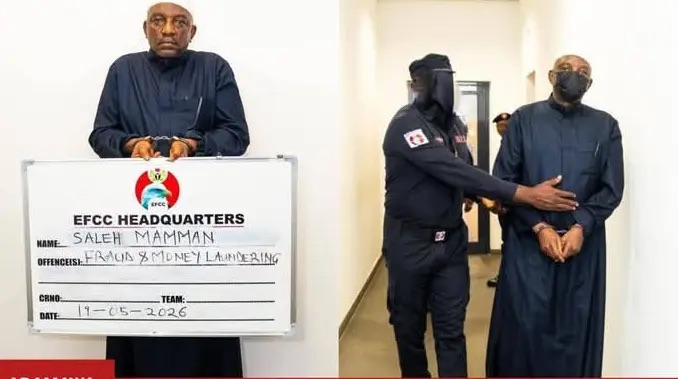
The Chairman of the Economic and Financial Crimes Commission (EFCC), Ola Olukoyede, has disclosed that the recently convicted former Minister of Power, Saleh Mamman, was arrested in Rigasa, Kaduna State while allegedly hiding under protection from accomplices.
Rigasa is located in Igabi Local Government area of the state, the largest community in Kaduna with population of about 2 million residents. It hosts Nigerian Railway Service terminal.
The conviction stemmed from the laundering of about N33.8 billion allegedly diverted during his tenure as Minister of Power.
The massive fraud case, which led to the sentencing of former minister to 75 years imprisonment, is regarded as one of the most significant corruption convictions secured in recent years by the antigraft agency.
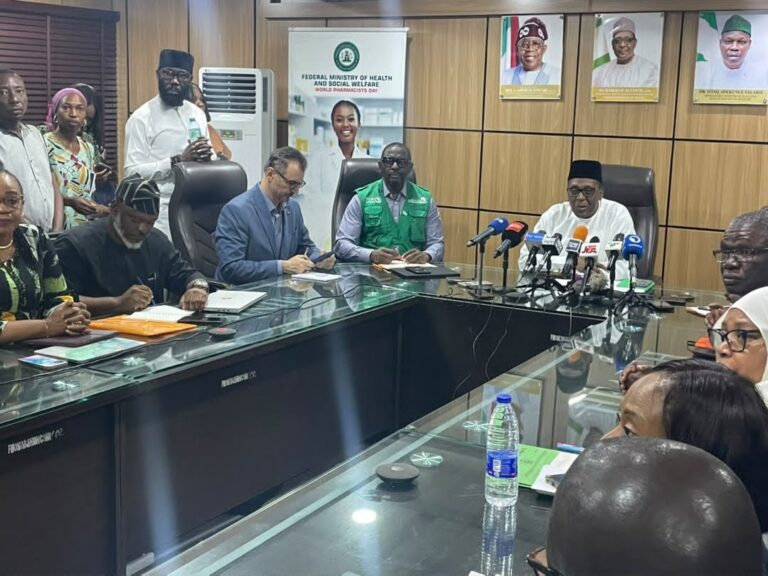
Speaking during a media briefing at the Commission’s headquarters in Abuja on Tuesday, Olukoyede said the anti-graft agency discovered that the ex-minister had been shielded from authorities before his eventual arrest “somewhere in Kaduna.”
According to him, two other Nigerians were arrested alongside the former minister for allegedly providing protection and assistance to a fugitive.
“We discovered that he was actually being protected all this while.
“It is a crime to protect or give shelter to a convicted person or fugitive,” he said.
Other News
He added that investigations were ongoing into the ownership of properties linked to the former minister, noting that more assets suspected to belong to him had recently been uncovered.
“As I am talking to you, investigations are still ongoing with respect to other properties that we suspect the man owns.
“Just a few days ago, we discovered another one,” he said.
The EFCC chairman explained that while some properties had already been tied to charges before the court, the commission would continue tracing and recovering additional assets connected to the former minister.
Responding to questions on lessons learnt from the case, Olukoyede admitted that Nigerian authorities needed to strengthen surveillance measures for high-profile corruption suspects undergoing trial.
“We are lucky to have found him here. If he had travelled to countries without Interpol agreements, it would have been difficult to bring him back,” he stated.
He stressed that the EFCC would henceforth work closely with courts and other relevant institutions to ensure that individuals facing corruption charges are properly monitored to prevent them from fleeing the country.
“For every high-profile corruption case, we must be able to put defendants under surveillance because it is not in the interest of the country for anyone undergoing criminal prosecution to escape jurisdiction,” he added.