Follow Us on Google
•Women demand inclusion as BoA cites 500,000 beneficiaries
By Chinyere Anyanwu and Okwe Obi, Abuja
Seven months after the federal government announced a N250 billion agricultural credit facility through the Bank of Agriculture (BOA), farmers’ associations across the country have raised questions about access to the funds, with some saying they have not benefited and others admitting they are yet to understand the conditions for obtaining the loans.
The development has brought renewed attention to the challenges facing Nigeria’s agricultural financing system, particularly the difficulty small-scale producers encounter in obtaining affordable credit, suitable machinery and facilities to process their harvests.
For Nigeria’s smallholder farmers, the promise of government support can be as important as the rain that nourishes their crops.
Women farmers say the problem is even more complicated for them.
Beyond the usual conditions attached to loans, many face difficulties acquiring farmland, providing collateral and accessing machinery designed to meet their needs.
For these farmers, the question is not simply how much money the government has approved for agriculture. It is whether the funds will reach the people who grow the food, whether the conditions for accessing them are realistic and whether the support will arrive in time to make a difference.
The BOA has, however, reported progress, saying about 500,000 farmers have benefited from the pilot phase of its intervention.
Its Managing Director, Ayotunde Sotinrin, said the N250 billion disbursed formed part of a broader N550 billion programme under the Renewed Hope Smallholder Support and Value Chain scheme.
The difference between the bank’s reported figures and the experiences described by farmers’ representatives has made transparency, beneficiary selection and the actual reach of the intervention central to the debate.
At stake, analysts note, is more than a loan programme.
It is the country’s ability to increase food production, reduce waste, create jobs and make agricultural businesses attractive enough to draw investment.
Billions announced, farmers still asking questions
In March, the Minister of Agriculture and Food Security, Abubakar Kyari, announced the approval of the N250 billion facility as part of broader government efforts to strengthen agricultural financing, insurance coverage and institutional support.
The scheme, to be administered by the BOA, was designed to provide credit at single-digit interest rates to smallholder farmers and primary producers across several agricultural value chains.
Its target beneficiaries include rice millers requiring high-yield seedlings and cultivation and harvesting facilities; maize farmers needing seeds and fertilisers and wheat producers seeking support to expand dry- and wet-season farming.
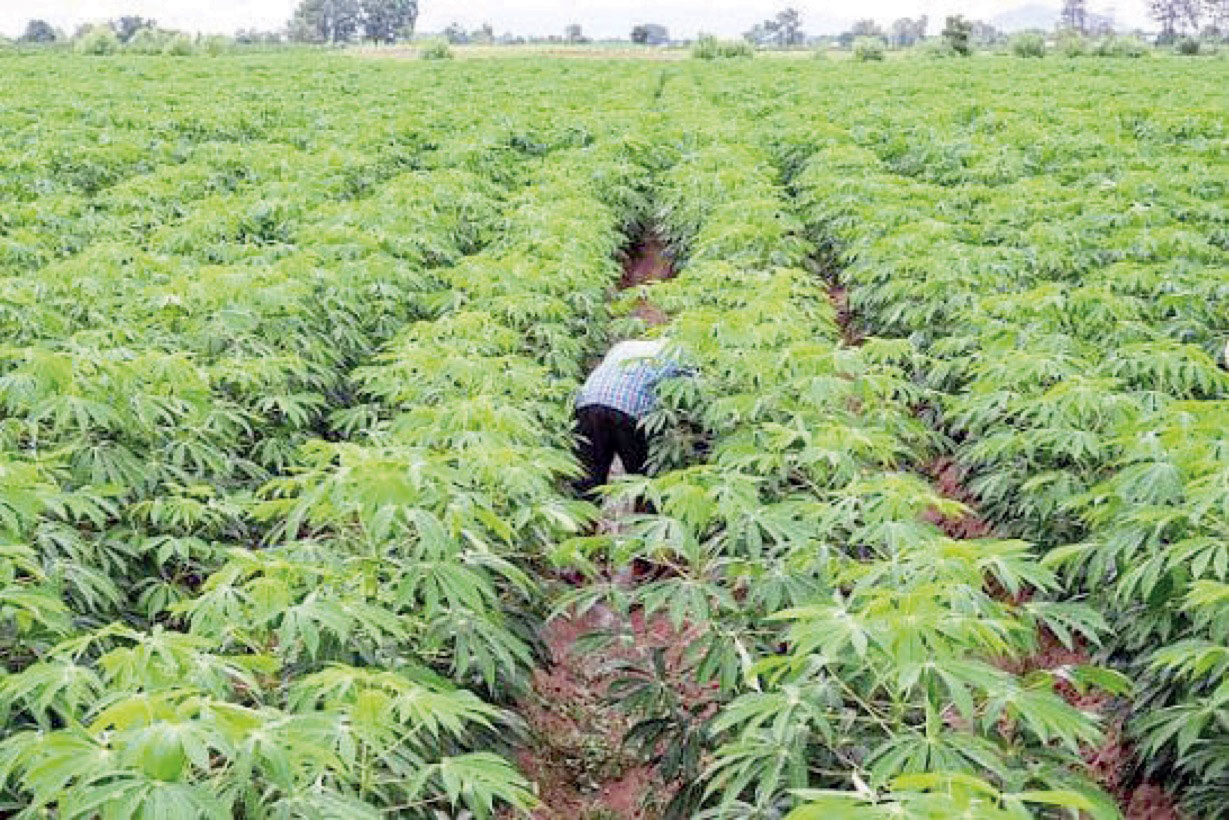
Cassava farmers are expected to benefit from assistance for primary production and processing, while soybean producers are targeted for input supplies and smallholder aggregation. Sesame farmers are also included through seed and agrochemical support, alongside livestock farmers requiring facilities for animal husbandry and production.
The government presented the intervention as a way to increase food supplies, improve mechanisation and strengthen farmers’ livelihoods.
Kyari said, “this grant aims to support food production, enhance mechanisation and improve the livelihoods of farmers.”
However, investigations into the scheme found that several farmers and agricultural associations were still waiting for the promised credit as the wet-season farming period approached its end.
The All Farmers Association of Nigeria (AFAN) Public Relations Officer, Ibrahim Garuba, said members had supplied the BOA with the information required to facilitate access to the loans but were still awaiting details of the disbursement process.
According to him, the association had mobilised its members across the country after learning about the intervention and worked with the bank to provide farmers’ data.
Garuba said, “when the news came to us, we tried to share the same information with our farmers across clusters, in anticipation of the disbursement, and we had an agreement with BOA and the BOA requested for data of farmers, and from there, they’ll be able to provide a plan of how this disbursement should take place. We were able to get that data across the nation from all the 36 states of the federation and Abuja. Data was collected, and just about two weeks ago, there was an announcement by the MD of BOA, that the Federal Government has approved disbursement of these loans to 400,000 farmers across board, including livestock farmers. That’s the most I can tell you for now.
“As of today, no farmer has been given the facility because it’s like a policy announcement. So, as soon as we begin to access this credit, definitely we are going to speak to you about it. But as of today, it is mentioned that 400,000 farmers will benefit from the first phase of the disbursement. So, that’s the situation now.”
He further explained that, “it’s a policy issue. We have to wait for the modalities involved. They will decide how farmers can access the fund but as of today, we have not gotten information from BoA pertaining to the date they are going to start disbursement. Farmers have supplied their data, so, the data is there with BoA, but as for disbursement, we have not been briefed when and how it will be disbursed, but we’re anticipating that should happen as soon as possible.”
Garuba’s account raises a fundamental question about the relationship between policy approval and implementation. Supplying farmers’ names and other details is an important first step, but it does not necessarily mean the applicants have been approved, that money has been transferred or that the farmers can begin production.
There is also a difference between identifying potential beneficiaries and confirming that they have received funds. That distinction matters when public announcements refer to hundreds of thousands of farmers.
The BOA’s subsequent account in July presented a different picture, with Sotinrin saying N250 billion had been disbursed as part of the N550 billion intervention and about 500,000 farmers had benefited from its pilot phase.
The two accounts cannot simply be treated as proof that no money was disbursed or that every reported beneficiary had received a loan.
They reflect different statements about the programme at different points, while the farmers interviewed described their own experiences and those of the associations they represented.
What remains important is a clear, verifiable breakdown of the funds released, the beneficiaries reached and the stages of implementation.
For farmers who supplied their information but are still waiting, the immediate concern is when the application process will lead to actual financial support.
Who gets the money?
The question of access is not limited to the time taken to release funds. Farmers also worry about whether the selection process will favour genuine producers or those better positioned to navigate government programmes.
The former president of Lagos State Pig Farm Estate, Oke Aro, Ifelodun Union, Lagos, Pastor Adewale Oluwalana, said he was unaware of anyone in his circle who had benefited from the facility.
He blamed what he described as the influence of politically connected individuals who, he alleged, sometimes take advantage of government interventions at the expense of practising farmers.
According to him, “nobody has benefitted from the loan. Nobody has ever discussed such on our platform because if anyone has accessed it, they would have mentioned it on our platform. The political farmer is the one who will be praising the government and when the time for disbursement comes, it is the political farmer who will totally grab it. The real farmers will be in their farms grappling with their farms; they will not have access to the fund until when it becomes remnant before they start taking it to real farmers.
“The problem of Nigeria is the political farmer. If you see any of them dancing around the government, they are political farmers, they don’t have farms. Political farmers are the ones who suppress the real farmers. That is the real problem we have in this country. If the government is giving something to farmers, the political farmers will corner it while the real farmers are on the street. They don’t have access to the loans. It is a problem we don’t know how the government is going to resolve.”
Oluwalana argued that the government should introduce a more direct process for identifying and reaching practising farmers instead of relying solely on applications and information supplied through intermediaries.
Speaking further, he said: “We have told them (the government) that if they want to do such a thing (supporting farmers with funds and inputs), they should get a committee that will be going to disburse the fund. Let them show you the picture and everything but the political farmers will go and organise kangaroo farmers and show them. You know Nigerians are very smart. So that is the major problem. Sometimes, the government will have a good plan but people will destroy it. The government has a good plan to rescue the nation but Nigerians are very wicked and smart. It is an epidemic. “Political farmers don’t give the real farmers a chance to move closer to the government. That is the problem we are facing and we have been making a series of advances to the government that if you have a plan like that, go to the real farmers.
“For example, last week, the Minister for Livestock, Idi Maiha, came to our farm because he wanted to see the biggest pig farm in the country and what we have done, so I believe that if there is an opportunity now, we will try to channel it directly to him.”
These are the views of a farmer who says he has not seen the benefits of the intervention in his own circle, rather than independently established evidence that the loan scheme has been captured by politically connected beneficiaries.
Nevertheless, the concerns highlight why the selection process matters. If farmers cannot understand how beneficiaries are chosen, or cannot establish whether their applications are being considered, confidence in the programme may suffer.
The BOA’s reported use of artificial intelligence and its Know Your Farmer (KYF) system could help address some of these concerns by improving identification, payment tracking and transaction monitoring. But the effectiveness of such systems will ultimately depend on the quality of the data, the transparency of the selection process and the ability of farmers to access and understand the scheme.
Other producers say they are yet to establish the requirements for applying. The Chairman of the Lagos State Catfish and Allied Farmers Association (LASCAFAN), Olatoye Fajimi, said members of his association had not accessed the loan because they were still trying to understand the application process.
He stated that, “there was a time they asked us to open accounts with the Bank of Agriculture, but I have not had time to go there. I met one of their regional directors recently at a programme and we scheduled an appointment to go to their office to know the modalities. We hear all these figures in the news just like you do too, but I have not gone to their office and the association I head, LASCAFAN, we have also not gone to make inquiries about it. “I spoke with the branch manager on the phone but I have not been able to go there to get the details about the requirements for accessing the loan. So I will not be able to speak about the impact of that fund. Our plan was to go there, look at the modalities, discuss with our members to open an account and apply for the funds, so that we would be able to say whether people are benefiting from it or not.”
His account shows that the problem is not necessarily the same for every farmer. While some associations say they have submitted the required data and are waiting for the bank to provide a disbursement timetable, others acknowledge that they have yet to complete the steps needed to apply.
The challenge, therefore, is to make the process clear enough for farmers to understand the requirements, submit applications and know what happens next.
The Founder and Chief Executive Officer of Ope Farms, Olusola Sowemima, a food crops, vegetables and livestock farmer, also said neither she nor any member of the Association of Organic Agriculture Practitioners of Nigeria (NOAN), to which she belongs, had benefited from the loan.
Other respondents declined to comment for fear of being harassed by “people in authority.”
Women farmers demand a fair chance
For women involved in food production, access to credit is only one part of a much wider struggle.
Perpetual Nkechi Okafor, Chairman of the All Farmers Association of Nigeria (NFAN), Federal Capital Territory chapter, and President of Visionary Women in Agricultural Development in Africa, said farmers in the FCT were still expecting to receive support under the scheme.
She was careful not to conclude that the government had failed to disburse the funds elsewhere.
In a telephone interview, she said: “So as I have rightly told you, I cannot say that there was no disbursement whatsoever.
“But what I can tell you is that farmers are still expecting to get our own as far as FCT is concerned because we have not gotten. But it does not mean if we have not gotten they have not done what they say they have done.
“We have not gotten ours. I do not know about other states.”
Her position reflects the need to distinguish between the experience of a particular group and the overall performance of a nationwide programme. Yet, it also reinforces the importance of making information about beneficiaries available so that farmers know where the scheme stands and whether their communities are covered.
The Director-General of the Poultry Association of Nigeria (PAN), Onallo Akpa, similarly said he was unaware of the intervention reaching members of his association.
He said: “Unfortunately, I do not have an answer to the questions as I am not aware of my Poultry farmers participating in the loan nor the Association as a body.
“There could be individual farmer beneficiaries which I am not aware of and therefore cannot comment on the subject matter.”
Akpa’s comments do not establish that no poultry farmer has benefited. They do, however, underline the difficulty of assessing the programme’s reach when a major industry association cannot identify participating members.
For women farmers, the difficulties extend beyond information about loans. Okafor said many agricultural programmes were presented as women-focused initiatives without adequately addressing the barriers women encounter when trying to farm, harvest and process produce.
She said: “If I am to speak for the constituency where I am as a woman, I should just let you know that women farmer challenges are too numerous to mention. In most issues women are being used to project for many programmes.
“But at the end the projection is one thing and the presentation for it to be a women-based programme is another one. And then I just dropped my goodwill message for the programme coming up tomorrow.
“I stated it there that the equipment they are projecting for farming does not favour women.
“We are living in a region like West Africa, Nigeria where gender stereotypes are very pronounced in every aspect. If you go to the National Agricultural Council, you see the tractors that are lying there.
“If any woman climbs any of those tractors, you will just hear again, that woman is driving a tractor. And if we are to hire every labour, instead of using every hired labour in every opportunity, we end up labouring it. So, we are feeling that gender friendly equipment should be produced.
“That is the one women can easily use to do their work. And also in the type of processing, you know Nigerian women in particular constitute over 17% of the workforce in the agricultural food system. But I have little to work with.”
Her argument is that agricultural modernisation must be practical and inclusive. Providing machinery does little for farmers who cannot afford to hire it, do not have access to it or find that it does not suit their work.
Where women have to depend on manual labour or pay others to carry out basic farming operations, the cost of production can rise, reducing the income left after harvest.
Okafor also believes Nigeria’s food security strategy should support a wider range of crops rather than concentrating too heavily on rice and a few other popular staples.
She argued that food security must reflect the different dietary needs of Nigerians and the variety of crops that farmers can produce.
She said: “No, I didn’t just talk about rice. I said the reason why the government focuses more on rice is because they see rice as a lucrative business where there is no occasion without rice. You can hear about party rice but you forget about party swallow.
“So there are many value chains they should invest in and food security is not about investing in one particular crop. You must invest in a diverse crop because what is good for A may not be good for B.
“There are people due to their health issues who cannot even eat their rice. So, what if we say it is because maybe it is widely accepted for men and the rest.
Other News
That is a different bargain. But for Nigeria first to achieve food security they should invest in different crops. Yes, they should not focus on one or two crops.
“There is no useless crop unless the owners make it useless.”
The point is that increasing rice production alone cannot meet every food need. Supporting crops such as cassava, maize, vegetables, fruits and other staples could give farmers more choices, strengthen different value chains and create additional opportunities for processing.
For a country seeking to increase domestic food supplies, diversification could also help spread production risks. A farmer who has access to different crops and markets may be better placed to manage changes in prices, demand and weather conditions.
From the farm to the processing centre
Even when farmers manage to produce good harvests, their problems may not end there.
Poor storage, limited processing capacity and inadequate access to markets mean that some farmers lose part of their produce because they cannot sell or preserve it in time.
Okafor said women who grow tomatoes, mangoes and oranges can end up abandoning unsold produce rather than paying to transport it back home.
She called for affordable processing centres in farming communities and local government areas to enable farmers to preserve produce and reduce post-harvest losses.
She said: “So we are feeling that if there will be processing zones in local government, in communities, we are women who cannot afford those equipment that will be used to process food, to reduce post-harvest losses on their end.
“We go and process their agricultural produce at an affordable price. It will be a very good, welcome one.
“It cannot just be women, men used for projects but the impact is not felt. So, we need processing zones, we need gender friendly machines, and we need access to finance.”
Her proposal is for processing services to be brought closer to farmers who cannot afford to buy the necessary equipment themselves.
She said: “And they should at least establish cottage industries for us. Countries where we can process our produce to reduce the service cost.
“You go to a market where women will carry their produce like tomato, mango, and other things to market, and if they cannot sell, they dump it and go. Who is losing? Go to Benue City, how much are they selling a bag of oranges? It is when you come to the city that it becomes something useful.
“There, sometimes when you go to the orange market, you see that most of the farmers left their produce unsold and went to avoid carrying the burden of carrying back the load.
“So, many are still undone. But we are appreciating the government and what they have done and appealing to them to do more.”
Processing centres could allow farmers to turn fresh produce into products that last longer, giving them more time to find buyers and reducing the pressure to sell everything immediately after harvest.
But such facilities would need affordable charges, reliable electricity, suitable machinery and sound management to remain useful. Without these, the centres could become expensive facilities that small-scale farmers cannot afford to use.
Okafor also called for lending arrangements that reflect the realities of agricultural production, particularly the time farmers need to earn returns on their investments.
She said: “Sometimes the burden, the reports, the bureaucracy, the recommendation for you to access loans, to access grants, to access financial aid, is always met by women.
“Because you know that the land has prevented us from many things. And until you are a woman, you get a land which, in some issues, you go to buy land, they say you didn’t come with the man, they cannot sell it to you, blah, blah, blah, blah. And you may not have collateral to present for this job.
“And sometimes the announcement made about you is not a practice when you go to the bank. It is not a practice when you go to the bank. You may go to the bank and see a different thing.
“So we are bidding on behalf of Nigerian women, farmers, that they should make equipment gender friendly for our use for both planting, harvesting and processing.
“And they should at least establish cottage industries for us. Countries where we can process our produce to reduce the service cost.”
Her concerns point to the difficulty women may face when lenders require collateral they cannot provide or when land ownership arrangements prevent them from using property as security.
The issue also extends to the terms of agricultural lending. Farmers invest in seeds, labour, fertiliser and other inputs before they can harvest and sell their crops. Loan repayment conditions that do not reflect this cycle can place pressure on farmers before their businesses have generated enough income.
Okafor questioned the reluctance of some financial institutions to lend to primary producers while being more willing to finance processing businesses.
She said: “Nigerian farming is just what it is. What you should understand about the requirement for accessing loans is that bank loans are open for many requirements.
“Collateral, depreciated, some will say they are not giving single digits, some will say they are not even giving… I went to an event where they said the responsible and the business are not in discussion.
“Because it was a project, a programme where bankers are speaking. I now ask them, what do you mean by that? They say, eh, the people that are processing, they can give them loans. Well, for farmers, they are afraid of giving them loans because farming takes a long time to mature.
“Like, I went, I can’t mention the bank, I visited the reception, they were telling me about the duration of the money given to agriculture before they start farming.
“And I know, a bank is for business, the money is for business, they cannot buy it all in one place. So, the fear of farming, of funding agriculture, because they say agriculture, agribusiness is processing, agriculture is farming, is that bad.
“And they should know that if there is no loan, there will not be value addition. So, if you can fund value addition, go to fund processing and refuse to fund farming, how can the people you want to fund have raw material to process?
“So, they are afraid of funding agriculture, farming in particular, because of the duration for the return. And sometimes, when women go, most of the requirements, collateral, blah, blah, they will not meet up.
“If you did that, we are not the ones who refuse to give you, you don’t get what you are supposed to before they get up. My brother, it is a story for another day, but we believe that in future time, all the normalcy will be normal. As will be corrected and will be controlled.”
Her argument is that funding agricultural processing without supporting primary production could create a gap in the value chain. Processors need reliable supplies of raw materials, while farmers need buyers and facilities that allow them to earn more from their harvests.
A well-designed agricultural financing system must therefore support production, storage, processing and marketing rather than treating them as separate activities.
Livestock investment offers another path
While farmers await clarity on the N250 billion facility, developments in Nigeria’s livestock sector offer an example of the kind of investment and infrastructure that could help modernise agriculture.
During a working visit to Origin Tech Group Nigeria, the Minister of Livestock Development, Idi Maiha, commended the company and the Lagos State Government for investments aimed at building a more organised and commercially viable livestock industry.
The minister toured the company’s operations, examining its approach to livestock production, management, processing and distribution.
The initiatives included cattle fattening and transit facilities at Igbodu and Badagry, alongside technology-enabled animal feed production. The partnership with the Lagos State Ministry of Agriculture and Food Systems was presented as an example of how government and private businesses could work together to develop the livestock value chain.
The investments align with the objectives of the Nigerian Livestock Growth Acceleration Strategy, which seeks to attract private investment, modernise production and establish commercially sustainable livestock businesses.
Maiha said the company had recognised the opportunities in Nigeria’s livestock market before the creation of the Federal Ministry of Livestock Development.
“Long before this ministry was created, Origin Tech Group had recognised the huge opportunities presented by the size of Nigeria’s market and had moved ahead to demonstrate that Nigerians can invest in organised livestock production, management, marketing and distribution,” he said.
The minister also challenged the assumption that Lagos lacked the land required for organised livestock production.
“They have also dispelled the notion that Lagos does not have land for ranching, feedlotting or livestock development. What we are seeing demonstrates that with the right investment, technology and management, commercial livestock production is possible,” Maiha stated.
The significance of such investments lies in the possibility of improving productivity through better animal management, feed production, processing and distribution. They also show how private capital can complement government policy in developing agricultural businesses.
During the visit, Maiha sampled locally produced fresh milk, using it to illustrate the potential of domestic livestock production.
“The fresh milk we had today was produced here in Lagos. That demonstrates the point that this can be done if we are determined to do it. Origin Tech Group has taken advantage of the opportunities in the sector, and our vision is for Nigeria to become the biggest livestock powerhouse on the continent,” the minister said.
The partnership highlights the role organised investment can play in creating jobs, improving food supplies and building stronger links between production and processing.
However, large commercial investments and smallholder support serve different but complementary purposes. While companies can invest in facilities and technology, small-scale farmers need affordable finance, equipment, inputs and markets to improve their own productivity.
For livestock farmers seeking support under the BOA scheme, the challenge remains ensuring that the opportunities created by modernisation are accessible beyond a few large operators.
Making agricultural support count
The BOA says its intervention includes measures to reduce risks and improve accountability. Sotinrin explained that four per cent of the overall financing had been set aside for insurance against weather-related losses.
He also said the bank had introduced Know Your Farmer, using artificial intelligence to automate payments and track transactions involving aggregation companies. The system is intended to reduce the delays associated with verifying millions of farmers’ accounts.
The broader N550 billion intervention also includes a price-stabilisation component. According to Sotinrin, N300 billion was provided to the BOA to stabilise food prices for local consumption, alongside the N250 billion disbursed under the smallholder support programme.
The initiative includes what he described as a ‘Guaranteed Minimum Price’ for produce, with the BOA responsible for implementing the arrangement.
These measures indicate an effort to address some of the risks involved in agricultural lending. But the concerns raised by farmers’ associations show that financial technology, insurance and the size of an intervention cannot, on their own, guarantee that its benefits reach the intended recipients.
A credible assessment requires transparent information on how much money has actually been released, the number of farmers who have received it, the value of loans disbursed and the geographical and agricultural spread of the beneficiaries.
The bank would also need to make the application process and lending conditions accessible to farmers who may not have the resources to navigate complicated procedures.
For women, this should include addressing barriers to collateral, access to farmland and suitable machinery. For small-scale producers generally, it means providing terms that reflect agricultural seasons and the time required to earn returns from farming.
The concerns about crop diversification and post-harvest losses also show why credit must be linked to other forms of support. A farmer who receives a loan but cannot obtain affordable inputs, access machinery or sell the harvest at a reasonable price may struggle to repay it.
Similarly, a processor who receives funding but cannot obtain enough raw materials from local farmers may fail to operate at full capacity.
Nigeria’s food security ambitions therefore depend on strengthening the entire agricultural value chain, from the farm to the marketplace.
Beyond announcements
The debate surrounding the N250 billion loan scheme is ultimately about whether government interventions can translate into measurable improvements in the lives of farmers.
For some associations, the immediate demand is straightforward: provide clear information about the application process, explain when disbursements will begin and ensure that farmers who meet the requirements have a fair opportunity to benefit.
For women farmers, the demands go further. They want affordable finance, access to land, machinery they can use, local processing facilities and agricultural programmes designed around the practical challenges they face.
For commercial livestock businesses, the priority is an environment that encourages investment in technology, production, processing and distribution. For smallholders, the challenge is gaining access to the financing and infrastructure that can help them compete and grow.
These needs are not mutually exclusive. An agricultural system that supports large-scale investment while expanding opportunities for small producers could strengthen food supplies, create jobs and improve the incomes of rural households.
But the first step is accountability. When a government announces billions of naira for farmers, the public should be able to establish how the money is being used, who has benefited and what has changed as a result.
The BOA’s reported 500,000 beneficiaries provide a starting point for measuring the intervention, but farmers’ accounts show why the figure needs to be supported by transparent details on actual disbursements and access across the country.
For farmers who have supplied their information but are still waiting, the test is not the size of the announcement. It is whether the promised support arrives in time to buy inputs, cultivate their land, raise livestock, process their harvests and earn a living.
Until that happens, experts say the distance between government promises and farmers’ daily realities will remain a central challenge for Nigeria’s food security drive.