Follow Us on Google

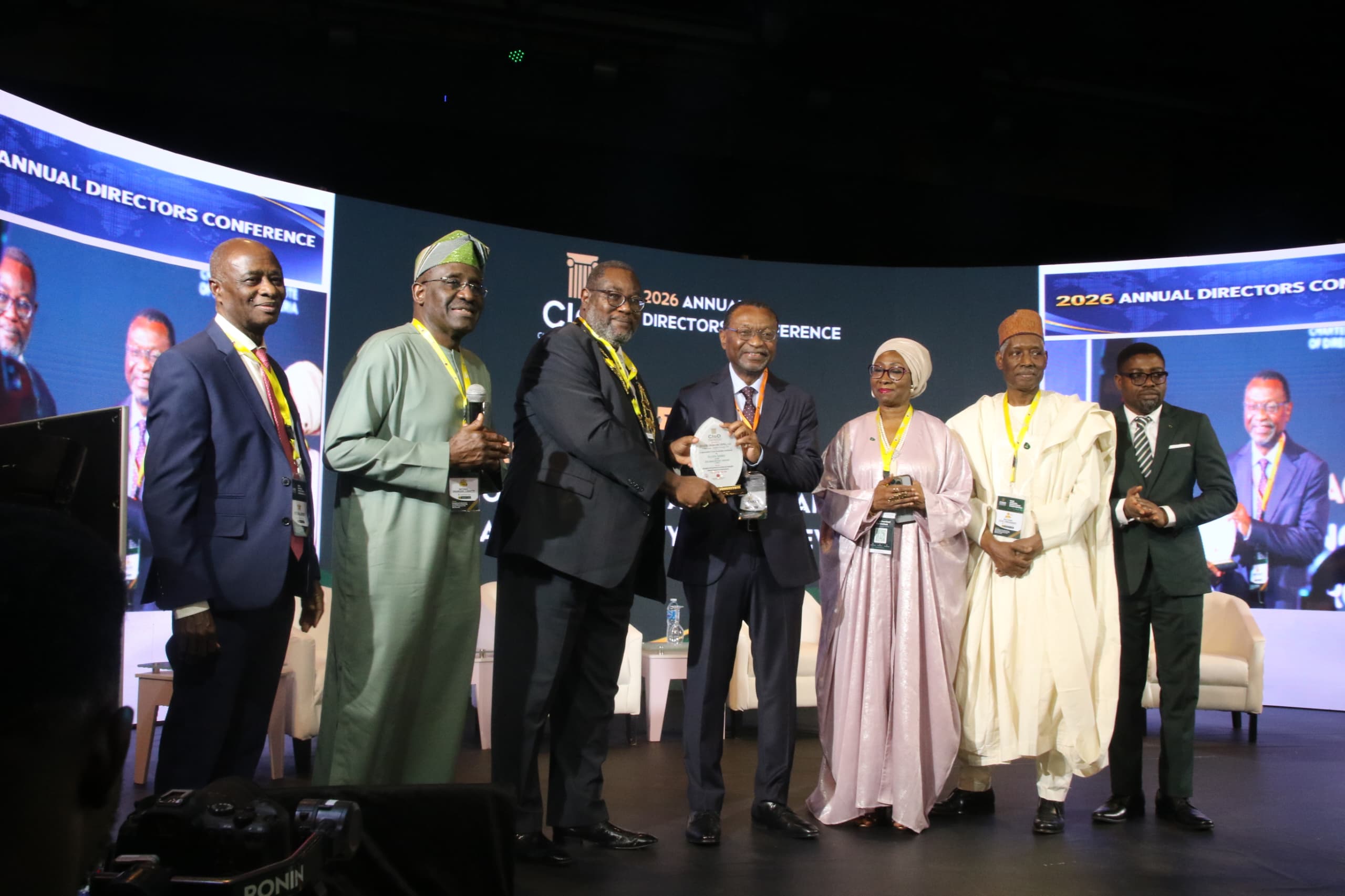
Administrative and management experts have maintained that Nigeria does not merely need a bigger economy; but a better governed economy where capital is deployed responsibly, technology is governed ethically, enterprises are strengthened and encouraged, and above all prosperity is shared more broadly.
Speaking at the 2026 Annual Directors Conference of the Chartered Institute of Directors Nigeria (CIoD) in Lagos, the President & Chairman of the Governing Council of the Institute, Otunba Oyebanji, assured that as advocate for good governance and excellence in leadership, it would leave no stone unturned in ensuring that people at various leadership positions do the right things at the right time and right place for the interest of Nigerians.
CIoD President reiterates that to build a $1 trillion economy by 2030 as proposed by President Bola Tinubu, there is need for a substantial acceleration in economic growth. This ambition, he noted cannot be achieved through fiscal policy alone; it requires economic and political leaders to allocate capital productively, encourage enterprise, manage risks effectively, and create lasting economic value.
“Directors play an important role in building an inclusive economy. Micro, small and medium-scale enterprises account for 46.32 percent of Nigeria’s GDP and 87.9 percent of employment, according to the NBS/SMEDAN survey cited in PwCs 2024 MSME Survey.
“These figures remind us that national prosperity depends not only on the performance of large corporations but also on our ability to strengthen micro, small, and medium-scale businesses through sound governance, access to capital, and expanded market opportunities”
Oyebanji believes that the ongoing discourse in strategic competitiveness amid global uncertainty; entrepreneurial growth access to capital; board accountability in the age of artificial intelligence; stakeholder collaboration for shared prosperity; and ethical standards would yield positive results. “We will also consider how sustainable capital and effective public-private collaboration can support Nigeria’s ambition for a larger and more productive economy.
“As directors, we must recognise that good governance is more than compliance with laws and codes. It is demonstrated through the impact of our decisions, the integrity of our leadership, our willingness to challenge assumptions and our accountability to shareholders and other stakeholders”
He admonished corporate leaders to equip themselves and anticipate risks, seize opportunities and ensure that the pursuit of profit also contributes to wider economic and social progress of the national and our world.
“We remain committed to promoting professional standards, strengthening directors’ capacity and advancing governance practices that support institutional credibility and sustainable national development. We must build a sustainable businesses that will not only create value but also stand the test of time” he added.
The Chairman, National Organising Committee (NOC), Dr Waheed Olagunju, reminded boardroom leaders, policymakers, implementers, investors, academics and professionals that corporate success should contribute to broader national progress and bring about considerable improvements in the well being of societal members.
With the theme, “Reimagining the Board Room for Inclusive and Sustainable National Prosperity in the New Economy” Olagunju believes that sustainable prosperity entails productive businesses, effective institutions, decent employment, investment in human capital and opportunities that extend across sectors, regions and communities.
“Boards must consider how their decisions affect not only shareholders but also employees, customers, suppliers, our communities, and the wider society. Reimagining the boardroom is consequently not simply about adopting new technologies or introducing new governance procedures.
“It is about strengthening the quality of board deliberations, improving strategic judgment, promoting ethical leadership, and ensuring that decisions are informed by clear understanding of the opportunities and the risks organizations face”
He added that reimagining the board room also requires boards to respectfully challenge established assumptions, embrace relevant and diverse experience and perspective, as well as maintain long-term view of organizational performance and national development. “While interrogating established assumptions we should be mindful of lessons from the past that could serve as useful guide while navigating our ways into the future”
“Let us renew our commitment to responsible leadership, sound corporate governance and the pursuit of prosperity that is both inclusive and sustainable in the rapidly evolving new economy. By reimagining our boardrooms and strengthening the institutions that support productive enterprise, we can make considerable meaningful contributions to Nigeria’s economic aspirations” he averred.
On his part, the conference Chairman, Emmanuel Ocholi, warned corporate leaders that their decisions made in our boardrooms have far-reaching consequences for businesses, institutions and the Nigerian economy.
Commenting on the theme, Ocholi challenged captains of industries to examine whether the way they govern their organisations is adequate for the economic realities confronting their country, and whether the decisions they take are contributing meaningfully to the kind of economy Nigeria wants to become.
“The boardroom is where major corporate choices are scrutinised, where capital is allocated, where leadership is held accountable and where the long-term direction of organisations is determined. Yet, the environment in which these responsibilities are exercised has changed considerably. Technology is altering business models and competitive structures. Artificial intelligence is changing how organisations make decisions and deploy human resources.
“Global supply chains are being reconfigured. Climate risks, energy transition, cyber threats, geopolitical uncertainty and changing patterns of consumer demand are creating new exposures for businesses. At the same time, investors, regulators, employees and communities are demanding higher standards of transparency, responsible conduct and performance”
He explained that recent developments raise a fundamental question: Are boards governing the businesses of tomorrow with the assumptions and practices of yesterday?
For directors, he confirmed that the challenge is not to become experts in every new technology or emerging business trend. It is about asking better questions, understanding the implications of change, obtaining reliable information, challenging management assumptions, and ensuring that the organization is prepared for risks that may not yet be fully visible.
“Sustainable business growth requires more than a promising idea. It requires sound governance, credible leadership, appropriate risk management, access to capital and the capacity to adapt. Directors must look beyond periodic financial results and ask whether their organizations are building the capabilities required to remain relevant and competitive over the long term. We must be reminded that financial performance and national development are related, but not automatically the same”
He challenged directors to build organizations that are commercially successful, at the same time contributing to a more productive and inclusive economy. This, he opined requires boards to consider the quality of employment they support, the opportunities they create for local businesses, the development of human capital, the responsible use of natural resources and the wider consequences of their strategic decisions.
“Inclusion should be treated as part of the foundations of a resilient economy. When more people and businesses can participate productively in economic activity, the market broadens, the supply base strengthens, and the potential for sustainable growth increases.
“Similarly, sustainability should not be reduced to a reporting exercise or a regulatory compliance requirement. It should influence how organizations invest, manage resources, assess long-term risks and preserve their capacity to operate in the future. The board must therefore ask not only whether a decision is profitable today, but whether it is responsible, resilient and capable of creating value over time”
“Boards must move from simply reviewing risk reports to developing a deeper understanding of interconnected risks and the organization’s capacity to withstand them. Good governance is not demonstrated merely by holding meetings, approving minutes or satisfying compliance requirements.
“It is demonstrated when directors exercise sound judgement, ask difficult questions, insist on credible information and make decisions in the long-term interests of the organisation. A board that avoids difficult conversations cannot provide the oversight it is expected to provide”
He noted that these questions should not be treated as abstract governance issues because they affect investment decisions, organisational competitiveness, employment, innovation and the confidence that businesses and citizens place in our institutions.
“Boards cannot resolve every national economic challenge. That is not their mandate. However, they can make a meaningful contribution through the quality of their decisions and the standards they establish within their organisations.
“They can promote investment in productive capacity, support innovation, strengthen internal controls, develop capable leadership teams and insist on ethical business practices. They can also encourage constructive engagement with regulators and policymakers, while ensuring that their organisations contribute responsibly to the communities and markets in which they operate.
The management expert maintained that businesses require predictable rules, effective regulation, credible public institutions and a functioning justice system. Government, in turn, needs a productive private sector that creates employment, generates revenue, invests in infrastructure and contributes to economic growth.
“We need stronger institutions, more productive businesses and a relationship between the public and private sectors built on trust, accountability and a shared commitment to national development. Reimagining the boardroom begins with a willingness to rethink how we exercise oversight, how we define performance, how we manage risk and how we understand the relationship between corporate success and national progress” he posited.