Follow Us on Google

• Stakeholders demand probe, prosecution of culprits
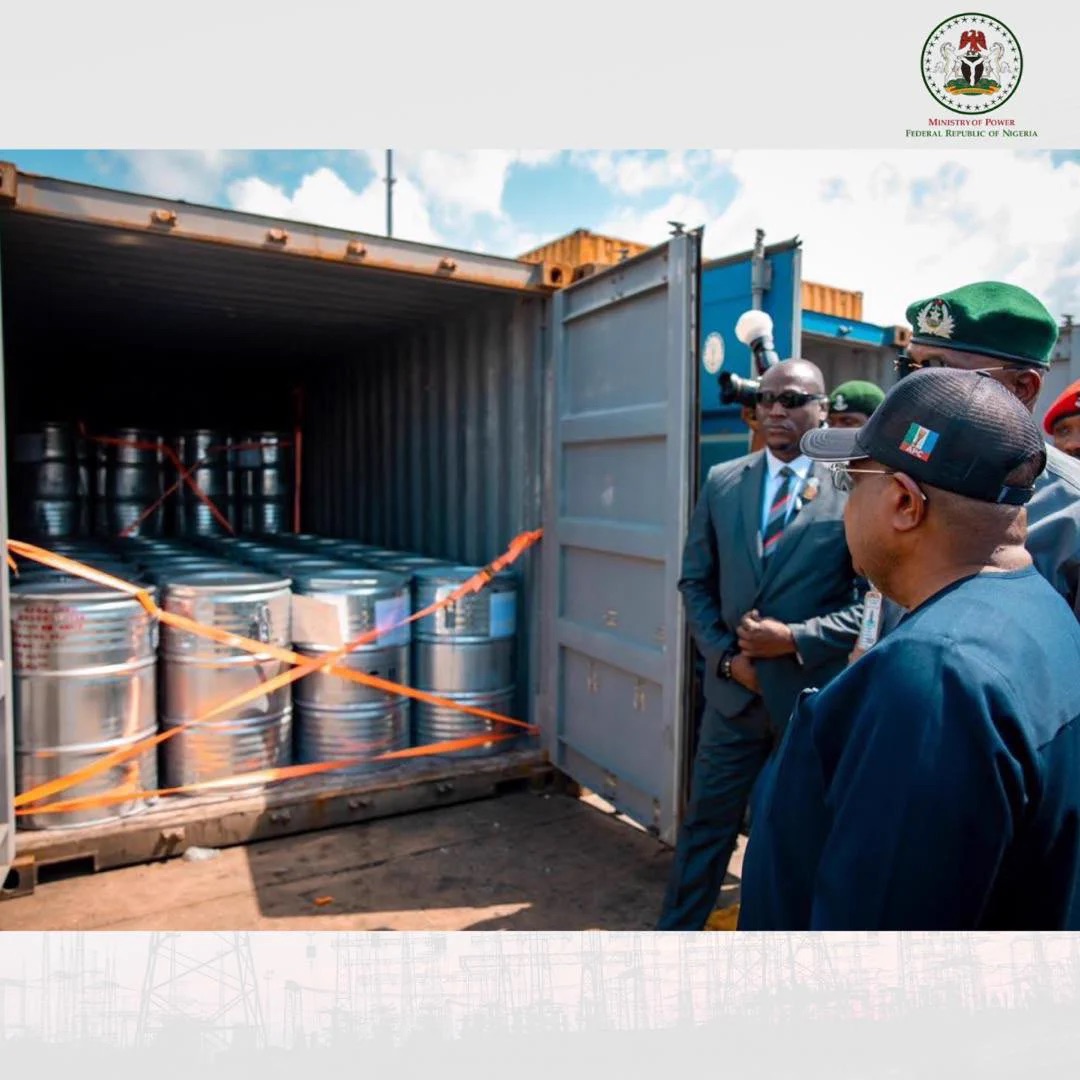
Nigeria’s power sector and economy at large are counting the cost of bureaucratic delays after more than 300 containers of vital electricity transmission equipment were left stranded at various seaport terminals in Lagos for about 20 years.
The ugly development denied the country, currently battling abysmal power supply, access to materials that could have helped improve the situation.
The prolonged delay, blamed on red tape and administrative bottlenecks, has raised genuine questions about accountability, the waste of public resources and the state of the country’s electricity infrastructure. Concerned stakeholders are now calling for a special committee to investigate how the equipment became trapped for two decades, establish the financial losses incurred, identify those responsible and visit them with the full weight of the law.
According to the Comptroller General of Customs, Adewale Adeniyi, the abandoned consignments include; transformers, electrical cables, switchgear and other essential materials procured for electricity transmission projects.
However, they were left uncleared at Apapa, Tin Can Island and other ports for periods ranging from 14 to 20 years.
Daily Sun learnt that poor inter-agency coordination among relevant government agencies was also another culprit.
Another factor listed was the contractor’s failure to secure the necessary import documentation before shipping the equipment into the country.
Key regulatory and clearance documents, including Form M, Pre-Arrival Assessment Report (PAAR), Standards Organisation of Nigeria Conformity Assessment Programme (SONCAP) certificates and Import Duty Exemption Certificates (IDEC), were reportedly not processed before the consignments arrived at the ports.
The two-decade delay has tied down huge public funds in equipment that could have strengthened Nigeria’s power transmission network, upgraded substations and improved the delivery of electricity from generating plants to consumers.
However, stakeholders who spoke with Daily Sun have faulted the government’s handling of the equipment, questioning how critical infrastructure purchased with huge public funds could be left stranded and unaccounted for nearly two decades.
They said several issues needed clarification, including whether import duties were unpaid, duty waivers or exemptions were delayed, or disagreements between the government and contractors stalled the release of the equipment. They also questioned whether project sites were ready to receive the materials and whether officials ignored warnings about rising port charges that continued to pile up over the years.
On the economic implications, stakeholders said that the prolonged abandonment of the equipment represents a significant waste of public resources, with government funds locked up in assets that have remained idle for nearly two decades.
Beyond the original procurement cost, the prolonged delay may have exposed the government to huge additional expenses, including storage charges, financing costs and depreciation. With warranties likely expired, components exposed to deterioration and technology advancing rapidly, some of the equipment may still be usable, while others could require expensive repairs, refurbishment or outright replacement.
More importantly, Nigerians may have lost the opportunity to enjoy additional electricity if the transmission projects for which the equipment was purchased had been completed on schedule. The failure to put the materials to use could have stalled improvements in the country’s transmission capacity and the delivery of electricity to homes and businesses.
However, the actual financial and economic losses can only be established through verified project records and independent technical assessments, rather than speculation.
The impact of poor electricity supply continues to take a heavy toll on Nigerian businesses. Many entrepreneurs and companies spend huge sums on generators, diesel and battery systems to keep their operations running. These additional expenses drive up production costs, eat into profits and make local businesses less competitive.
For manufacturers, the burden is particularly severe, as funds that could have been invested in expanding production, acquiring new technology and creating employment are instead diverted to providing alternative power. This further constrains business growth, discourages investment and undermines the potential of the private sector to generate jobs and drive economic development.
In response to the situation, President Bola Tinubu ordered the immediate release of the equipment, directing the Ministry of Power, the Nigerian Ports Authority (NPA) and the Nigeria Customs Service (NCS) to remove all obstacles delaying their clearance.
Following the President’s intervention, the Minister of Finance, Taiwo Oyedele, approved a waiver covering the accumulated port charges.
Consequently, the NCS began evacuating the equipment from the ports on Friday, November 6. So far, 98 containers have been released, including 44 from ENL Terminal and 54 from other terminals across Tin Can Island and Apapa ports.
However, stakeholders in the maritime sector have urged the federal government to set up a special committee of professionals to investigate the circumstances surrounding the importation and abandonment of the equipment and establish those responsible.
Speaking with Daily Sun, the National Council of Managing Directors of Licensed Customs Agents (NCMDLCA) called on the government to scrutinise the operations of the NCS and address the systemic failures that allow imported goods to remain abandoned at the ports for decades.
“You cannot import equipment into the country and leave it unattended for years. Such practices must be investigated, and those responsible must be held accountable.
“In this particular case, we are talking about consignments that have reportedly remained in the ports for 20 years. What is the justification for keeping such equipment for that long, especially when it was originally intended to support the country’s electricity supply system?” he stated.
According to him, the equipment was reportedly imported for NEPA at a time when the power sector was undergoing major developments, including the concessioning of generation and distribution assets and the restructuring of the transmission sector.
“Now, after 20 years, the equipment is being brought forward.
The question is: how relevant is it to the country’s present electricity infrastructure? Is it suitable for generation, transmission or distribution? These are three distinct areas that require different types of equipment and planning.
“This country must be properly restructured. We must stop politicising issues of this nature. Allowing consignments worth so much to remain abandoned for two decades is a serious matter. If there has been fraud, negligence or abuse of office, those responsible must face the consequences.
“This is why I have consistently called for a committee to review the entire port and Customs system. There must be a thorough investigation into how such consignments are allowed to remain in the ports or tied up in ports for so many years.
“We should not be celebrating the release of containers that have been abandoned for 20 years without asking the important questions: Who imported them? Why were they abandoned? Who was responsible for their clearance? Why were they not put to use when they could have contributed to the country’s electricity supply? These are the questions that responsible countries would ask. We cannot continue to operate as though we are a banana republic,” he stressed.
He added that Nigeria’s major problem was the politicisation of virtually every issue, adding that the consignment was reportedly imported for the then National Electric Power Authority (NEPA). If that was the case, he argued, the equipment should have been deployed to improve electricity generation, transmission or distribution.
He said those responsible for the prolonged delay must be identified and held accountable, urging the government to constitute an independent committee of professionals to investigate the matter. The committee, he said, should examine the activities of the ports, Customs and all government agencies involved in the process.
“We cannot continue to run the country this way. If 300 containers of equipment had been cleared and deployed 20 years ago, they could have made a significant contribution to the country’s electricity infrastructure.
“Instead, the equipment was abandoned, and we are now being told that it is time to clear it. What purpose will it serve today? Is it still compatible with the country’s current infrastructure? This is not a political issue. It is a matter of accountability. Anyone found culpable must be penalised in accordance with the law,” he said.
He described the economic implications of the delay as enormous, arguing that the failure to deploy the equipment when it was needed had deprived the country of infrastructure that could have strengthened its electricity supply system.
He maintained that the equipment, if released and installed two decades ago, could have improved power generation, transmission and distribution.
“This is not just about the particular containers. There are many other government consignments that have been abandoned at the ports, including equipment meant for different government agencies.
“When equipment that could have supported critical infrastructure is left unused for decades, the country loses the opportunity to benefit from that investment. By the time the equipment is eventually released, it may no longer be suitable for existing infrastructure or operational requirements.
“Consider the situation 20 years ago, when the country depended heavily on imported equipment to develop its electricity sector. Such consignments were extremely important. Yet, instead of being cleared and deployed, they were left at the ports. This is one of the factors that have contributed to the deterioration of the country’s electricity supply system,” he explained.
He called on the government to take decisive steps to prevent a recurrence, insisting that those found responsible must be held accountable and that the entire port system should be reviewed and restructured by qualified professionals.
Also speaking, the former Acting National President of the Association of Nigerian Licensed Customs Agents (ANLCA), Dr Kayode Farinto, blamed the delay in clearing the power equipment on bureaucratic failures at the Ministry of Power and its relevant agencies.
“Ordinarily, when you want to import equipment of this magnitude for the Federal Government, the IDEC is supposed to have been processed. I am sure one of the reasons for the delay is that they did not process the necessary documents until the equipment arrived. Customs will not allow you to take the equipment out of the port until the required duties have been paid. As a result, this has caused a lot of confusion.
“According to him, the delay is contributing to the hardships currently being experienced in the country because this equipment is supposed to be used for power supply, which would have helped alleviate the suffering of Nigerians.
“And over the last two weeks, the power supply has been epileptic. So, in terms of quantifying the impact, I cannot even begin to quantify how much damage the delay in clearing this equipment has caused the nation’s economy. I know the Federal Government has lost a lot of money.
“If we are talking about the Federal Government, what about individual Nigerians who have, in one way or another, also been affected by the lack of electricity? Do we talk about those who have died, those who have been injured, or those who are still hospitalised because of the lack of electricity?
“So, it is very unfortunate that the bureaucracy has kept this equipment at the port for this long. There is supposed to be inter-agency cooperation among all federal government parastatals. Unfortunately, this is seriously lacking at the moment,” he explained.
However, Farinto disagreed with calls for the prosecution of the importers, arguing that they had fulfilled their responsibility by bringing the equipment into the country.
“It is not as if the importer was asked to import the equipment and failed to do so. This person has imported it. Unfortunately, due to bureaucratic bottlenecks, he has been unable to clear it from the port. So, how do you sanction him? If you speak to the importer now, you will hear a lot about the efforts he has made to ensure that the equipment is cleared from the port. The importer is not at fault.
“If he had collected money and failed to import the items, then we could be talking about sanctions. But he has imported them. Unfortunately, the federal government bureaucracy has kept the equipment at the port. So, how is that his fault?” he queried.
He called for a major overhaul of the nation’s port system, with particular emphasis on better coordination among government agencies handling imports and other trade-related activities.
He said effective cooperation among the agencies was necessary to prevent similar delays and ensure that government consignments were cleared promptly.
“Customs will not allow you to move anything out of the port without an IDEC. It is commendable that the IDEC process has now been automated. Before importing anything on behalf of the Federal Government, you are supposed to have processed all the necessary documents.
“This includes the IDEC, letter of waiver and other relevant documents. You cannot simply import the equipment and wait until it arrives before starting the documentation process. That is not how it is supposed to be done. It is very wrong. From my analysis, bureaucracy is what has kept this equipment at the port,” he said.