Follow Us on Google
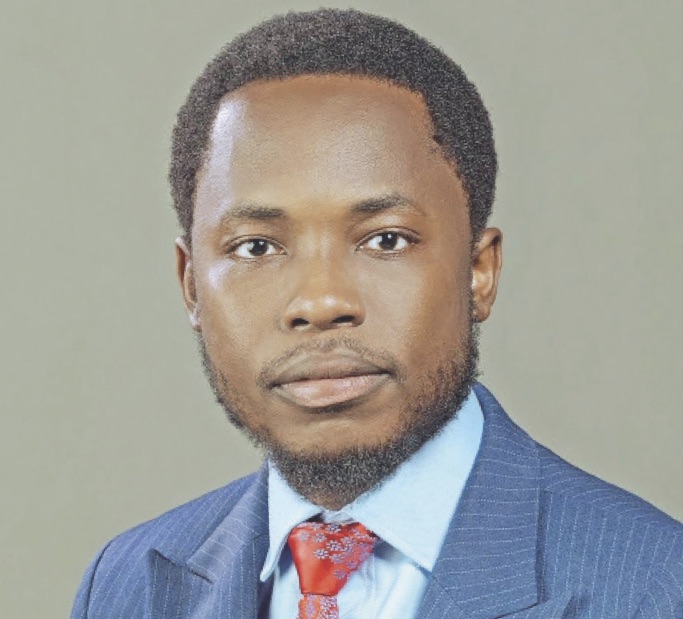
By Juliana Taiwo-Obalonye
Bayo Omoboriowo was the official photographer of Nigeria’s immediate past president, late Muhammadu Buhari. For more than eight years, he went with the late president virtually everywhere, capturing Buhari with his camera on the campaign train before the election and to different parts of the world in the eight years of his administration.
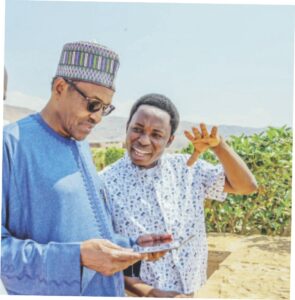
In this interview, Omoboriowo reflects on his humble start, how he met Buhari, his challenges with bureaucracy and protocol, and how he flew to London upon hearing of the demise of the late president and accompanying his corpse to Daura.
How did you meet the former President Buhari?
My journey with Muhammadu Buhari began in 2014 – the first time I met or even knew about him. Before then, I hadn’t followed his story. I was simply a passionate photographer, eager to capture and tell stories wherever I could. Having already documented numerous politically inspired scenes, I was struck by the difference between how Nigerian politicians were portrayed and the coverage I saw in global publications like The Guardian and The New York Times. That observation became my mission: to fill the gap in how our political stories were told.
In 2013, I soaked up images at newsstands, noticing talented Nigerian photographers mostly covered portraits, weddings, or events. I wanted to focus on political photography, even when that wasn’t the norm. I invested in my own gear, found inspiration in international photographers, and travelled to Ekiti State to document Governor Fayemi’s campaign – without pay, staying with a friend. When he lost, I returned to Lagos, and then covered Governor Aregbesola’s re-election, maintaining a professional distance. He won, but I realised joining his government wasn’t my path.
The real turning point was at the APC National Convention. Despite warnings, I attended without accreditation. I squeezed into the venue, and began photographing. In the crowd, I noticed a man attracting everyone’s attention, including the international media. I photographed him but had my phone stolen. Still, I stayed overnight, capturing key moments and witnessing him win.
Later, I was called to photograph Buhari’s campaign, chosen for my evident preparedness on social media. Though the job couldn’t match my usual fees, my passion guided me. I rushed to Port Harcourt, met Buhari on day one, and he noticed my distinct style —“a frame without glass”—and we shared a laugh. That was the start of our eight-year collaboration.
The journey was tough: I often slept in airports, squeezed into plane toilets, or rode in car boots. Buhari, without my knowledge, paid attention and asked about me, the tireless photographer. Initially, I saw this as political documentation, not photographing a president. Even when I hesitated when I was called, encouragement from T.Y. Bello and Lukman Olanipekun convinced me that no one was better prepared.
For eight years, though I sometimes wanted to quit, I remained dedicated to covering this political movement. That’s how I became closely linked with the Muhammadu Buhari’s story.
What challenges did you face working with the president as an outsider with no connections? And how did you overcome them?
The biggest challenge was navigating the bureaucracy. As a creative, I craved the freedom to work spontaneously, but I faced strict rules and procedures that stifled innovation, with constant reminders of how “things have always been done.” While I challenged this mind-set, I had to respect the presidency’s protocols to avoid risking myself or the government.
Confidentiality was another major challenge. Unlike typical creative work, I had to carefully control what and when to share, which added pressure.
Lastly, there was no room for error—I had to be fully prepared at all times. Despite the demands, I never missed an assignment or leaked information during those eight years. And I was 27 when I became the president’s photographer.
What was your typical day like as a president’s photographer?
Each day began with an immediate review of the president’s schedule, preparing to track and document every detail as the day unfolded. I was always on alert, frequently checking my phone for urgent calls—even in the middle of the night—worried that I might miss something requiring my attention. There were mornings when I had to leap out of bed and rapidly adjust, asking myself, “What’s next on today’s agenda?”
My role centred on shadowing the president’s itinerary, remaining perpetually on standby to respond to any spontaneous assignment. This often meant waiting for hours – sometimes up to eight—just to capture a brief, two-minute photo opportunity. On other days, I’d rise at 4a.m. to reach international venues well before schedule, arriving three hours ahead of the president for a quick five-minute shoot before moving on.
The demands were constant: relentless planning, long periods of waiting, quick execution, and immediate editing. I handled the entire process alone—serving as photographer, editor, printer, caption writer, and press liaison. Managing every aspect myself required flexibility and resilience. This experience pushed my limits.
How was your experience covering the president’s international trips? Like, how many countries did you visit with him, and which memorable places did you photograph in Nigeria and abroad?
Visiting all 36 states of Nigeria fulfilled a long-held dream and was a source of great joy. Beyond that, I travelled to over 80 countries.
One highlight was the exclusive access I had—for example, entering the White House and being photographed with President Obama in the Oval Office, where President Joe Biden, then vice president, introduced me jokingly because of my bow tie. Another unforgettable moment was being the only person present during a meeting between President Buhari and President Trump, placing me in close proximity to three recent U.S. presidents—a rare experience few Americans have.
Attending international conferences and being the sole companion of the president in the room gave me a unique view of world leaders’ conduct, deeply influencing my professionalism and discipline.
The organization and coordination at these high-level global gatherings taught me invaluable lessons in leadership finesse.
How did your role as President Buhari’s personal photographer impact your family life?
My entire personal life, not just my family life, was deeply affected. From age 27 to 35, I dedicated myself wholly to documenting President Buhari. Those eight years demanded immense sacrifices.
For instance, once during a presidential meeting, after photographing an event’s start, I rushed to the restroom but was abruptly called back before finishing. I had to quickly compose myself to capture the moment. On another occasion, I was driving rapidly to photograph the president when someone crashed into my car. I couldn’t stop to argue or even check the damage but drove straight to the Villa to fulfil the assignment, inspecting the car only afterward.
There were countless sleepless nights and moments of exhaustion.
The impact extended beyond me. My wife often felt like I was a stranger at home, as I would return from trips just to leave again early the next day, making us see little of each other. She worried we hardly knew each other anymore. The pressure affected my entire family, including my parents, as I was constantly busy and hard to reach. Many assumed I was just pretending to be busy, but it was the harsh reality of the service.
How did working with Buhari affect you professionally?
I believe it gave me a tremendous opportunity for growth and self-improvement. I wasn’t the same person when I left the Villa as when I arrived. I had become a stronger, more developed version of myself. The experience exposed me to a broad perspective, allowing me to see life more deeply. My work gained depth and purpose, and I was able to express myself fully. I became competitive on a global level, and my output became internationally relevant. This means that my storytelling is no longer just local or African—it meets global standards. Being at the Presidential Villa gave me the chance to compete on a worldwide stage. I had to sharpen my skills, prepare extensively before shooting or covering the press, and study global best practices.
You went back for your masters at some time. How did you handle that?
Education has always been central to my life, a value likely shaped by my Ekiti background. I believe in continuous learning and self-improvement, which drove me to pursue a master’s degree after eight years in government. Realising I hadn’t updated my knowledge, I saw further study as an investment in my future and a way to gain a global perspective through Arts and Cultural Management.
I chose this field intentionally, wanting to help creatives not only excel in their craft but also understand how to manage the arts. When I discussed my goals with the president, he fully supported my decision, even as others questioned it. COVID-19 made hybrid study possible, letting me learn both in Nigeria and the UK. Ultimately, furthering my education was about personal growth and preparing for life beyond government service.
How would you describe President Buhari in private? What was he like personally, having spent time closely with him?
The late President Buhari, may he rest in peace, was a genuine Nigerian leader – someone authentic, principled, and consistent in both public and private life. Unlike many who wear different masks, he embodied integrity and sincerity, living by the values he voiced. Having worked closely with him for eight years, I witnessed his focus on Nigeria’s welfare over personal image; he never once asked me to see the photos I took of him or manage his public appearance.
He truly cared about the nation and devoted himself fully, living simply without the grandeur usually associated with high office. For example, when we landed in Kaduna, I wasn’t allowed to visit his house, which I assumed had been lavishly upgraded. When I eventually saw it, the home was unchanged from before his presidency, except for a container kitchen added for security personnel. He even disliked changes to his furniture in Daura, showing reluctance toward unnecessary extravagance.
President Buhari valued professionalism, dedication, and competence, trusting those he believed were capable to handle their roles independently. He abhorred eye service, insincerity, and empty praise, preferring straightforward work and progress. His demeanour was simple, genuine, and mild rather than forceful or aggressive. This was the real character of the leader I knew.
Were there routines or habits of his that were surprising to you?
“Surprising” isn’t quite the right word. I can’t recall any routine or habit of President Buhari’s that truly caught me off guard. Some days were simply harder as a photographer, especially after he cut his hair. His full, thick hair made for visually stronger photos, so I always hoped he’d keep it, but haircuts are natural. Unlike him, I’ve mostly just trimmed mine over the past decade.
I also preferred when he wore his black outfit with the white collar—it was sleek and photographically ideal. Other clothing sometimes made my work more challenging, so there were definitely aspects of his presentation I found less easy to capture.
One of my favourite moments was when he took off his glasses – it gave him a raw, deeply emotional look that transformed the image. Being there during those moments was truly moving.
I also remember times when he’d see me nearby during meals and say, “Bayo, go eat your own too.” I’d sit and share the same food with him, which was a very humbling experience.
How accurate do you find the public perception of him—both as wicked and caring—based on your first-hand experience with him?
For me, it would be insensitive to ignore how Nigerians feel or felt about him. Just because I had a front-row seat doesn’t mean everyone shared the same view. I also understand how easy it is to be misunderstood. Even as a young person trying to find my way, I’ve often been misinterpreted. Friends have thought I was snobbish when I wasn’t, simply because I didn’t respond to a call. People who’ve never met me sometimes form opinions based on assumptions. Someone recently told me they were surprised by how humble I seemed, having expected arrogance. That’s unfair, and I believe that was President Buhari’s reality too.
How do you respond to rumours about President Buhari’s frequent illnesses, medical treatments abroad, and claims that he had died and was replaced by an impostor?
So if we were being ruled by a Jibril from Sudan, how would he have known me? How would he have known my wife? How come he related with me the exact same way I have known him? Did Jibril from Sudan come into my house to know I’m married? Did he know I have children, that I have twins? And then Jibril is asking me about my twins? Or is this just stretching it? It sounds sad. Maybe it’s AI—like an AI version implanted with all the programming and memories of what happened in the past.
Even the people spreading the story don’t really believe it. If it were truly Jibril from Sudan, they would say “In loving memory of Jibril.” But everyone says “Rest in peace Muhammadu Buhari.” Even those who disliked him say that. No one says Jibril has died. So if he was dead, why would those rumours suddenly be forgotten? I think it was just a media drama.
Could you share more about the bond you formed with President Buhari’s family?
For me, one of the things that helped me in government was maintaining my focus. My focus was to document the president and his family without interfering in their family life. Do you understand? I was primarily there, but from the little insight I had, I knew he deeply respected his children. The way he played with them was very telling. Everyone has said that he had a special place for children. There was just something about him and children. He wanted them around because they gave him a sense of hope. Over the years, I observed how much he loved, respected, and cared for his children. That stood out to me the most in my observations of his family. It was interesting to document that relationship, which I did for eight years. Those were always great times, like on Children’s Day, when I would post pictures of him with his children or with children in general. I believe he genuinely cared a lot about that.
Did you stay in touch after your assignment? Did you see him again once he left office?
Oh yes. I visited Daura twice. The last time, which was earlier this year, was very interesting. He was laughing. Mr. Femi Adesina even told me that the president spoke about me during my last visit. He was laughing about how when I arrived, I was wearing a “coat of many colours,” and it just stuck in his head. He laughed a lot when I came. I remember he even offered to give me some money as a gesture, but I refused. I said, “No, sir, I don’t need money from you.” He thought that was very un-Nigerian of me, saying, “How can you say no to money?” I told him he had already given me the opportunity to work with him, and I couldn’t expect money now that he was out of government. We laughed about it and had a good conversation about what had been happening since he left office. It was a very memorable experience, not knowing it would be the last time I would see him. And thank God I took a picture of myself and him, which was our last time being together.
Where were you and how did you feel when you heard he had died?
It felt like a movie trick, like maybe people were playing a prank and it was just an April Fool’s joke. I was at home, took a nap, and when I woke up, someone asked me, “Is it true?” I said, “What is true?” Then I checked the social media and saw that Muhammadu Buhari had died. It was completely unexpected and a huge shock because I had just seen him – he was agile, energetic, happy. We had even gone to the farm together the last time I visited; we walked quite a long way through it. It was surprising, but this is life, and God knows best – that’s what I keep saying. For me, the best thing I could do was to honour him by immediately getting on the next plane to London, to document that last phase of his life. I was there, photographing him, documenting everything—from the aircraft where I sat next to his corpse all through the journey all the way to Daura, right up to his burial. It was a great honour and a privilege to be part of President Muhammadu Buhari’s life journey. May his gentle soul rest in peace. Amen.
How do you assess the federal government’s honour of President Buhari, and what message would you share with Nigerians amid varied reactions?
I would encourage the federal government to do more, although what has been done so far is encouraging. However, I believe President Muhammadu Buhari truly deserves a dedicated mausoleum and museum in his honour. He served this country with great dedication. Similar to the Obasanjo Library, he is not here to personally push for support, the government could take the initiative to establish a library, mausoleum, or museum as a lasting tribute – a place where history can be preserved and referenced. Just like the Yar’Adua Centre in Abuja, creating a Muhammadu Buhari Centre would be a meaningful way to honour his legacy. If the current government truly values his contributions, setting up such a centre wouldn’t be difficult and would show real respect for his memory.
What are the most valuable lessons or memories you gained from serving as President Buhari’s photographer?
I’ve learned the importance of service—service to humanity and service to the nation. I’ve also learned the value of sincerity of purpose and sincerity from the heart. Often, people may misunderstand you or view you from different angles, but it’s essential to be sincere within yourself and true to your nation. I’ve learned to be true to God in everything, dedicating all I do to Him. Over eight years, I witnessed a man who deeply respected his faith. He always said he wouldn’t do anything to turn his back on God or to displease Him. I often tell people that President Muhammadu Buhari was a born-again Muslim. Speaking as a Christian, I see him as someone who lived an upright, sincere, and unblemished life. He had no social vices—he wasn’t a womanizer, didn’t drink, nor was he involved in partying. He was truly a born-again Muslim. For me, this taught me that it’s possible to serve in government while remaining deeply religious, spiritual, and living a life that pleases God.
What is your top advice for aspiring photographers aiming to work in storytelling or with public figures?
Never underestimate the impact of storytelling. Recent events have shown that what lasts are the stories we share—President Muhammadu Buhari’s memories filled the media because he allowed his journey to be documented. Storytelling isn’t secondary; it is what endures long after everything else.
For young Nigerians, especially photographers, they should recognise the privilege of their platform. Your role is to observe and capture moments, not become the focus. Stay true to your purpose, avoid distractions, and remember: you are there to document and preserve history, not to seek the spotlight.
The stories you record today will inspire future generations. Storytelling is a lasting investment in our national legacy and a message for those who follow.
How many photographers have you inspired to follow your storytelling advice?
From the very beginning, my journey in photography was guided by a desire to inspire a new generation of photographers. It was never just about my own success; it was about creating opportunities for others as well. When I started out, apart from Lukesh, I was one of the few involved in political photography. Today, even local government chairmen have their own photographers.
We’ve truly transformed the landscape: Creatives now earn better incomes; There’s greater respect for those in the field and photographers have gained stronger voices in their communities.
I’ve committed my own resources to mentoring and supporting many creatives, giving them the chance to collaborate with political leaders and work within government agencies. The impact is clear—I’ve been able to inspire numerous individuals across Nigeria and even beyond its borders. Ultimately, I’ve lived a life focused not just on myself, but on helping others grow and even surpass my own achievements.
How do you plan to keep sharing stories moving forward?
These days, my work has shifted to telling stories from within an agency, where I’m also focused on empowering other creatives and giving them the space they need to express themselves. Storytelling, in all its forms, is at the heart of what I do now. After President Muhammadu Buhari’s passing, I started thinking about how to expand my approach – using what I learned with him to share the stories of many others.
While working with President Buhari, I published three books. I can share more about those books and what inspired them. My intention was always to preserve the nation’s story, starting with the president himself. I believe that unless a story is published, it risks being lost. I wanted these accounts to exist not just on digital platforms, which can disappear or change, but as enduring books and letters. This motivation led to the creation of the first two books.
The third book, Discover Nigeria, was dedicated to telling the broader story of Nigeria. I wanted to present my country positively and offer the world a fresh perspective. Today, hearing from ambassadors and visitors who are inspired by these works reminds me why I embarked on this project in the first place.