Follow Us on Google
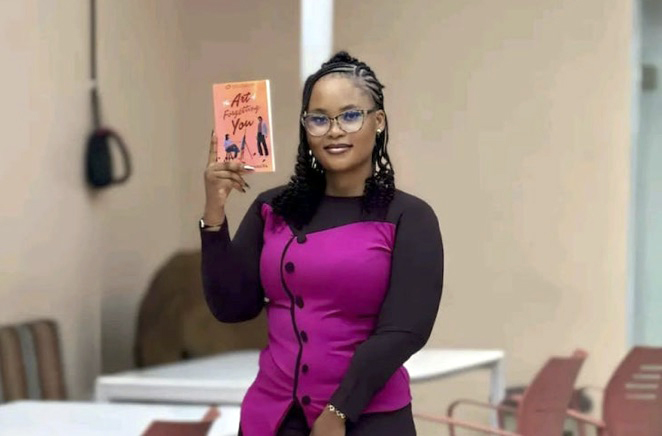
By Damiete Braide
Victoria Chinecherem Nwankpa is an up-and-coming writer and her digital books have reached millions of readers and listeners across the globe. Victoria began writing at a tender age as a way of expressing her imagination and making sense of the experiences around her.
The graduate of English from the University of Lagos has written over 28 books with themes on love and the complications of human relationships. In this interview with Damiete Braide, Victoria speaks on the major differences between digital and print publishing, why themes are important to her as a writer and plans, among others.
You have written more than 28 novels across multiple genres. What first inspired you to become a storyteller, and how did your writing journey begin?
I will say that storytelling has always been a part of who I am. Growing up, I was fascinated by books, films, and the way stories could transport people into entirely different worlds while still reflecting real human emotions. I began writing at a young age as a way to express my imagination and make sense of the experiences around me. What started as a personal passion gradually evolved into a professional career. Over the years, I developed my voice by exploring different genres, learning from readers, and consistently challenging myself to tell meaningful stories that connect with people across cultures and backgrounds.
Today, writing is more than a profession for me, it is a way of creating empathy, preserving emotions, and building connections through storytelling.
As a writer who successfully balances romance, fantasy, paranormal, and contemporary fiction, how do you decide which story idea to pursue next?
For me, every story begins with an emotional question: “What human experience am I trying to explore?” Whether I am writing romance, fantasy, paranormal, or contemporary fiction, I focus on themes that resonate deeply, love, identity, healing, loss, hope, and personal transformation.
I choose the stories that refuse to leave my mind. If a character’s voice stays with me for days or weeks, I know there is something meaningful worth exploring. Genre simply becomes the lens through which I tell that story.
Your digital books have reached millions of readers and listeners worldwide. What do you think makes your stories resonate so strongly with audiences?
I believe readers connect with authenticity. No matter how imaginative the setting is, the emotions must feel real. My stories explore experiences that people everywhere understand, love, heartbreak, ambition, family, resilience, and the search for belonging. I also create characters who are imperfect, vulnerable, and capable of growth. Readers want to see themselves reflected in the stories they consume, and I think that emotional honesty is what allows my work to resonate with audiences across different countries and cultures.
One of your books recorded over 1.9 million plays. How did that milestone influence your confidence and approach as a writer?
Reaching over 1.9 million plays was both humbling and motivating. It reminds me that stories can travel far beyond geographical boundaries and connect with people I may never meet. The milestone gave me greater confidence in my voice and reinforced the importance of consistency and authenticity.
It also encouraged me to think more strategically about my craft, audience engagement, and the opportunities available through digital publishing. Most importantly, it showed me that meaningful storytelling can have a global impact.
Your novel, The Art of Forgetting You, has gained visibility in notable Nigerian bookstores. What inspired the story, and what message did you hope readers would take from it?
The Art of Forgetting explores the emotional complexity of love, loss, memory, and healing. I want to tell a story about the difficult process of letting go while recognising that certain relationships shape who we become. The novel examines how people navigate grief, rediscover themselves, and find hope after emotional pain. My hope is that readers walk away understanding that healing is not about forgetting the people who changed our lives; it is about learning how to move forward while embracing the lessons those experiences leave behind.
Having built success in both digital and print publishing, what are the major differences between the two worlds from an author’s perspective?
Digital publishing offers immediacy, accessibility, and direct interaction with readers. It allows writers to build communities, receive instant feedback, and reach global audiences quickly. Print publishing, on the other hand, provides a different sense of permanence and visibility. Seeing a book on a bookstore shelf creates a unique connection between the author and readers.
Rather than viewing them as competing spaces, I see digital and print publishing as complementary. Digital platforms help authors expand their reach, while print publishing strengthens credibility and creates lasting literary presence.
Many of your stories explore love and human relationships. Why are these themes particularly important to you as a writer?
Love is one of the most universal human experiences.
It influences our decisions, shapes our identities, and affects how we understand ourselves and others. Through stories about relationships, I can explore themes such as trust, vulnerability, forgiveness, resilience, and personal growth.
I believe stories about human connection remind us that despite our differences, we share many of the same hopes, fears, and emotions.
You have participated in literary events organised by CORA, including World Literacy Day celebrations and the Lagos Book Walk. How have these experiences shaped your literary outlook?
Participating in CORA events has been incredibly enriching.
These experiences have allowed me to engage with writers, readers, publishers, and literary advocates who are committed to strengthening reading culture and promoting African literature.
They have reinforced my belief that literature is not created in isolation. Writing is deeply connected to community, dialogue, and cultural exchange. Being part of these events has inspired me to think more intentionally about the social impact of storytelling and my role within the wider literary ecosystem.
You facilitated an international online writing workshop attended by participants from Nigeria, the UK, India, and Lithuania. What did that experience teach you about the global writing community?
The workshop reminded me that storytelling transcends borders.
Although participants came from different countries and cultural backgrounds, we discovered that writers everywhere share similar aspirations, challenges, and creative questions. The experience reinforced the importance of collaboration, cultural exchange, and lifelong learning. It also showed me how digital platforms can create meaningful opportunities for writers to connect, learn from one another, and build international creative communities.
What are some of the biggest challenges emerging writers face today, and how can they overcome them?
One of the biggest challenges is information overload. Writers often feel pressured to follow trends, build personal brands, and achieve instant success.
Another challenge is maintaining confidence in an increasingly competitive industry.
My advice is to focus on developing your craft, remain consistent, and define success on your own terms. Writers should embrace continuous learning, seek constructive feedback, and remember that sustainable careers are built over time.
Authenticity and perseverance remain more valuable than chasing temporary trends.
In your view, what role can fiction play in promoting cultural understanding and meaningful human connections across borders?
Fiction has a unique ability to foster empathy. Stories allow readers to experience lives, cultures, and perspectives different from their own. Through fiction, we can challenge stereotypes, encourage dialogue, and create deeper understanding between people from different backgrounds. In a world that often feels divided, storytelling reminds us of our shared humanity. It helps us recognise that while our cultures may differ, our emotions, dreams, and struggles are often remarkably similar.
Looking ahead, what exciting projects, books, or literary initiatives can your readers and followers expect from you in the coming years?
I am currently developing new fiction projects across multiple genres, including romance and fantasy, while continuing to expand my work in both digital and print publishing.
I am also passionate about literary education and hope to facilitate more workshops, mentorship opportunities, and international collaborations that support emerging writers.
My goal is not only to tell compelling stories but also to contribute meaningfully to the global literary community.
If you could give one piece of advice to a young writer who dreams of reaching millions of readers, what would it be and why?
Write with honesty, not with the intention of going viral.
Readers connect with stories that are genuine and emotionally truthful. Focus on mastering your craft, understanding your audience, and staying consistent even when progress feels slow. Success rarely happens overnight, but every story you write helps you grow as a writer. If you remain committed to your voice and continue learning, your work will eventually find the readers it was meant to reach.Before sending these answers, review them once and adjust any details to sound more like your natural speaking voice. Authenticity is what will make the interview memorable.