Follow Us on Google
•Queues return, prices of goods may skyrocket
By Adewale Sanyaolu and Adanna Nnamani, Abuja
Petrol prices surged again on Thursday, compounding the hardship of motorists and commuters as pump prices climbed to N1,400 per litre in Lagos and N1,550 in Abuja, despite a recent downward adjustment announced by the Dangote Refinery.
The development has dimmed early expectations that the refinery’s reduction in its ex-gantry price would trigger immediate relief for consumers. On Tuesday, the refinery lowered its gantry price of Premium Motor Spirit (PMS), also known as petrol, to N1,075 per litre from N1,175, while coastal supply was adjusted to N1,050 per litre. Diesel prices were also cut by N190, from N1,620 to N1,430 per litre.
However, checks across filling stations showed that the anticipated relief has yet to reflect meaningfully at the pumps, leaving motorists to grapple with higher costs and commuters to bear the brunt through rising transport fares.
At some outlets visited in Lagos, petrol sold for significantly higher prices. Northwest filling station in Gbagada topped the list, dispensing petrol at about N1,400 per litre, while several other major marketers sold below N1,200 per litre. The spike has already triggered a sharp increase in transport fares across the city, with commuters reporting hikes of more than 30 per cent on several routes, an increase analysts warn could push the cost of goods and services even higher.
In Abuja, the situation has become increasingly difficult for residents as commercial drivers raise fares in response to rising fuel costs. Commuters across major routes in the Federal Capital Territory reported paying more to get to work, with many forced to adjust their daily budgets.
The fare from Kubwa to Wuse, which previously averaged N800, has risen to about N1,000, while commuters travelling from Lugbe to the Central Business District now pay around N800 compared to the earlier range of N500 to N700. Passengers on the Maraba–Central Business District route also reported paying as much as N1,000, up from between N700 and N800.
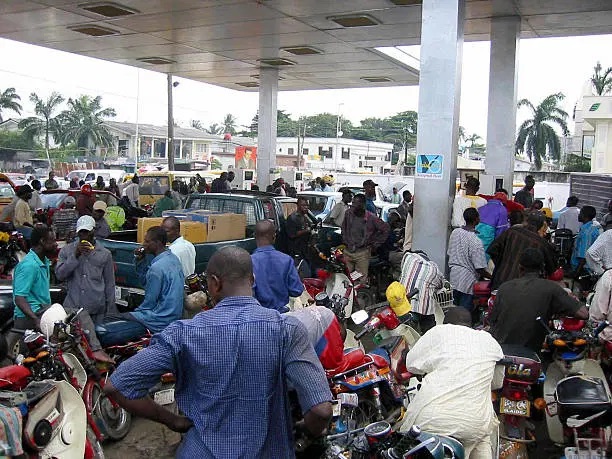
Beyond the higher fares, commuters say the fuel situation has reduced the number of buses on the road, forcing many to spend longer hours waiting at bus stops.
“Before, I could easily get a vehicle to work in the morning, but now you can stand for one hour or more waiting. Even when you finally see a bus, the fare has increased,” a civil servant, Grace, said at a bus stop in Wuse.
Other News
Long queues have also begun to form at several filling stations, particularly those operated by the Nigerian National Petroleum Company Limited, as motorists scramble to buy petrol at relatively lower prices. The state-owned oil company recently reduced its pump price to about N1,165 per litre in Abuja from N1,260, while also adjusting prices at its Lagos retail outlets.
Industry operators attribute the earlier surge in petrol prices to fluctuations in global crude oil prices and supply adjustments within the domestic market.
A commercial driver in Abuja said many motorists are forced to patronise stations selling at higher prices because waiting in long queues at Nigerian National Petroleum Company Limited outlets could take hours. “Fuel may have reduced slightly at NNPC stations, but the queues are long and many of us cannot wait there for hours. So we buy from other stations at higher prices,” he said.
In explaining its pricing move earlier in the week, the Dangote Refinery said the reduction reflects its commitment to fairness and transparency, noting that its pricing structure is influenced by global crude oil benchmarks and prevailing foreign exchange rates.
The refinery said all crude processed at its facility is purchased at international benchmark prices with an additional premium of between $3 and $6 per barrel, while foreign exchange payments are made at prevailing market rates without subsidies. It added that crude supplied under the naira-for-crude arrangement is also priced at global benchmark levels before being converted to naira.
According to the company, it reduced its gantry prices at least eight times in 2025, increasing them only twice, in what it described as an effort rooted in economic patriotism and a commitment to pass cost advantages to consumers across Nigeria.
Meanwhile, in a move aimed at promoting competition and stabilising supply in the downstream sector, the Nigerian Midstream and Downstream Petroleum Regulatory Authority has issued six fresh petrol import permits to depot owners and petroleum marketers—the first approvals granted in 2026.
Industry sources said the regulator granted the permits to six importers, each authorised to bring in about 30,000 metric tonnes of PMS, a step seen as part of efforts by the Federal Government to maintain balance and competition in Nigeria’s fuel market.