Follow Us on Google
By Damiete Braide
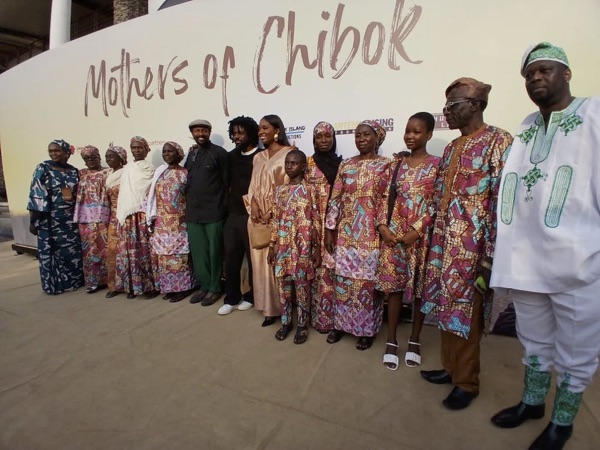
On a humid evening in Lagos, silence fell over the room as the lights dimmed and the first frames of Mothers of Chibok flickered onto the screen during the premiere of the documentary in Lagos on Friday.
What unfolded was not simply a retelling of a national tragedy, but a profound meditation on resilience, dignity and the stubborn endurance of hope.
For more than a decade, the name “Chibok” has echoed globally as shorthand for loss. In April 2014, over 200 schoolgirls were abducted from their secondary school in Borno State, an event that sparked international outrage and the #BringBackOurGirls movement. Yet in the years that followed, headlines faded, hashtags quieted and the world moved on. What remained were the mothers.
In Mothers of Chibok, Emmy award-winning filmmaker, Joel Kachi, Benson shifts the lens away from the abduction itself and toward the women who have lived in its shadow ever since. It is a deliberate reframing. Instead of grief as the final word, Benson asks: What comes after sorrow? What grows in the soil of heartbreak?
The documentary follows four mothers, Yana Galang, Lydia Yama, Ladi Lawan and Maryam Maiyanga, over the course of a farming season. The camera lingers not on spectacle, but on rhythm: hands digging into the earth, voices lifted in prayer, shared laughter under a relentless sun. These women, whose daughters were among those taken, have refused to let tragedy hollow out their humanity.
Yana Galang’s story anchors the film with quiet force. Her daughter, Rifkatu, was 18 when she was abducted. Eleven years later, she still waits. There is no theatrical anguish in her voice when she speaks, only steadiness. She recalls a day when the parents collectively fasted and prayed for just one sign of life. When Amina Ali Nkeki became the first girl to return, bringing word that the others were alive, it rekindled belief across the community. More girls would eventually come home, through negotiations or escape. Yet many, including Rifkatu, remain missing.
What is striking in the film is not despair, but discipline, the discipline of continuing. The women farm. They trade. They send their children to school.
They rebuild what insurgency tried to fracture. Education, they insist, is non-negotiable. Despite the fear that once emptied classrooms, they remain convinced that schooling is the bridge to a better tomorrow.
Benson’s journey with Chibok did not begin here. His earlier virtual reality short, Daughters of Chibok, won global acclaim and positioned him as a pioneer of immersive storytelling. But with this feature-length documentary, he sought something deeper. He has spoken about spending three years making repeated trips to the community, determined to avoid what he calls “extractive storytelling”, parachuting in for a few days to harvest trauma for global consumption.
Other News
Instead, he waited. He listened. He earned trust.
“I wanted to move beyond the headlines,” he has explained at screenings. “The tragedy is one part of their story, but it is not the whole story.” In a media landscape that often reduces communities to statistics, Mothers of Chibok insists on dimensionality. These women laugh. They tease. They dream. They argue. They are not symbols; they are human.
Veteran actress and producer, Joke Silva, who lends her voice to the project, describes the film as a tribute to dignity. For her, the most powerful scenes are not the recollections of 2014, but the images of women rising before dawn to work their land, determined to fund their children’s education. “It’s not about pity,” she noted during a post-screening conversation. “It’s about respect.”
Indeed, pity is noticeably absent from the film’s emotional palette. Instead, there is admiration. The mothers are portrayed not as passive victims but as active architects of their survival. Benson himself refers to them as “Amazons”, women who have transformed private pain into communal strength.
The documentary’s impact extends beyond cinema. In an unexpected evolution, the filmmaking process has grown into an agricultural empowerment initiative. Through a pilot project, nine women received improved seeds, fertiliser and technical support. The results were dramatic: harvest yields increased significantly, in some cases multiplying several times over. Groundnuts cultivated in Chibok are now processed into peanut butter and other products under a “Mothers of Chibok” brand, with ambitions to scale the programme to hundreds more women.
This blending of art and action reflects Benson’s belief that storytelling should not merely illuminate problems but contribute to solutions. By pairing narrative with enterprise, he is attempting to rewrite not only perception, but possibility.
The decision to release the documentary in cinemas nationwide is itself a statement. In an industry dominated by comedies and blockbuster dramas, documentaries rarely enjoy wide theatrical runs. Yet Benson sees communal viewing as essential. Watching together, he believes, transforms empathy into shared responsibility.
As audiences file into cinemas across Nigeria and Ghana, they encounter more than a film. They encounter a mirror. The women of Chibok challenge viewers to reconsider what resilience looks like, not grand gestures, but daily perseverance; not loud proclamations, but quiet endurance.
More than a decade after the world first learned the name Chibok, Mothers of Chibok offers a different kind of remembrance. It refuses to let the story calcify into tragedy alone. Instead, it reveals something radical: hope as practice, courage as routine and strength as inheritance.
In the end, the film does not ask for sympathy. It asks for recognition. And in doing so, it restores humanity to a narrative too often flattened by grief.