Follow Us on Google
By Enyeribe Ejiogu
Vaccination is ongoing in Ondo State where 12 cases of Mpox infection (formerly known as monkeypox) were discovered in eight local government areas.
Director of Disease Control, Ondo State Primary Health Development Agency, Victor Adefesoye, disclosed that the vaccination process which commenced on August 11 will end on August 21, 2025. Adefesoye, according to a report by the News Agency of Nigeria, NAN, said the vaccination will be given to a certain category of people who are 18 years old and above. He explained that the vaccination is restricted to people in the identified areas who already have the disease as well as close relatives, contacts and health workers that have handled them. Each of the people within the identified category would be given two doses of the injectable vaccine at different intervals.
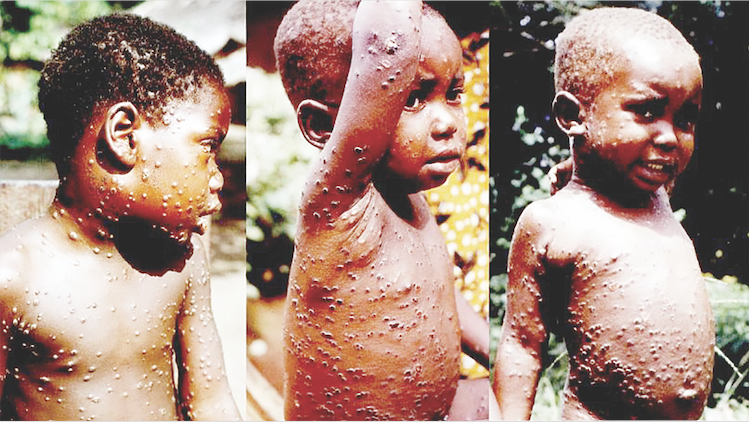
Mpox (MPXV) is a viral illness that spreads between people, mainly through close contact. It causes painful skin and mucosal lesions, often accompanied by fever, headache, muscle aches, back pain, fatigue, and swollen lymph nodes. The disease can be debilitating and disfiguring, in that it leaves scars on different parts of the body.
MPXV was first identified in 1970 in the Democratic Republic of Congo (DRC) during the global campaign to eradicate smallpox, a disease caused by Variola virus, which is another orthopoxvirus. It was during the period in the early 1980s, when health scientists were engaged in heightened surveillance on the disease which manifested symptoms that were like those of smallpox that they were able to properly define the clinical presentation, epidemiology and transmission of mpox. In the course of the research studies, health scientists were able to determine that the disease originally came from monkeys in parts of Africa.
Mpox is caused by two different genetic versions of the virus: clade I in Central Africa, and clade II, in West Africa. It is only in Cameroon that both clades are known to occur. For almost 40 years, Nigeria did not have any reported cases of Mpox until 2017 a re-emergence of cases due to clade II, which led to an outbreak in 2018 with 122 confirmed or probable cases in 17 states, resulting in seven deaths, as Yinka-Ogunleye and others noted in their article, Outbreak of Human Monkeypox in Nigeria in 2017–18, published by Lancet.
The country has continued to report mpox cases, most of which are concentrated in the most southern states, including in urban settings. In 2020, during the COVID-19 pandemic, the number of cases reported in Nigeria decreased sharply (eight cases reported); however, the number rose again in 2021. Nigeria has observed a number of patients with MPXV and HIV co-infections.
In response to an upsurge of mpox in the Democratic Republic of the Congo and which spread to neighbouring countries, the World Health Organisation (WHO) declared it a public health emergency of international concern on 14 August 2024.

Medical practitioner, Dr Daberechi Ihebuzor, recounted to Sunday Sun his first encounter with a patient with a confirmed case of monkeypox. He said: “During my housemanship in 2023 at the Irrua Specialist Teaching Hospital (ISTH), specifically the Institute of Viral and Emergent Pathogens Control and Research, I encountered a confirmed case. ISTH is Nigeria’s referral centre for such infections. The patient had initially self-managed, thinking it was malaria, then as a drug reaction, before being referred to us for specialist care. The symptoms of Monkey pox (now referred to as mpox following a change in the name by the WHO because of concerns about stigmatising language) usually follow an initial flu-like illness that is similar to the symptoms of malaria before the characteristic rash. So it is easy to understand the patient’s train of thought but also why health care workers always advocate against self-medication.”
Increasingly, diseases that were once restricted to other animals are now able to jump across species and cause life-threatening diseases in humans. Ihebuzor offered this explanation: “Human activities have brought us into closer contact with wildlife than ever before. These activities include deforestation, farming practices, wildlife trade which increases exposure to animal reservoirs, and urban expansion. Also, certain factors have enabled the quick spread of animal diseases amongst humans and they include global travel, climate change, and the ability of viruses to adapt quickly. A combination of these factors has made it easier for animal diseases to cross into humans and spread.”
What you need to know
The rash caused by Mpox can take weeks to clear. There’s no proven treatment for mpox, but it usually goes away on its own. People at higher risk of infection are advised to get vaccinated.
The major symptoms of mpox include: rash, skin ulcers or blisters, fever, swollen lymph nodes, chills, headache, muscle aches, fatigue. It is not that gets infected with the virux that will manifest the symptoms. There are different ways individuals will experience the symptoms.
The rash caused by Mpox can appear as sores on the mouth, face, hands, feet, penis, vagina or anus. Some people have a widespread rash, but others only a have few bumps or blisters. Mpox rash can go through several stages over two to four weeks: it may start out as flat, red bumps. These can be painful.
The bumps become raised and turn into blisters, which then fill with pus. The blisters later crust and fall off.
Other News
Infection with mpox occurs through direct contact with mpox sores or scabs (from an animal or person), contact with contact with saliva or spit, respiratory secretions from your nose or mouth (mucus), blood or other bodily fluids (from an animal or person). Other means of infection include: contact with materials like clothing, bedding and towels used by an infected person or animal and vertical transmission — from a pregnant woman to the fetus during pregnancy or at birth.
There are specific situations that can spread mpox. These include: close, intimate contact like cuddling, kissing or sex. It’s possible, though less likely, that you could spread mpox by talking, sneezing or coughing very close to others; skin-to-skin contact like in packed commuter buses, sharing personal items, like towels, bedding or sex toys, bites or scratches from an infected animal, eating the meat of an infected animal.
Risk factors for mpox
Anyone can get mpox. The global outbreak appears to be disproportionately affecting men who have sex with men (MSM). On the other hand, during the clade I outbreak in the Democratic Republic of Congo, children under 15 years old made up more than half the cases.
You could be at risk if someone you’ve had sex with in the past two weeks has been diagnosed with mpox or longer. You’ve been diagnosed with one or more sexually transmitted infections (STIs) in the past six months. This includes acute HIV, gonorrhea, syphilis, chancroid or chlamydia.
A person is more likely to get severely ill with mpox if such a person has a weakened immune system, especially if it’s caused by HIV. A pregnant woman will have more severe illness. Similarly, babies younger than 1 year old are also at a higher risk for severe illness.
Complications of mpox
Complications caused by mpox can include bacterial infections, which can lead to sepsis, loss of vision or eye damage from mpox ocular infections, myopericarditis (inflammation around the heart); encephalitis (inflammation in the brain), pneumonia, respiratory distress (extreme difficulty breathing and getting oxygen to the body), severe scarring.
Diagnosis and Tests
Diagnosis of mpox is done by doctors in a hospital. Do not engage in self-treatment. The hospital, a swab of two to three sores (lesions) will be taken sent to a medical laboratory for polymerase chain reaction (PCR) testing. The doctor may also require blood tests. The doctor will decide the best way to manage and treat the case.
Duration of illness, survival, prevention
Mpox normally takes about two to four weeks to run its course. The very sick person will be treated and observed until he/she recovers. Clade II mpox, the subtype causing a global outbreak, is rarely fatal. The fatality (death) rate for clade I has historically been around 10%. But during recent outbreaks, it’s been less than 3.3%.
The best way to reduce the risk of mpox is to get vaccinated if you’re at a higher risk of exposure. It’s important to get vaccinated before, or as soon as possible after, exposure.
In addition to vaccines, other ways to help prevent the spread of mpox include: avoiding close contact in social situations (like clubs, raves or parties), especially if you or other people have a lot of exposed skin; do not touch mpox rashes, blisters or scabs; avoiding contact with bedding and other materials that could be contaminated with mpox; washing your hands frequently with soap and water; practicing safe sex, including the use of condoms and dental dams. Maintain marital fidelity – stick to one partner; wear a mask that covers your mouth and nose when around others; frequently clean and disinfect touched surfaces; use personal protective equipment (PPE), like gloves and a mask, when caring for people with mpox; avoiding contact with infected animals or wild animals. Thoroughly cook all foods that contain meat and do not eat the meat of wild animals.
•Additional materials adapted from websites of WHO and Cleveland Clinic