Follow Us on Google
By Moses Akaigwe
The overload of advanced driver-assistance systems (ADAS) and active-safety features might not autosteer you to safety bliss, but some of the safety techs highlighted here can help lessen the severity of a crash—if not help you avoid one entirely.
Rather than aiming to preserve life and limb once in an accident, why not avoid the accident entirely?
This safety sentiment, amid a pending futurescape of self-driving cars, is driving modern vehicles’ emphasis toward advanced driver-assistance systems (ADAS) courtesy of ever-sharper sensor suites.
These forms of active safety still go hand-in-hand with old-fashioned passive safety priorities. Think airbags, three-point seatbelts, and crumple zones.
Electronic Stability Control (ESC)
Electronic stability control (ESC) is nothing new, but it still tends to take top billing. The active safety pioneer helps maintain control in a skid or sudden maneuver, and it alone cuts fatal single-vehicle crash risk in half. Since September 2011, all new light vehicles have included this tech.
Automatic Emergency Braking (AEB)
Automatic emergency braking (AEB) taps into a vehicle’s on-board cameras, radar, or lidar systems. If the vehicle is barrelling toward a slower-moving object and fails to get on the left pedal, then AEB hits the brakes to help avoid or lessen the severity of a crash.
There’s no learning curve to AEB, and it can cut front-to-rear injury crashes by 56 percent, according to the Insurance Institute for Highway Safety (IIHS).
These systems are improving fast, and many are now capable of responding to pedestrians, bicyclists, and animals. Recent testing from AAA found that 2024 models with AEB avoided 100 percent of forward collisions at 35 mph (versus 33 percent for 2017–2018 models).
Lane Centring Assist (LCA)
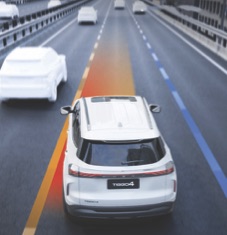
Not every active safety feature might result in a real-world safety boost, either. Lane centering assist (LCA) is a precursor technology toward future self-driving features, but it hasn’t been shown to decrease crashes on its own.
Lane Departure Warning
Lane departure warning (LDW) systems provide, at a minimum, an audible warning or steering wheel vibration if you drift from your travel lane. Some can even steer the car away from the lane line. In a 2025 study of 2,000 vehicles, 43 percent of these vehicles’ drivers disabled the system.
Blind Spot
Blind spot detection monitoring alerts the driver to vehicles in the adjacent lanes under the presumption that the driver may not see these vehicles in their rear-view mirrors.
Rear Automatic Emergency Braking
Rear automatic emergency braking (RAEB) can lead to a 78 percent drop in back-up crashes, according to theInsurance Institute Highway Safety (IIHS), albeit largely in low-speed incidents.
Rear automatic emergency braking (RAEB) is a safety feature that uses sensors to detect objects behind a vehicle while it is in reverse and automatically applies the brakes to help avoid a collision if the driver doesn’t react in time.
Rear Cross.-Traffic Alert
Rear cross-traffic alert provides an alert to the driver if an intersecting vehicle or individual is present when backing up. According to Insurance Institute Highway Safety (IIHS), the system can reduce accidents by22 percent.
Footnote
The size of a vehicle also plays a part in the event of an accident. All things being equal, bigger, heavier vehicles generally provide more crash protection to occupants than smaller, saw
With ESC and stronger rollover protection, SUVs now have less than half the fatality rate of cars. Dynamically, not all the old preconceptions hold true either. Some big-and-heavy SUVs stop shorter than small cars, even though they might not slalom around hazards as nimbly.
While modern safety features play an important part in vehicle safety, this tech alone cannot replace the fact that the buck ultimately stops at the driver. The best accident is ultimately the one you avoid, something that’s more likely to occur in vehicles that are nimbler and more dynamically capable.
Still, there’s no denying that modern advanced driver-assist systems are important assets that can further assist in preventing or limiting a collision and the ensuing damage to both the vehicle and its occupants.
* Courtesy: Car & Driver