Follow Us on Google
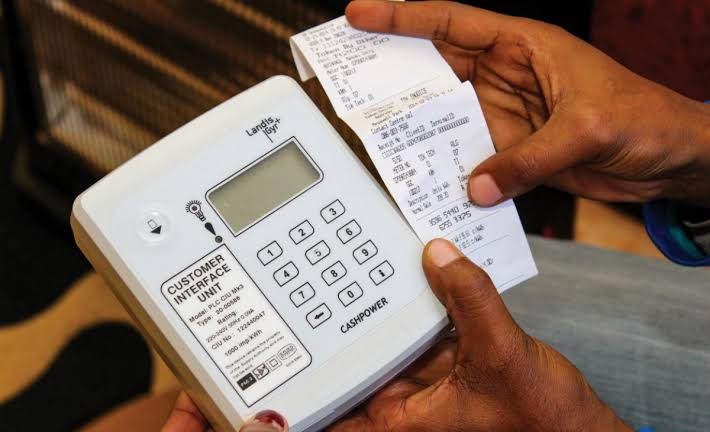
The Federal Competition and Consumer Protection Commission (FCCPC) has warned electricity distribution companies (DisCos) and other stakeholders in the industry against pushing the cost of replacing obsolete prepaid meters onto consumers, while calling for closer collaboration among regulators to strengthen consumer protection in Nigeria’s electricity sector.
Executive Vice Chairman and Chief Executive Officer of the FCCPC, Mr Tunji Bello, stated this on Thursday in Abuja during a stakeholder engagement on consumer protection and regulatory cooperation in Nigeria’s electricity sector.
The meeting brought together the Nigerian Electricity Regulatory Commission (NERC), the Nigerian Electricity Management Services Agency (NEMSA), and State Electricity Regulatory Commissions (SERCs).
The EVC in his remarks said the implementation of the Electricity Act 2023, which allows states to establish their own electricity regulatory commissions and oversee intrastate electricity markets, has made cooperation among regulators more important than ever.
He said: “While the new regulatory framework creates opportunities for innovation and faster decision-making, consumers expect a seamless system that protects their interests regardless of which agency has jurisdiction.”
“Consumers experience electricity as one system. When supply is interrupted or a bill appears incorrect, they are not concerned about which regulator has jurisdiction. They simply expect protection.”
He stressed that the FCCPC’s role complements rather than competes with those of sector regulators, noting that NERC provides sector-specific regulation, NEMSA enforces technical standards, and state commissions oversee intrastate electricity markets.
“Our responsibilities are different, but they are complementary. Our objective is to consult, exchange information, support one another’s lawful actions, and ensure that consumers receive timely and effective protection,” Bello added.
The FCCPC boss disclosed that one of the commission’s earliest interventions after he assumed office in July 2024 involved concerns over the planned replacement of obsolete Unistar prepaid meters used by customers of one of the electricity distribution companies.
He said although replacing outdated meters is ordinarily a technical exercise, many consumers feared they would be compelled to pay for new meters, be subjected to estimated billing, or experience disruptions in electricity supply.
Other News
To address the concerns, Bello said the FCCPC convened a meeting involving NERC, NEMSA, and all electricity distribution companies to ensure the replacement programme complied with existing regulations and adequately protected consumers.
“The engagement resulted in the suspension of the replacement exercise pending compliance with regulatory requirements, a decision jointly endorsed by NERC and NEMSA,” he said.
He explained that the eventual resolution was guided by NERC’s Order on the Structured Replacement of Faulty and Obsolete End-user Customer Meters, which guarantees that consumers will not pay for replacing obsolete meters, will not suffer interruption of electricity supply during the exercise, and will not be subjected to estimated billing because of implementation delays.
“Consumers should never be disadvantaged because infrastructure has reached the end of its useful life through no fault of their own,” Bello said.
He noted that the intervention demonstrated the benefits of inter-agency collaboration, saying consumer protection is most effective when regulators coordinate their actions instead of working in isolation.
Bello argued that effective consumer protection goes beyond resolving disputes after they arise, insisting that the true measure of regulatory success lies in preventing consumer harm before it occurs. “Early identification of risks, prompt regulatory engagement and coordinated action help to build public confidence in the electricity sector and reduce disputes,” he said.
Bello called on electricity distribution companies and other operators in the power value chain to comply fully with regulatory obligations, handle customer complaints fairly, and operate transparently to build trust in the sector.
He equally urged electricity consumers to utilise established complaint resolution mechanisms, engage regulators in good faith, and fulfil their responsibilities while asserting their rights.
The FCCPC chief, however, expressed optimism that stronger partnerships among regulatory institutions would deepen accountability, improve service delivery, and foster a more responsive, competitive, and consumer-centred electricity sector.
He said every regulatory decision ultimately affects millions of Nigerians, including households, small businesses, hospitals, schools, and manufacturers that depend on reliable electricity for their daily activities and economic productivity.