Follow Us on Google
By Oluibukun Gbenga Ajayi
This is not the best of times for the Gulf states, as torrents of heavy rain with its consequential flash floods wreak unimaginable havoc, disrupting flights at the world’s second-busiest airport. According to an article published in The New York Times on Wednesday, 17th April 2024, a year’s worth of rain fell in just one day in some areas across Oman and the United Arab Emirates.
Oman’s National Committee for Emergency Management reported that several areas of Oman received over 230 millimetres of rain. The average annual rainfall in Muscat is about 100 millimetres, although other parts of the country can receive more rain. Also, the United Arab Emirates’ National Centre of Meteorology reported that the largest rainfall event in 75 years was experienced by the UAE on Tuesday 16th April 2024, with one area receiving as much as 255 millimetres of rain in less than a day. This has brought cities in the UAE and Oman to a standstill. Heart-wrenching videos and pictures circulating on the various social media showed vehicles completely submerged on gridlocked highways with some completely washed away, and airplanes leaving waves in their wake as they taxied through heavily flooded runways in Dubai. The streets of Muscat, Oman’s capital, have become a similitude of raging rivers because of the flash floods. According to Oman’s emergency management committee and The Associated Press, by Wednesday morning (17th April 2024), 19 deaths had been confirmed, including ten schoolchildren who were swept away in a vehicle with an adult, and an infant. Some schools remained closed in Oman, and some government employees were told to work from home.
These global catastrophic flooding events should serve as a strong warning to Nigeria and a sobering reminder of the urgent need to address its own recurring flood disasters.
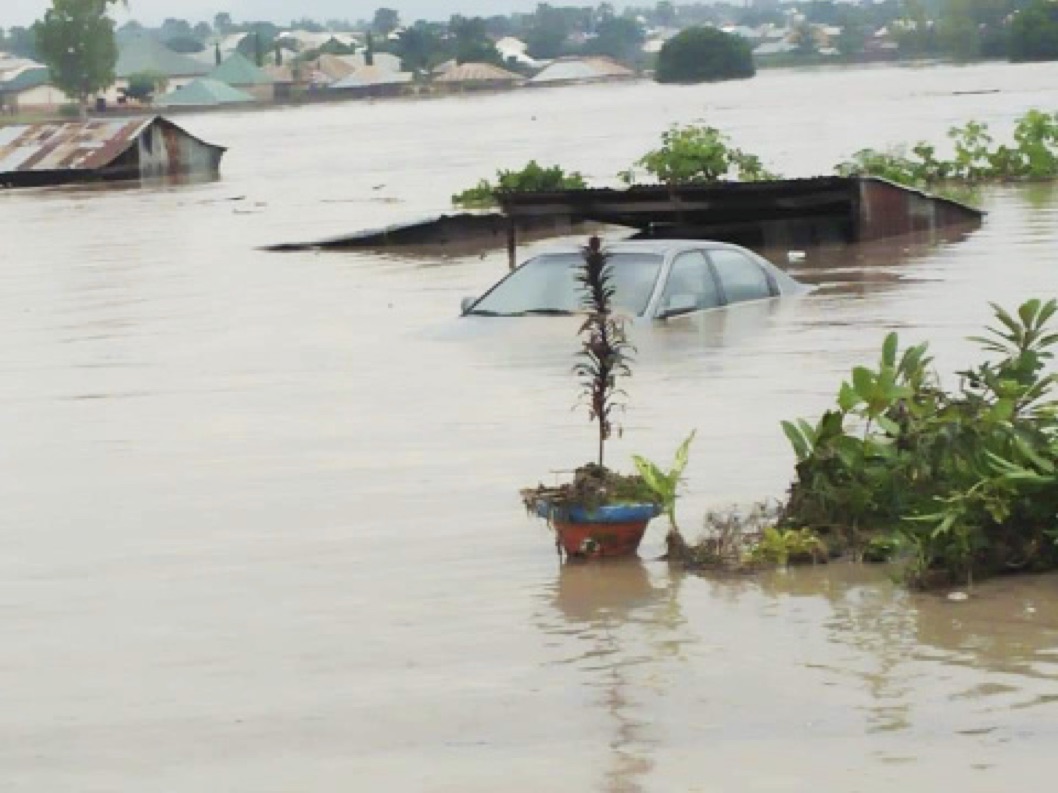
In Nigeria, flooding is not a new phenomenon, but its frequency and intensity have escalated in recent years. According to Nigeria Flood Impact, Recovery and Mitigation Assessment Report 2022-2023 by UNDP, flooding is the most common and recurring disaster in Nigeria. Between July and October in 2012, the Niger and Benue rivers overflowed their banks causing an unprecedented flood disaster which is Nigeria’s worst flooding in over 40 years, allegedly caused by heavy rainfall across the country and the perennial release of excess water from the Lagdo Dam in northern Cameroon, east of Nigeria, used basically for irrigation and generation of electricity. The disaster affected 32 states, and over seven million people while more than two million others were internally displaced and over 5,900 houses were destroyed, with Benue and Niger states being the most severely affected because of their riparian communities.
The damage and losses recorded during the 2012 flood disaster were severe, but the 2022 floods, which were on a multidimensional scale, had even more devastating effects. The 2022 floods caused unprecedented disruption and destruction and proved to be more intense than the 2012 floods, where approximately three million families saw their houses damaged or destroyed.
Sizable portions of surrounding communities around the River Niger Bridge, which joins Lagos to Onitsha and the rest of eastern Nigeria, were submerged. The situation was so dire that Sadiya Umar Farouq, the then Nigeria’s Minister of Humanitarian Affairs, asked five state governments to prepare to evacuate residents living along flood plains. Hundreds of lives and livelihoods were lost, about 1.4 million people displaced and over 569,000 hectares of farmland destroyed along with key infrastructure, negatively impinging on the cost of living across the country. For the past two decades, annual floods in Nigeria have resulted in the loss of about 1,763 lives and damage to property worth close to $1 billion.
According to the Nigeria Hydrological Services, the major causes of flooding in Nigeria include climate change induced extreme weather conditions, soil moisture, functionality and management of dams, especially those close to the country’s borders, and topography. Human or anthropogenic causes include inadequate drainage system, blockage of canals, dumping of refuse on waterways, obstruction of and building on waterways and river/dam overflow, etc.
On Monday, 15th April 2024, Professor Joseph Utsev, the Minister of Water Resources and Sanitation, issued a cautionary statement revealing that 148 local government areas across 31 states are at high risk of severe flooding in 2024 during the official unveiling of the 2024 Annual Flood Outlook (AFO) in Abuja. The identified states include Adamawa, Akwa-Ibom, Anambra, Bauchi, Bayelsa, Benue, Borno, Cross-River, Delta, Ebonyi, Edo, Imo, Jigawa, Kaduna, Kano, Katsina, Kebbi, and Kogi, among others, and could impact the population, agriculture, livelihoods, livestock, infrastructure, and the environment. The warning issued by Professor Utsev signals the looming threat of another catastrophic flood season, with millions at risk of displacement and further devastation.
While flooding may seem to be an inevitable reality for Nigeria, risks can be minimized in a many ways. The most significant of these is coordinated spatial planning where surveyors and geospatial experts, rural and urban planners and environmental practitioners are brought together to strategically plan the distribution of people and activities to minimize flood risk. Others include collection of reliable data that will enable accurate flood modelling and forecasting, installation of gauging stations which are essentially data collection points set up on rivers and other bodies of water to track water levels and flow, and development of suitable models for hydrological predictions.
To avert another humanitarian crisis, concerted efforts are required from government, policy makers, professionals, and citizens alike. The following practical steps must be taken to mitigate the impact of floods in Nigeria:
1. Government must prioritize investment in resilient infrastructure, including flood barriers like levees and walls in high-risk areas, drainage systems, and early warning systems. Infrastructure projects should be designed to withstand extreme weather events and protect vulnerable communities.
2. Government must enact and enforce policies that promote flood risk reduction and resilience. Policy makers must enforce zoning regulations and land-use planning to prevent construction in flood-prone areas. Development must be guided by risk assessments and environmental considerations to minimize vulnerability. Building codes, land-use regulations, and environmental laws should be rigorously and proactively enforced to prevent further degradation of ecosystems and exacerbation of flood risks.
3. Clogged drains and waterways are a major cause of urban flooding. Improper waste disposal, like littering or overflowing bins, can lead to a build-up of trash that blocks the natural flow of water during heavy rains. Efficient waste collection and proper disposal minimizes flood risk and must be prioritized in our communities.
4. Citizens must be empowered through education and awareness programmes on flood preparedness and response. Communities should also develop contingency plans and evacuation procedures to ensure swift and coordinated action during emergencies.
5. We must embrace nature-based solutions such as wetland restoration and reforestation to enhance flood resilience. Green infrastructure can help absorb floodwaters, reduce erosion, and mitigate the impact of urbanization on natural drainage systems.
6. Improved and sustained collaboration with our neighbouring countries and international organizations to address transboundary flood risks and share best practices. Regional cooperation is essential for effective disaster preparedness and response.
As communities, our people must take also responsibility and do the following:
1. Keep abreast of weather forecasts and flood warnings. Stay informed about the flood risk in your area and take necessary precautions when alerts are issued.
2. Use flood barriers, sandbags, or seals to prevent water from entering your home through doors, windows, and other openings. Installing flood-resistant doors and windows may also be considered for added protection.
3. Regularly clean gutters, downspouts, and drains to ensure proper drainage and prevent water from pooling around your home. Remove debris and obstructions that can block the flow of water during heavy rainfall.
4. Raise electrical appliances and utilities, such as water heaters, furnaces, and electrical panels, above potential flood levels to minimize damage and reduce the risk of electrical hazards during flooding.
5. Participate in community-based flood preparedness initiatives such as clean-up drives, floodplain management programs, and neighbourhood watch groups. Work together with neighbours to build a more resilient community and reduce flood risks collectively.
6. Finally, heed issued evacuation orders and evacuate to higher ground or designated shelters if instructed to do so. Follow evacuation routes and avoid driving or walking through flooded areas.
While it may be difficult to prevent floods, especially those triggered by extreme weather events, we can significantly diminish their impact by taking proactive measures. It is imperative for governmental bodies, non-governmental organisations, community-based groups, and residents to unite and prepare for floods, thereby reducing their adverse effects. Nigeria cannot afford to endure another catastrophic flood season wreaking havoc on its populace and economy. Government agencies, policy makers, professionals, and citizens must work together to build a more resilient nation that can withstand the challenges of climate change and natural disasters. The time for this conscientious preparation is now!
•Dr Oluibukun Gbenga Ajayi is a Senior Lecturer in Geoinformation Technology at the Department of Land and Spatial Sciences, Namibia University of Science and Technology. He writes from Windhoek and can be reached via [email protected]. The views expressed in this article are entirely his own and not those of NUST.