Follow Us on Google
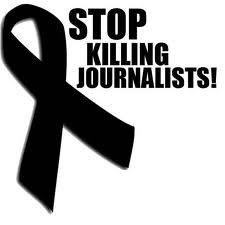
The year 2025 has turned out to be a deadly year for journalists. A recent report by the International Federation of Journalists (IFJ) indicated that 128 journalists were killed worldwide in 2025. The list included 10 women and nine accidental deaths. According to the IFJ, with 74 deaths, the Middle East and the Arab World accounted for 58 per cent of the killings worldwide.
In Palestine, 56 media professionals were killed. This is as a result of the war in Gaza. The most emblematic, the IFJ said, was the targeted attack on Anas Al-Sharif, an Al Jazeera reporter killed along with five other journalists and media workers in a tent housing journalists on the outskirts of Al Shifa Hospital in Gaza City on August 10, 2025.
Yemen took the second position with 13 deaths while Ukraine, Sudan, and India recorded eight, six and four deaths respectively. Many other countries, including the Philistines, Mexico, Peru and Pakistan lost three journalists each. The IFJ particularly noted the brutal murder of Indian journalist, Mukesh Chandrakar, on January 1, 2025. He was said to have been beaten to death with an iron bar and later found in a septic tank.
In Africa, a number of media workers were reportedly killed in 2025. Sudan took the first position with six recorded deaths. Mozambique, Somalia, Tanzania and Zimbabwe recorded one death each. Nigeria recorded deaths of seven media workers in a car accident on December 29. These deaths were considered non-work related. Burundi also recorded one accidental death.
The IFJ said since 1990 and the launch of its annual Killed List, it has recorded 3,173 deaths worldwide, an average of 91 deaths per year and 876 in the past 10 years. It documented 122 deaths and 516 imprisoned journalists in 2024.
Between 1993 and 2019, the United Nations Educational, Scientific and Cultural Organisation (UNESCO) estimated that over 1,327 journalists were killed worldwide. About 349 of these attacks reportedly occurred in Nigeria. Among those killed over the past years included Dele Giwa of Newswatch magazine, Bagauda Kaltho of TheNews magazine, Godwin Agbroko of ThisDay newspaper, and Bayo Ohu of The Guardian newspaper.
Another deeply worrying trend in the IFJ report was the use of drones to target journalists or their vehicles. It cited the case of Ukrainian journalists: Olena Hramova, Yevhen Karmazin and Tetyana Kulyk; French journalist, Antoni Lallican; and Russian journalist, Ivan Zuev, as those reportedly killed by Russian drones.
In a worrying tone, the IFJ General Secretary, Anthony Bellanger, said, “128 journalists killed in a single year is not just a statistic, it is a global crisis. These deaths are a brutal reminder that journalists are being targeted with impunity, simply for doing their job. Governments must act now to protect media workers, bring killers to justice, and uphold press freedom. The world can no longer wait: it is time for a United Nations convention that guarantees the safety and independence of journalists everywhere.”
The Committee to Protect Journalists (CPJ) had, in a special report released on February 12, 2025, noted that 2024 was the deadliest year for journalists globally for over three decades. It said 124 journalists and media workers were killed worldwide that year; and that almost 70 per cent of the deaths were at the hands of Israeli military in Gaza and Lebanon. It is disturbing that instead of reducing, the death toll has increased in the past year.
Besides the killings, 533 journalists were reportedly in prison across the globe. The IFJ said the figure had more than doubled over the past half-decade. China took the first position as the world’s biggest jailer of journalists. In Africa, the biggest jailer is Eritrea, accounting for seven out of the 27 imprisoned journalists on the continent. Many of them are said to have been behind bars for over a decade.
Nigeria also records high frequency of arrests and detention of journalists. In 2024, the Nigerian Guild of Editors (NGE) condemned the harassment of journalists by security agents and called for a proper understanding and intention of the Cybersecurity Act, which security agents often use to persecute journalists performing their legitimate duties.
We join the IFJ to condemn the persistent failure of authorities to protect media workers. There is urgent need to end this ugly situation in 2026.
World leaders must ensure that they implement Resolution 2222 (2015) and Human Rights Council Resolution 33/2 (2016). These provisions mandate member states of the United Nations Security Council to prevent, protect and prosecute in order to end impunity in the killing of journalists.
International Covenant on Civil and Political Rights, African Charter on Human and Peoples’ Rights and Article 19 of the UN Universal Declaration of Human Rights (1948) protect the rights of journalists to do their job without molestation. Governments must not only protect these rights; they must also ensure that all killings and attacks on journalists are thoroughly investigated and prosecuted. On their part, media owners should provide journalists with adequate tools and life insurance cover to aid their work.