Follow Us on Google
From Noah Ebije, Kaduna
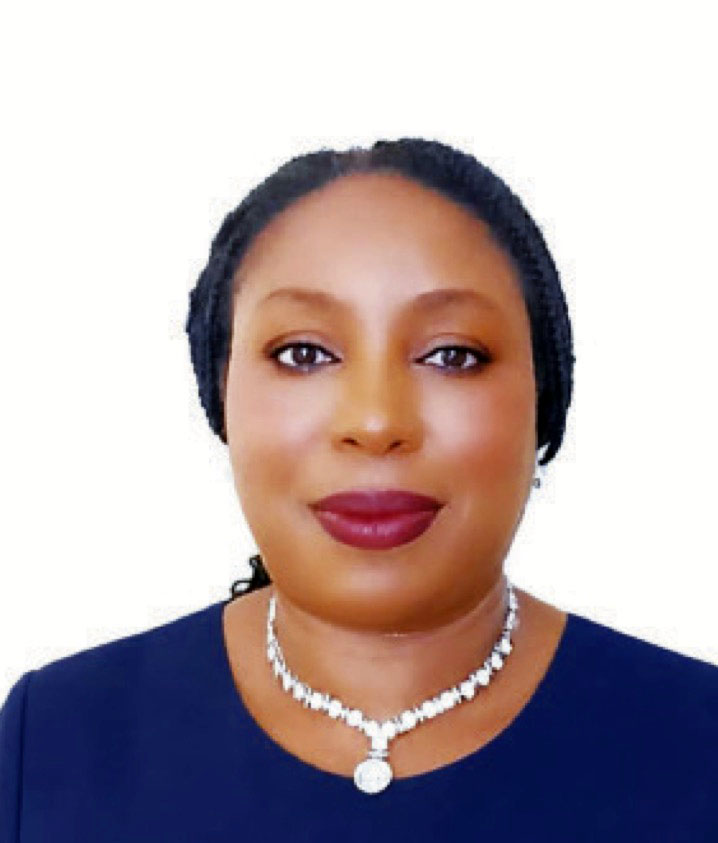
Halima Musa-Bakwunye is a legal practitioner, writer, author, entrepreneur, and humanitarian. She is Principal Partner at Mubak Legal Consult, and co-founder of the Pavilion of Hope Foundation. Her foundation focuses more on children, young people and women.
In this interview, she speaks about the fate of the Nigerian child and what could be done to better their lives through quality education.
Nigeria has millions of children facing poverty, insecurity, limited educational opportunities and other challenges. In your view, what urgent steps should government and other stakeholders take to improve the situation?
Nigeria truly has millions of children who are not exposed to standard and quality education. Poverty remains a major challenge, and many parents simply cannot provide for their children in the way they would want to. This is why there is an urgent need for government to step in. And one of the most important ways government can do this is by making education a priority. The education of our children must be a priority. Their security must also be a priority. We must never forget that these children are the leaders of tomorrow. If we fail to take proper care of them today, then our future as a nation is at stake. There is, therefore, an urgent need for us to focus more attention on education.
There are some states in Nigeria that provide free education for children, and this is commendable. However, there is still a lot more that can be done. If you visit many of these schools, you will discover that the children lack some of the most basic educational materials. Some do not even have exercise books, pens, or pencils with which to carry out their schoolwork. New textbooks were purchased only when it was necessary, such as when the curriculum changed or a particular book was no longer suitable. These are some of the areas that government needs to look into.
Another very important issue is security. Security must be guaranteed for everyone, including our children. It is deeply saddening to hear stories of children who wake up in the morning, go to school, and by the afternoon, their parents receive the devastating news that they have been kidnapped. This creates fear, particularly in rural and remote communities where we are trying to encourage children to attend school.
Do you believe enough attention is being paid to the emotional and psychological wellbeing of Nigerian children?
There is a growing concern that insufficient attention is being given to the psychological and emotional well-being of children in Nigeria. This unfortunate situation may be partly attributed to the nature of our contemporary society – one that is increasingly driven by the pursuit of rapid wealth accumulation. The get-rich-quick mentality has become deeply entrenched, and its influence is evident across various platforms, particularly social media. Much of the content accessible to children and young people today is heavily centred on money, wealth, success, and financial empowerment. While financial success is important, it is equally essential that we do not overlook the emotional, psychological, and overall well-being of our children. Regrettably, even within some educational institutions where parents pay substantial school fees, the primary focus is not always on making a meaningful and holistic impact in the lives of students. In certain instances, schools operate more as commercial enterprises, with greater emphasis placed on revenue generation than on the comprehensive development and welfare of the child. We must begin to ask ourselves critical questions: How are our children truly doing? What thoughts occupy their minds? What challenges are they facing? What values are they internalising? When these questions are neglected, the effects inevitably manifest within society. We are already witnessing rising concerns such as crime, substance abuse, sexual exploitation, and other harmful behaviours among young people. One contributing factor is that some children, who should primarily be focused on learning, personal development, talent discovery, and future preparation, are instead being exposed to undue pressure to achieve financial success prematurely. This is why I consistently emphasise to parents that raising a child is a profound responsibility. The fact that a child is enrolled in school does not signify that parental responsibility has been fulfilled.
You are a legal practitioner, writer, author, entrepreneur and humanitarian. What inspired you to devote a significant part of your time and resources to humanitarian work, particularly initiatives focused on children and young people?
I got inspired to start humanitarian work through a rather unexpected experience.
I once participated in a creative writing competition and, to my surprise, I won. After I won the competition, the organisers asked me for my age. At that time, I was already serving under the NYSC. When I told them my age, they came back to me and said, “You are too old for this event. The competition was meant for children between the ages of 10 and 15.” That experience really got me thinking. I began to realise that in other parts of the world, there are different organisations and initiatives specifically created to support and encourage children. There are competitions and charity programmes focused on creative writing, poetry, dance, the arts, and so many other areas. As a child growing up, I didn’t really experience these kinds of opportunities. Then, one day, I was watching Nickelodeon, one of the popular children’s television channels, and I saw how children in other parts of the world were being encouraged to participate in charitable activities and community projects. I saw children being taught to give back, support one another, and make an impact in their communities and the environment.
For me, that was a wake-up call. I had always thought that to establish an organisation and make a significant impact, I had to wait until I was much older—perhaps 50 years or more—and until I had become extremely successful. But I realised that you don’t have to wait until you have everything before you can make a difference. That realisation inspired me to start something. We began with a creative writing competition. From there, we expanded into organising free creative arts competitions for children. And as we interacted with these children, we began to notice some of the challenges they were facing. Some of the children didn’t even have basic learning materials such as pencils, pens, or exercise books. We realised that if we truly wanted to make an impact, we had to go beyond competitions. We needed to support these children in practical ways. That was how the humanitarian aspect of our work began to grow.
What have you personally sacrificed to sustain your humanitarian activities? What kept you going?
I am a highly optimistic individual, guided by a personal motto: never give up. In everything I do, I remain persistent, positive, and committed to continuous progress. Establishing this NGO was not an easy journey. We initially began as an unregistered initiative, which I managed alongside my law practice. However, based on the response and impact we were beginning to see, I recognised the need to formalise our structure. After operating informally for eight years, we were officially registered as the Pavilion of Hope Foundation in 2018. There have been significant challenges along the way, particularly in securing funding. As an NGO, we are not permitted to operate as a business, which means we rely primarily on donations. I had to learn how to navigate this space effectively while also maximising the limited resources available to us. We are intentional about working with what we have, rather than waiting for ideal or abundant funding. I also remind myself consistently that our work is not only about direct impact on children, but also about inspiring others to contribute in their own capacity – whether through partnerships, collaborations, or independent initiatives that advance similar goals. I continue to persevere, and where possible, my team and I also provide financial support to sustain the NGO’s activities while we actively seek external funding.
The Foundation focuses considerably on children, young people and women. Why did you choose these groups as major areas of intervention?
Other News
My experience as a legal practitioner has greatly influenced my decision to focus much of my humanitarian work on children, youths, and women. As I interacted with women through my legal practice, particularly women who had been abandoned by their husbands, separated from their spouses, divorced, or widowed, I began to understand the depth of the pain and challenges that many of these women experience.
I came to realise that when a mother is going through emotional or financial distress, it often affects the children as well. Children are deeply connected to the emotional well-being of their parents, and the challenges within the home can have a significant impact on them.
This realisation created a need for us to organise programmes where we could engage with and educate women. I became a strong advocate against domestic violence and for women’s empowerment, and I also began speaking about issues such as unhealthy and narcissistic relationships. I carry out many of these advocacies freely on social media platforms, with the hope of creating awareness, educating people, and making a positive impact.
Along the line, as we interacted more with vulnerable children, we also realised that there was a need to reach out to children who were growing up in difficult circumstances—children from broken homes, single-parent homes, and impoverished families, including homes where both parents were present but were still struggling financially.
As we began to engage more closely with these children, we became convinced that we were doing the right thing. We also became increasingly aware of the gap between the rich and the poor and the limited opportunities available to children from disadvantaged backgrounds. Many children do not have access to activities and events where they can simply come, participate, learn, and have fun without having to worry about money. Unfortunately, almost everything is monetised today. You want to attend a simple event, and there is a gate fee. You want to participate in an activity, and there is a cost attached to it.
We decided that we wanted to create a different kind of experience for children. We began organising free activities and events where children could come together without anyone asking about their financial background.
In a country where many families struggle with the cost of education, how significant do you think interventions of this nature are keeping children in school?.
This project of distributing free educational supplies is very important to us. At the beginning, it was a struggle to convince my team to focus on exercise books and basic writing materials. People often think of educational support in terms of bigger items like school bags and shoes.
But I saw it differently. The simple things we often overlook are actually what children need most. I insisted we include exercise books and basic materials, and over time my team understood the impact. They realised that something as small as an exercise book can make a real difference in a child’s education.
That experience reinforced our belief that no support is too small when it meets a real need. However, our resources are limited, so we cannot reach everywhere. We continue to seek support to reach more communities and children. When we say 2,000 or 3,000 children, it may be just one community, and many more still need help across different states. We therefore need more individuals, organisations, government, and NGOs to get involved and see education as an area where they can make a real impact. While other areas like healthcare and feeding are also important, education is essential. Every child needs basic learning materials to grow and reach their potential. We would appreciate support from anyone willing to partner with us or similar initiatives. Together, we can reach more children and make a lasting difference in their education.
Given the digital divide in Nigeria, how is the foundation addressing the possibility that children from disadvantaged backgrounds may not have access to smart phones, computers or reliable internet services?
At Pavilion of Hope Foundation, we know that organising online programmes can be difficult for some families. Some do not have smart phones, computers, or reliable internet, while others cannot afford data—even when they have devices. We understand these challenges, but our organisation is for every child. While we support children from less privileged backgrounds, we also believe every child deserves guidance, values, and access to opportunities that help them grow.
A child is a child, regardless of background. Every child needs to learn, be exposed to new ideas, and be positively shaped. For example, books like Don’t Touch My Body and Law as a Career are not just for some children—they are for all children because their messages are important. When we get it right with children, we help build a better society. A child from any background without the right values can become a problem to the community, which is why our work must reach everyone.
At Pavilion of Hope Foundation, we are for everybody. We intentionally support less privileged children, but we also aim to educate and influence children from all backgrounds. While we run online programmes, we also value physical outreach, which allows us to engage children directly in their communities.
This year, our free annual children’s competition will hold in Navy Town, Lagos, reaching children in Navy Town, New Site, and nearby areas. We hope to expand to more communities as resources allow. Children even travel from places like Agbara, Ibadan, and Badagry to attend our events in Satellite Town, showing the real need for these programmes. With more support, we can reach even more communities.